Era
The Decade America Took Back Its Own Gold
How the Great Depression and the New Deal rewrote the country's money — minting its most legendary coin, and a flood of commemoratives along the way.
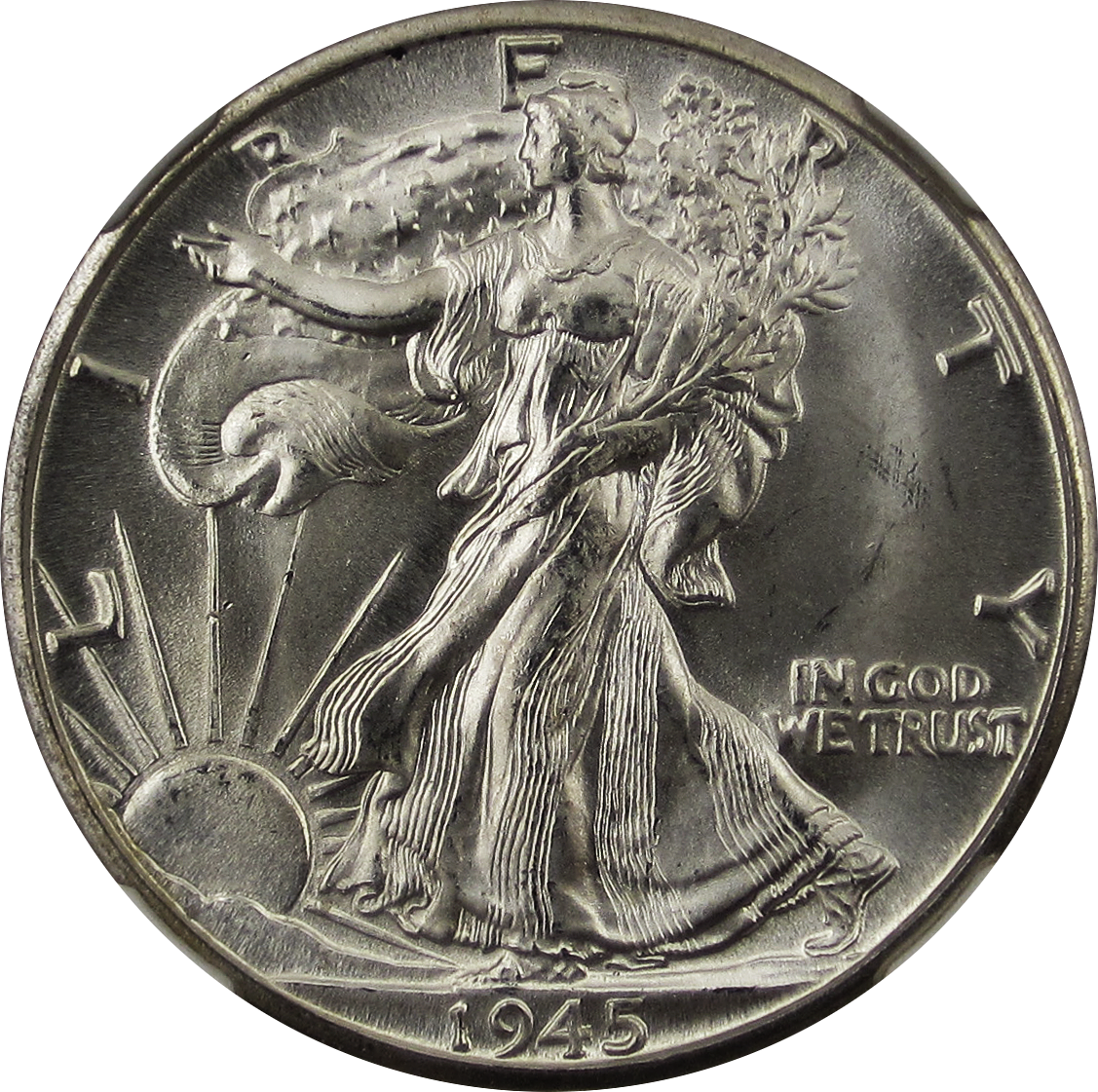
In 1933, the United States struck nearly half a million gold coins and then made it a crime to own them. Almost the entire run went into the furnace. The ones that escaped became the most valuable coins on Earth. Meanwhile, while ordinary change grew scarce, a frenzy of special half dollars poured out of the Mint. This is the story of the decade money changed hands — and changed shape.
The world then
In October 1929 the stock market collapsed, and the country fell with it. Banks failed by the thousands. Savings vanished. At the worst of it, roughly one in four American workers had no job. People hoarded what they trusted — and what they trusted most was gold.
That instinct became a problem. When frightened citizens pull gold and cash out of banks, the banks run dry and shut their doors, which frightens more people, who pull out more money. The system was eating itself.
Franklin D. Roosevelt took the oath of office on March 4, 1933, into the teeth of that panic. Thirty-six hours later, at one in the morning on March 6, he shut every bank in the country. The "bank holiday" lasted four days while inspectors decided which banks were sound enough to reopen. It worked: within days, Americans were carrying their hoarded cash back to the tellers. But Roosevelt wasn't done. He had decided the nation's money itself needed to change — starting with gold.
The money
For generations, an American dollar was a promise you could redeem in gold. A $20 gold piece held about an ounce of the metal. That link — the "gold standard" — tied the government's hands: it couldn't print more money to fight the Depression without more gold to back it.
So Roosevelt cut the link. On April 5, 1933, he signed Executive Order 6102, which forbade Americans from hoarding gold coins, gold bars, and gold certificates (paper dollars redeemable in gold). Citizens had until May 1 to turn in nearly all their gold to the Federal Reserve, paid out at the official rate of $20.67 per ounce. Owning gold beyond a small allowance was now illegal.
Then came the twist. In January 1934, the Gold Reserve Act let Roosevelt raise the official price of gold to $35 an ounce overnight. The government had bought the nation's gold at $20.67 and instantly marked it up by roughly seventy percent — a one-stroke devaluation of the dollar that gave Washington room to spend its way toward recovery. Most of the surrendered gold coins, no longer money, were melted into bars and locked away. Construction on the Fort Knox bullion depository began the same period to hold it.
The most haunting casualty was the 1933 Double Eagle — the $20 gold coin designed by the great sculptor Augustus Saint-Gaudens (his masterpiece, commissioned by Theodore Roosevelt back in 1905, and called by many the most beautiful coin America ever made). The Mint struck 445,500 of them in 1933. Then the gold recall hit, and the order came down to melt the entire run. Two were spared for the national collection at the Smithsonian. The rest were destroyed. A coin made in the morning was contraband by nightfall.
Not every gold coin vanished, though. A handful of 1933 Double Eagles slipped out of the Mint before the melting — and that small leak became one of the great legends of American money.
Amid all this upheaval, the country also got a new everyday coin. 1932 marked the 200th anniversary of George Washington's birth. To honor it, Congress put Washington's face on the quarter — replacing Hermon MacNeil's Standing Liberty design — based on a famous 1785 marble bust by the French sculptor Jean-Antoine Houdon, long considered the truest likeness of the man. Sculptor John Flanagan won the design. It was meant as a tribute; it became permanent. Washington has ridden the obverse — the "heads" side — of the quarter ever since.
The coins of this era
Walk through a coffee can of 1930s pocket change and you're holding the whole decade's story in metal. The Depression didn't just shrink wallets — it bent the Mint's output into a strange, telling shape. Demand for new coins fell off a cliff, so for several years entire denominations simply weren't struck. No half dollars left the presses from 1930 through 1932. No quarters in 1931 or 1933. No silver dollars at all from 1929 through 1933. That silence is why so many Depression-dated coins are scarce today: when nobody has money to spend, nobody mints it, and nobody saves it.
The small change carried over from the calmer 1910s and '20s, struck in the same beloved designs by the artists who'd won Theodore Roosevelt's campaign for beautiful money. Victor David Brenner's Lincoln cent still wore its wheat-stalk reverse. James Earle Fraser's Buffalo nickel rumbled along to its final year in 1938 — then yielded to a young German immigrant's design, Felix Schlag's Jefferson nickel, the first U.S. coin chosen by open competition under the new Mint director Nellie Tayloe Ross. Adolph Weinman's 1916 masterpiece, the Mercury dime, kept circulating. And the Peace dollar — Anthony de Francisci's olive-branch silver dollar from the end of the Great War — made its last circulating appearance in 1934 and 1935, struck mainly to use up silver, then went quiet for nearly ninety years.
The quarter is where the era left its sharpest mark. The 1932 bicentennial of Washington's birth retired Hermon MacNeil's Standing Liberty design and put the first president on the coin for good. There's a quieter drama behind that choice: the sculptor Laura Gardin Fraser — James Earle Fraser's wife — submitted a Washington portrait the federal Commission of Fine Arts judged the finest of the lot, yet Treasury Secretary Andrew Mellon overruled them and picked John Flanagan's. (Fraser's portrait waited ninety years for its turn; it finally reached the quarter in 2022.)
But the metal that defines this era is the one that left it. America's gold coinage — Saint-Gaudens's $20 Double Eagle and the $10 Indian Head eagle, the last of a tradition reaching back to the Republic's founding — was struck for the final time in 1933 and then largely fed to the furnace. Every pre-1933 U.S. gold coin you can hold today is a survivor of that purge.
Then there's the strangest twist of all. As real circulating coins grew scarce, special coins multiplied like nothing before or since. These were the classic commemorative half dollars — 50-cent pieces authorized by Congress to mark an anniversary, a town's founding, a fair, a battle. A sponsoring group bought the entire mintage from the Mint at face value and resold it to collectors and the public at a premium, with the profit funding a monument or celebration. The idea wasn't new, but in the depths of the Depression it became a craze. The peak was 1936: in that single year the Mint struck roughly two dozen different commemorative designs — about a quarter of every classic commemorative the United States ever made, all in one twelve-month rush. It is a remarkable thing to picture: a nation too broke to mint quarters, eagerly buying souvenir half dollars by mail.
The themes ran the whole sweep of American memory. Battles and the Civil War (Gettysburg, Antietam); the great westward routes (the long-running Oregon Trail Memorial and the Old Spanish Trail); state and colony anniversaries up and down the map (Texas, Arkansas, Maryland, Connecticut, Delaware, Rhode Island, Wisconsin, Daniel Boone for Kentucky, Roanoke Island for the Lost Colony); city and county milestones from coast to coast (Cincinnati, Cleveland, Albany, Bridgeport, Elgin, Hudson, Long Island, Lynchburg, Norfolk, Columbia, New Rochelle, York County); and a fair and a feat of engineering (the San Diego and Cleveland / Great Lakes expositions, the Bay Bridge half dollar with its grizzly bear). They were minted by a who's-who of American sculptors — Laura Gardin Fraser, Chester Beach, Charles Keck, Henry Kreis, Gertrude K. Lathrop, Brenda Putnam, and many more — which is why a single decade carries so many designer names.
The frenzy also bred abuse. Promoters learned to manufacture scarcity by splitting a coin's tiny mintage across the Philadelphia, Denver, and San Francisco mints, forcing collectors to buy three coins to "complete" one issue, or by stretching a design over many years to keep selling it. The outcry over these schemes eventually shamed Congress into shutting the commemorative program down. But the coins remain — small silver windows into what 1930s America chose to remember, and a tradition the Mint would later revive. That later spirit even reached back to honor the decade's own great monument: Mount Rushmore, carved by Gutzon Borglum from 1927 to 1941 with federal money flowing in from 1929, was celebrated decades on by a 1991 commemorative dollar — a modern coin built around an unmistakably Depression-era work.
The thread running through all of it is the same: a nation in crisis reached into its own pockets, took back the gold, devalued the dollar to claw its way out — and turned both a drawer of ordinary coins and a flood of souvenir half dollars into some of the most coveted history in American hands.
A timeline of the turning points
- 1929The stock market crashes in October; the Great Depression begins.
- 1932The Washington Quarter debuts for the bicentennial of Washington's birth, replacing the Standing Liberty quarter.
- March 1933FDR is inaugurated and orders a four-day national bank holiday to halt the panic.
- April 1933Executive Order 6102 forbids hoarding gold; Americans must turn in their gold by May 1.
- 1933The Mint strikes 445,500 Double Eagles, then orders nearly all of them melted; two go to the Smithsonian.
- 1933The $10 Indian Head eagle and the rest of America's circulating gold coinage are struck for the last time.
- Jan 1934The Gold Reserve Act lets FDR raise the price of gold from $20.67 to $35 an ounce, devaluing the dollar.
- 1934The bulk of the recalled gold coinage is melted into bars; Fort Knox is built to store it.
- 1934The first wave of the new commemorative half dollars begins (Texas, Maryland, Daniel Boone), launching the Depression's coin craze.
- 1934–1935The Peace dollar makes its final circulating appearance — America's last silver dollars for decades.
- 1936The commemorative frenzy peaks: about two dozen new half-dollar designs in a single year — roughly a quarter of all classic U.S. commemoratives.
- 1938The Buffalo nickel is retired; Felix Schlag's Jefferson nickel takes its place.
- 1938–1939Public outcry over commemorative-coin abuses pushes the program toward shutdown; the New Rochelle (1938) closes out the great wave.
Key facts
- Country
- United States
- Span
- 1929–1939 (Great Depression / early New Deal)
- The gold recall
- Executive Order 6102, April 5, 1933
- Gold price reset
- $20.67 → $35 per ounce (Gold Reserve Act, 1934)
- Legendary coin
- 1933 Double Eagle — 445,500 struck, nearly all melted
- Double Eagle designer
- Augustus Saint-Gaudens (design from 1907)
- Last circulating gold
- Saint-Gaudens Double Eagle & Indian Head eagle, struck through 1933
- New everyday coin
- Washington Quarter, first struck 1932
- Quarter designer
- John Flanagan, from Houdon's 1785 bust of Washington
- Quarter composition
- 90% silver (1932 through 1964)
- Last circulating silver dollar
- Peace dollar, final issues 1934–1935
- New design late in the decade
- Jefferson nickel by Felix Schlag, 1938 (replacing the Buffalo nickel)
- Commemorative craze
- Classic commemorative half dollars; ~2 dozen designs in 1936 alone
- Why so many designers
- Each commemorative had its own sculptor — dozens across the decade
Why it fascinates collectors
This is the decade that turned ordinary coins into history you can hold. Every U.S. gold coin from before 1933 is a survivor — it lived through a recall that was supposed to melt it. That alone gives the Saint-Gaudens Double Eagles, the gold eagles, and the half eagles a weight that pre-Depression dates from quieter years simply don't carry.
The 1933 Double Eagle is the apex of it. A coin the government insisted should not exist, that it spent decades hunting down. Of the survivors, only one has been ruled legal to privately own — the "Weitzman specimen," which sold in 2021 for about $18.9 million, the highest price ever paid for a coin at auction. It is, in the most literal sense, a coin made famous by being forbidden.
The Washington Quarter offers the opposite kind of romance: scarcity hiding in plain sight. The series ran for decades and most dates are common, but the very first year is the prize. Philadelphia struck millions in 1932 — but Denver and San Francisco each made only a little over 400,000. Those two first-year coins, the 1932-D and 1932-S, are the key dates collectors hunt to finish a set, scarce precisely because almost no one set them aside during a year when nobody had a quarter to spare.
The commemorative half dollars are a world unto themselves — and one of the most rewarding corners of the whole U.S. series. Because each was sold to a small, eager audience, mintages are tiny by circulating standards: many issues run in the low thousands, and the rarest, like the Old Spanish Trail and Hudson, are genuinely scarce. A complete set of classic commemoratives is a famous, demanding goal. Better still, most of these coins never circulated — they went straight from the Mint into a collector's drawer — so high, original-mint-state survivors are far more attainable here than in the worn small change of the same years. The flip side of the 1930s promotional schemes is a bonus to the modern collector: those split-mint and multi-year issues mean a single design can offer several distinct, collectible varieties.
And the silence itself is collectible. The years the Mint didn't strike a denomination — no half dollars 1930–1932, no silver dollars 1929–1933 — left gaps in date runs that make the surrounding years harder to find in good condition. In the Depression, a beautiful coin in your pocket was a coin you spent. The ones that survived untouched are the ones the market chases now.
Questions collectors ask
Why did the U.S. government recall everyone's gold in 1933?
To fight the Depression. As long as the dollar was redeemable in gold, the government couldn't expand the money supply without more gold to back it. Executive Order 6102 pulled gold out of private hands so Washington could break that limit, then devalue the dollar to encourage spending and lending.
Why is the 1933 Double Eagle so valuable if 445,500 were made?
Because nearly all of them were melted. The gold recall hit just as they were struck, so the entire run was ordered destroyed except for two sent to the Smithsonian. A small number escaped the Mint, and only one is legal to own privately — it sold in 2021 for roughly $18.9 million, a world record for any coin.
Was it really illegal for Americans to own gold?
Yes. From 1933 until 1974, U.S. citizens could not legally hoard gold coins or bullion beyond small exceptions for collectors, jewelers, and the like. The ban began with Executive Order 6102 and was reinforced by the Gold Reserve Act of 1934.
Why did the Washington Quarter appear in 1932?
1932 was the 200th anniversary of George Washington's birth. The quarter was meant to honor the bicentennial — replacing the Standing Liberty design — and proved popular enough to become permanent. Washington has been on the quarter ever since.
Which Washington Quarters are the ones to look for?
The first-year 1932-D (Denver) and 1932-S (San Francisco) are the key dates. Each had a mintage just over 400,000, far below Philadelphia's millions, and few were saved during the Depression — making high-grade survivors genuinely scarce.
What were the 1930s commemorative half dollars, and why are there so many?
They were special 50-cent coins Congress authorized to mark an anniversary, town, fair, or battle. A sponsoring group bought the whole mintage at face value and resold it at a premium to fund a celebration. In the Depression this turned into a craze — 1936 alone saw about two dozen different designs, roughly a quarter of all the classic commemoratives the U.S. ever struck.
Are the Depression-era commemorative halves a good place to collect?
For many people, yes. Mintages are small (often a few thousand), most coins went straight from the Mint to collectors rather than into circulation, so attractive mint-state examples survive in good numbers, and the designs were cut by a remarkable roster of American sculptors. The rarest issues — like Old Spanish Trail and Hudson — anchor one of the hobby's classic sets.
Which coins changed during the Great Depression and the New Deal?
In 1932 the Washington Quarter replaced the Standing Liberty quarter. In 1938 the Jefferson nickel, by Felix Schlag, replaced the Buffalo nickel. America's gold coinage — the Saint-Gaudens Double Eagle and the Indian Head eagle — was struck for the last time in 1933, the Peace dollar made its final circulating appearance in 1934–1935, and a wave of commemorative half dollars filled the gap left by scarce everyday change.
Sources
- 1933 double eagle — Wikipedia
- Executive Order 6102 — Wikipedia
- Gold Reserve Act — Wikipedia
- Washington quarter — Wikipedia
- Bank Holiday of 1933 — Federal Reserve History
- Emergency Banking Act of 1933 — Federal Reserve History
- The Majestic 1933 Saint-Gaudens Double Eagle — PCGS
- 1932-D Washington Quarter: History & Value — CoinWeek
- 1932-S Washington Quarter — CoinWeek
- Saint-Gaudens double eagle — Wikipedia
- Indian Head eagle — Wikipedia
- Peace dollar — Wikipedia
- Jefferson nickel — Wikipedia
- U.S. Commemorative Half Dollars, Part 2: 1933–1939 — PCGS
- Classic Commemorative Half Dollars of 1936 — Numismatic News
- Classic Commemorative Coins, 1892–1954 — CoinWeek
- United States commemorative coins — Wikipedia
- Mount Rushmore memorial history — National Park Service
- The Missing Years — Collecting the Coins of 1931 to 1933 — CoinWeek
- How Laura Gardin Fraser Won the Washington Quarter Design in 1932 — ANA