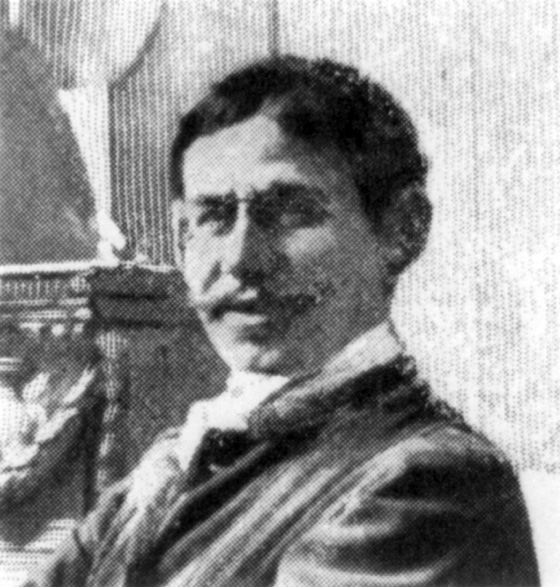
Designer

John Flanagan: the man who put Washington on the quarter

He lost the contest — and won the coin you carry every day.

John Flanagan: the man who put Washington on the quarter
Unknown author. Library of Congress Prints and Photographs Division, digital ID cph.3a01008 (photograph, 1900) · public domain · source

In 1931 a panel of art experts twice chose someone else's design for the new Washington quarter. The Treasury Secretary ignored them and picked John Flanagan instead. Flanagan's profile of Washington has now been struck billions of times — the most-circulated work of American sculpture ever made.

The contest he lost — and the coin he won

In 1931, the United States was getting ready to celebrate the 200th birthday of George Washington. To mark it, the government wanted a new coin bearing his face. A competition was held, and the Commission of Fine Arts — the panel of artists and architects that advises on federal design — judged the entries. Twice, the Commission named a winner: the sculptor Laura Gardin Fraser.

Twice, she did not get the job.

Treasury Secretary Andrew W. Mellon overruled the panel and chose a different design — by a quiet, sixty-six-year-old medalist named John Flanagan. When Mellon left office in early 1932, his successor Ogden L. Mills declined to reverse the call. Flanagan's Washington went onto the quarter, and Fraser's bust waited nearly seventy years for its own day on a coin. (It finally got one — on a 1999 commemorative gold piece, and again on the American Women Quarters that began in 2022.)

So the most familiar profile in American pockets came from the runner-up's pen, by order of the Treasury. The decision still draws argument among collectors. But it gave Flanagan something almost no artist ever gets: a design that would be struck, year after year, for the better part of a century.

Who John Flanagan was

Flanagan was born in Newark, New Jersey, on April 4, 1865. He trained in New York first — at the Cooper Union, and in classes at the Art Students League — before the break that shaped him: from 1885 to 1890 he worked as a studio assistant to Augustus Saint-Gaudens, the towering figure of American sculpture. Saint-Gaudens is the man behind the $20 gold "Double Eagle," widely called the most beautiful coin the United States ever made. Five years at his elbow was an education no school could match.

Then Flanagan did what serious American sculptors of his generation did: he went to Paris. He worked in the atelier of Alexandre Falguière, studied at the École des Beaux-Arts, and drew at the Académie Colarossi. He came home a polished European-trained sculptor — and, increasingly, a specialist in the small.

Because Flanagan's real gift was for medals. He made the official medal of the 1915 Panama-Pacific International Exposition; the Verdun Medal of around 1920, struck to honor the brutal World War I battle, carrying the French defenders' cry "They Shall Not Pass"; and the Rotunda Clock in the Library of Congress. The National Academy of Design made him a full Academician in 1928. By the time the quarter competition came around, he had spent decades doing exactly the thing a coin demands — telling a whole story inside a circle the size of a button.

The craft — thinking small, on purpose

A coin is the hardest kind of sculpture. It has almost no depth — a portrait that rises a fraction of a millimeter off the surface — and it has to survive being struck millions of times, stacked, rolled, and rubbed smooth in a pocket. The artist who fills a coin with too much detail and too much relief — the height the design stands up from the field — hands the Mint a coin that strikes weakly and wears out fast.

That was the lesson of the coin Flanagan replaced. The Standing Liberty quarter, by Hermon MacNeil, was beautiful and a production headache — high relief, weak strikes, dies that failed quickly. The Mercury dime and Walking Liberty half dollar had the same problem. Mellon, who had watched those coins struggle on the presses, wanted something the Mint could actually make at scale.

Flanagan gave it to him. His Washington is calm and low — a dignified profile, plainly lettered, with nothing fussy to clog a die. For the portrait he didn't invent a face; he adapted the most trusted likeness available, the bust the French sculptor Jean-Antoine Houdon modeled from life in 1786, when Washington was a living man. The reverse — the tails side — is a heraldic eagle, wings spread, perched on a bundle of arrows over two olive branches: the old American balance of war and peace. He signed it the way medalists do, small and unmissable once you know to look: the initials JF tucked at the base of Washington's neck.

It is a restrained, almost unshowy design. That restraint is exactly why it lasted.

A career in brief

  1. 1865Born April 4 in Newark, New Jersey.
  2. 1885–1890Works as a studio assistant to Augustus Saint-Gaudens in New York.
  3. 1890sStudies in Paris — Falguière's atelier, the École des Beaux-Arts, the Académie Colarossi.
  4. 1896Completes the Rotunda Clock in the Library of Congress's Jefferson Building.
  5. 1915Designs the official medal of the Panama-Pacific International Exposition.
  6. c. 1920Designs the Verdun Medal honoring the World War I battle.
  7. 1928Elected a full Academician of the National Academy of Design.
  8. 1931–1932Wins the Washington quarter design after Treasury Secretary Mellon overrules the competition judges.
  9. 1952Dies March 28 in Manhattan, aged 86.

Key facts

Born
April 4, 1865 — Newark, New Jersey
Died
March 28, 1952 — Manhattan, New York
Nationality
American
Trained under
Augustus Saint-Gaudens (1885–1890); later Falguière, Paris
Signature coin
Washington quarter (1932–present) — both sides
Initials on the coin
JF, at the base of Washington's neck
Other notable work
Panama-Pacific Exposition medal (1915); Verdun Medal; Library of Congress Rotunda Clock

Questions people ask

Who designed the Washington quarter?

The sculptor John Flanagan (1865–1952). He designed both the obverse — the George Washington profile — and the reverse eagle, first struck in 1932. His original portrait stayed on the quarter for decades, and the coin still carries his initials, JF, at the base of Washington's neck.

What do the initials JF on the quarter mean?

They are John Flanagan's. Coin designers customarily sign their work with small initials; Flanagan placed his at the base of Washington's neck. It is his signature on the coin, not a mint mark.

Did John Flanagan really win the design competition?

Not with the judges. The Commission of Fine Arts twice recommended Laura Gardin Fraser's design instead. Treasury Secretary Andrew Mellon overruled them and selected Flanagan's, and his successor Ogden Mills declined to reverse it. So Flanagan got the coin by Treasury decision, not by winning the panel's vote.

Was the Washington quarter Flanagan's only coin?

Yes. Flanagan was a prolific medalist and sculptor, but the Washington quarter was his only executed United States coin design — which makes it, by sheer mintage, one of the most-struck works of art in the country's history.

What is Washington's portrait based on?

A bust the French sculptor Jean-Antoine Houdon modeled from life in 1786, when Washington was alive. Flanagan adapted that trusted, lifelike likeness rather than inventing a new face.

Sources