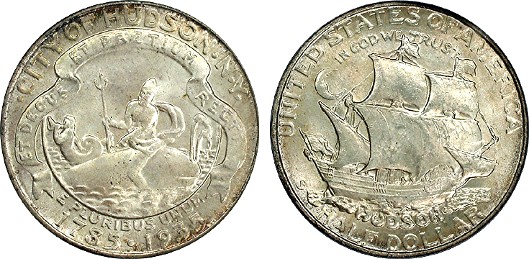
The story behind the coin
In June 1935, a small city on the east bank of the Hudson River turned 150 years old. To celebrate, Hudson, New York did what dozens of towns did in that decade — it asked Congress for the right to sell its own commemorative coin and pocket the profit.
The 1930s were the wild years of American commemoratives. The Mint would strike a special half dollar for almost any anniversary, hand the entire run to a local committee at face value, and let that committee sell the coins at a markup to fund a celebration. It was a clever way to raise money during the Depression. It was also wide open to abuse.
Hudson's coin became the textbook case of the abuse. Congressman Philip A. Goodwin's bill, signed by President Franklin Roosevelt on May 2, 1935, authorized just 10,000 pieces. The Philadelphia Mint struck 10,008 — the extra eight set aside for the following year's Assay Commission, the panel that checked the Mint's work. The full run of 10,000 was delivered on June 28.
Here is where it goes wrong. The coins were offered at one dollar apiece through a bank in Hudson. But before ordinary collectors could get a foothold, the dealer Julius Guttag of New York reportedly bought 7,500 of them — at 95 cents each, below the dollar list price — and a Florida dealer took roughly a thousand more. By July 2, four days after delivery, the bank announced the issue was sold out. Coins that had cost a dollar were changing hands for five to seven dollars within days. The public never really had a chance.