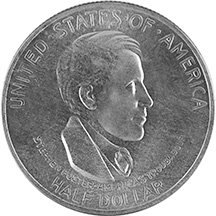
The story behind the coin
The pitch was tidy: a half dollar marking the 50th anniversary of Cincinnati, Ohio, "as a center of music." The problem was the math. Cincinnati's reputation for music had grown through the 1870s — the famous May Festival began in 1873. By 1936, that made the anniversary the 63rd, not the 50th. The figure "1886" stamped on the coin marked nothing in particular.
The man behind it was Thomas G. Melish, a Cincinnati businessman and coin collector. Melish wanted what every speculator of the 1930s commemorative boom wanted — a coin he alone controlled, so he could set the price and meter the supply. He got Congress to authorize it. On March 31, 1936, President Franklin Roosevelt signed the bill, capping the issue at 15,000 pieces.
The government's own art board saw through it. The Commission of Fine Arts objected hard. Its chairman, Charles Moore, pointed out the false anniversary and argued that if anyone deserved the honor it was Theodore Thomas, who founded the May Festival — not Stephen Foster, the songwriter the coin would actually depict. Foster had died in 1864 and lived in Cincinnati only briefly, as a young bookkeeper. The Bureau of the Mint approved the designs anyway.