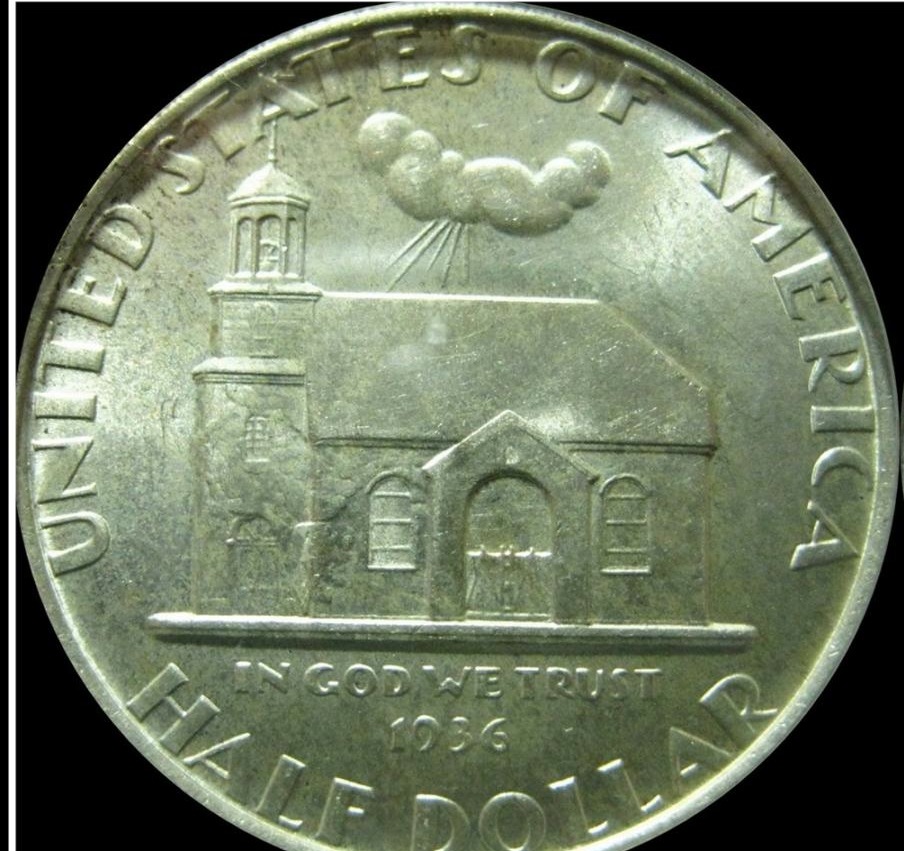
The story behind the coin
In 1638, two small ships nosed up the Delaware River. The Kalmar Nyckel and the Fogel Grip, sent from Sweden and led by Peter Minuit — the same man who had bought Manhattan for the Dutch a decade earlier — landed at the rocks where Wilmington now stands. The settlers built Fort Christina and called the colony New Sweden. It was the first lasting European foothold on what would become Delaware.
New Sweden was tiny and short-lived. The Dutch absorbed it in 1655, the English took over after that, and the Swedish chapter slid quietly into the footnotes. But the people stayed, and so did their faith. By the late 1690s their descendants had built a stone church in Wilmington — Holy Trinity, known to everyone as Old Swedes — that still holds worship today in the building where it began. That is the rare thread the coin was made to celebrate.
Three hundred years after those ships arrived, Delaware wanted a party. Congress obliged. On May 15, 1936, President Franklin Roosevelt signed an act authorizing "not fewer than 25,000 half dollars" to mark the anniversary — one of dozens of such commemorative coins Congress green-lit in the 1930s, a boom that would later be remembered as the golden age of the classic U.S. commemorative.