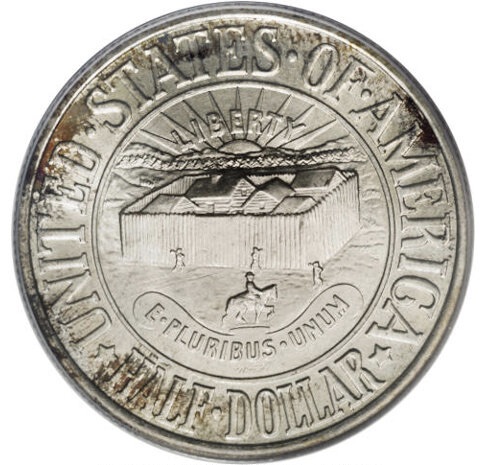
The story behind the coin
In 1936, the United States struck a silver half dollar to celebrate the 300th anniversary of one county in Maine. Not a state. Not a battle. A county — York County, the oldest and southernmost in Maine, founded in 1636.
That sounds like a small thing to put on a national coin. It was. But 1936 was the year the rules of common sense seemed to lapse. Congress authorized more than a dozen new commemorative half dollars that year, for events of ever-shrinking importance — town anniversaries, local fairs, a Rhode Island settlement, an Arkansas centennial, an Albany charter. Collectors at the time joked that you could soon get a coin struck for a county picnic. The York County half dollar is one of the children of that craze.
Here is how it worked, and why it bred so many coins. Congress would authorize a commemorative, and the U.S. Mint would strike it — but a local committee bought the entire run at face value and sold it to the public at a markup. The profit funded the celebration. That made a commemorative coin a fundraising tool, and once enough towns figured that out, the requests poured in. The bill for the York County coin sailed through Congress without opposition and President Franklin D. Roosevelt signed it on June 29, 1936.