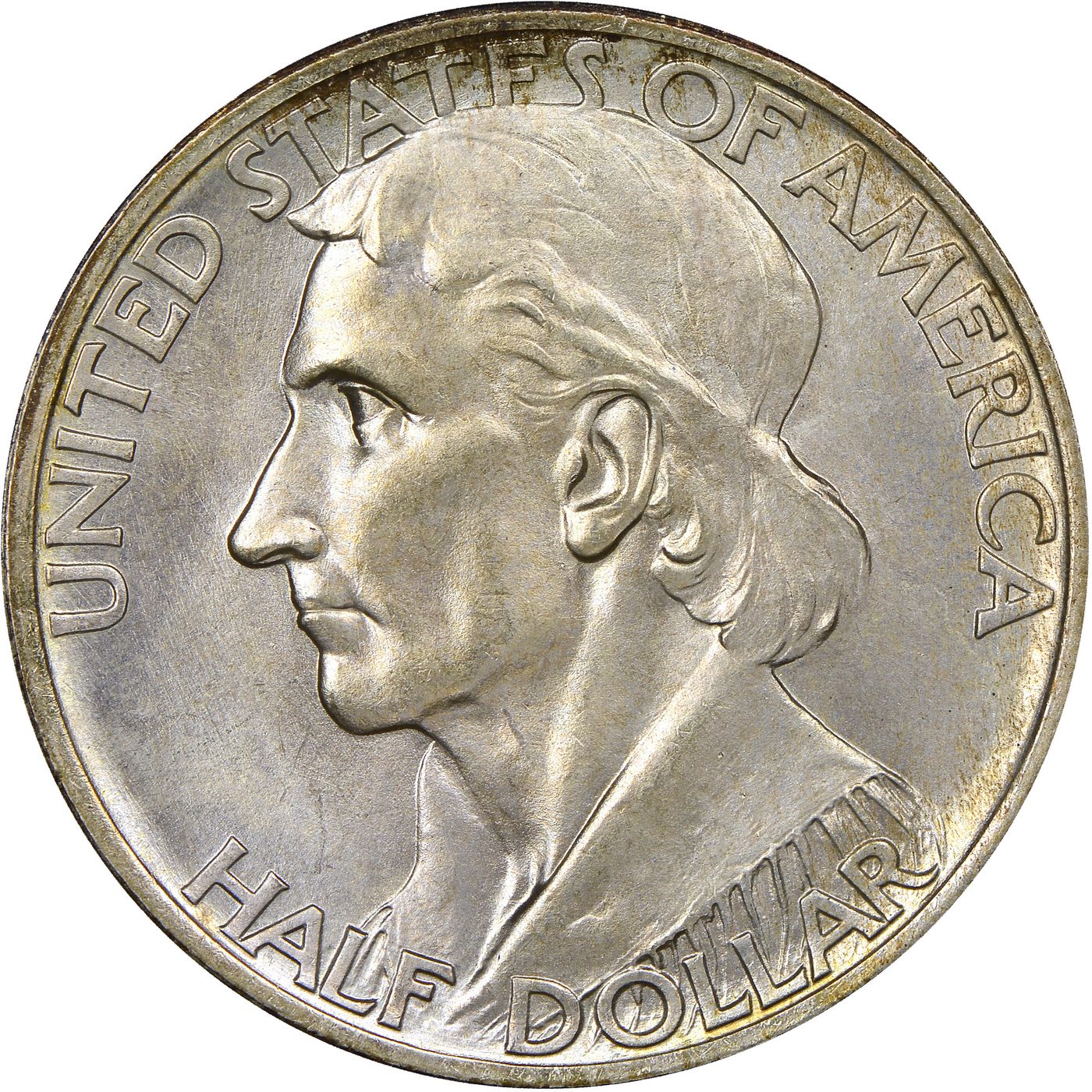
The story behind the coin
Daniel Boone was born in 1734. Two hundred years later, in 1934, a Kentucky commission decided the frontiersman who blazed a path through the Cumberland Gap deserved a coin. Congress agreed. On May 26, 1934, Public Law 73-258 authorized a commemorative half dollar — up to 600,000 of them — to mark his bicentennial.
That much is ordinary. What happened next is not.
In the 1930s, a commemorative coin was a fundraising tool. Congress would authorize a private group to buy a fixed run of half dollars from the Mint at face value, then sell them to the public at a markup — the profit funding a monument, a celebration, a cause. The Boone coins were sold by the Boone Bicentennial Commission, and its secretary, C. Frank Dunn, ran the sales from an office in the Phoenix Hotel in Lexington. The first Boones, struck in Philadelphia in 1934, went out at $1.60 apiece. They sold.
Then the program kept going — for five years, across three mints, in ways that had less and less to do with Daniel Boone and more and more to do with making coins scarce on purpose.