Designer

John Howard Benson

The Newport letter-carver who put Roger Williams on a coin.

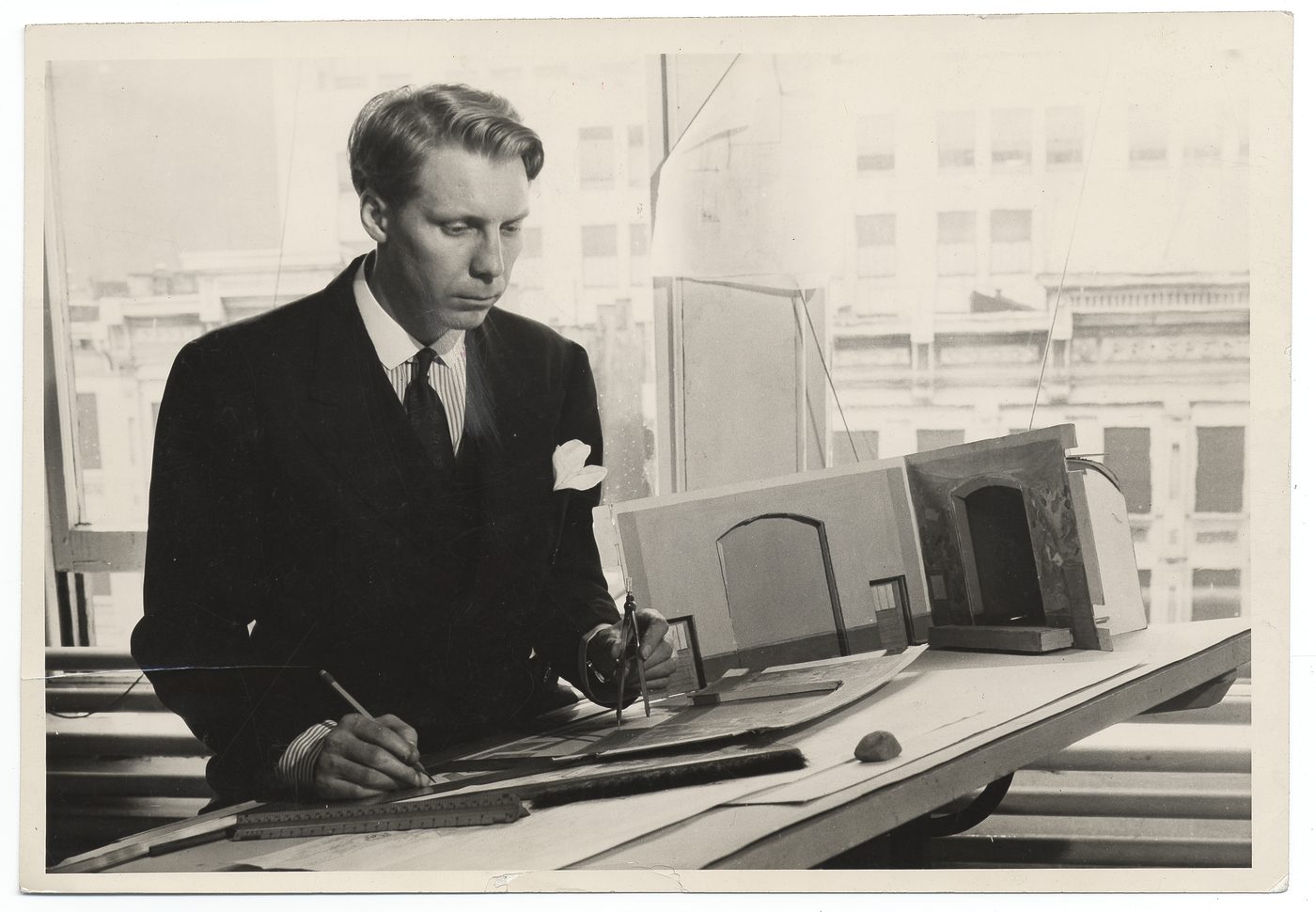
John Howard Benson
Sidney M. Friend, photographer (1938); Federal Art Project, Photographic Division collection, Archives of American Art · public domain · source

Most coin designers were sculptors or painters. John Howard Benson cut letters into stone for a living — and in 1936 that hand carved a US half dollar.

Who he was

John Howard Benson did something few coin designers ever did: he made his living with a chisel and a slab of stone.

He was born in Newport, Rhode Island, on July 6, 1901, and he never really left. He studied at the National Academy of Design and the Art Students League in New York, training as a printmaker and painter. But the old slate gravestones in Newport's burying grounds pulled at him — the deep-cut, hand-drawn letters of colonial carvers — and he turned toward stone.

In 1927 he bought the John Stevens Shop on Thames Street, a letter-carving business founded in 1705 and already one of the oldest continuously running shops in America. Benson didn't just keep it alive. He made it the center of a craft revival, cutting inscriptions by hand at a moment when the rest of the trade had gone to machines and sandblasting. The shop is still carving today, run by his descendants.

The craft

Benson's real subject was the letter itself. He was a calligrapher as much as a carver — he believed the carved letter and the written letter were the same problem solved in two materials, and he taught both.

From 1931 until his death he taught sculpture, calligraphy, and design theory at the Rhode Island School of Design, just up the bay in Providence. He wrote the books that carried his thinking past his own students: The Elements of Lettering (1940, with Arthur Graham Carey) and The First Writing Book (1955), his English translation and facsimile of a 16th-century Italian manual — the first printed guide to the elegant italic "chancery" hand. Generations of letterers learned from both.

His chisel reached far beyond Newport. He carved for the Metropolitan Museum of Art, Phillips Exeter Academy, and the Groton School, and designed RISD's own seal and diploma. He is also credited with the inscriptions on the Marine Corps War Memorial near Arlington — the Iwo Jima statue — dedicated the year before his death.

The coin grew out of this same hand. When the Rhode Island Tercentenary needed a designer in 1935, RISD's Royal B. Farnum handed the job to Benson and Carey for a plain reason: the two men had already cut dies for small medals. A coin die, after all, is just lettering and relief carved into metal — Benson's day job, shrunk to the size of a thumbnail.

Key facts

Born
July 6, 1901 — Newport, Rhode Island
Died
February 23, 1956 — Newport, Rhode Island
Nationality
American
Known for
Stone letter-carving, calligraphy, the John Stevens Shop
Coin
Rhode Island Tercentenary half dollar (1936), with Arthur Graham Carey
Taught
Rhode Island School of Design, 1931–1956
Books
The Elements of Lettering (1940); The First Writing Book (1955)
Other work
Marine Corps War Memorial inscriptions; RISD seal and diploma

Questions people ask

Who designed the Rhode Island Tercentenary half dollar?

John Howard Benson and Arthur Graham Carey designed it together, chosen in 1935 because both had already cut dies for small medals. The 1936 coin shows Roger Williams in a canoe greeting a Narragansett man — the obverse, or heads side — with Rhode Island's anchor of hope on the reverse.

What was John Howard Benson best known for?

Hand-carved stone lettering. He owned and revived the John Stevens Shop in Newport, a letter-carving business founded in 1705, and was one of America's most respected calligraphers and lettering teachers. The half dollar was a single coin in a long carving career.

What is the John Stevens Shop?

A stone-carving shop on Thames Street in Newport, Rhode Island, founded in 1705 and among the oldest continuously operating businesses in the United States. Benson bought it in 1927; his descendants still run it, cutting inscriptions by hand.

Did Benson design any other US coins?

No. The 1936 Rhode Island Tercentenary half dollar is his only United States coin. His name is far better known in stone carving and calligraphy than in numismatics.

Sources