The story behind the coin
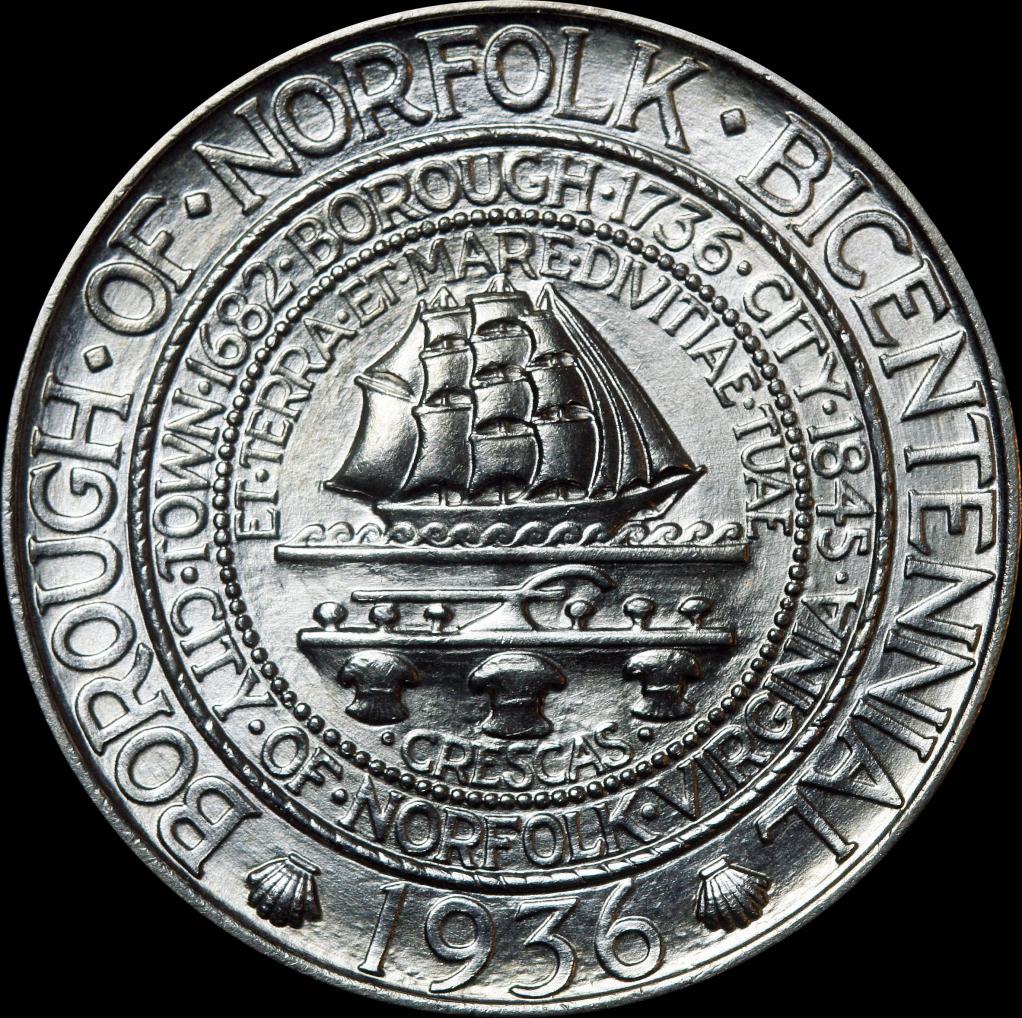
Norfolk wanted a coin, and Norfolk wanted it to say everything.
The city's boosters were chasing a wave. In the mid-1930s, dozens of American towns talked Congress into authorizing their own commemorative half dollars — coins struck by the U.S. Mint but sold to the public at a markup, with the profit going to a local cause. Oregon, Boone, Texas, Arkansas: the half dollar became a souvenir of civic pride and, often, a fundraising scheme. Norfolk wanted in.
But Norfolk's path was a slog. An early effort was watered down by a congressional committee into a bill for a medal, not a coin — a far less valuable thing to sell. It took a second run at Congress to get it right. The authorizing act finally passed on June 28, 1937, letting the Mint strike up to 25,000 silver half dollars.
Here is the quiet oddity. The coin is dated 1936. It was struck in 1937. And the year it was actually made — 1937 — appears nowhere on it. The date was fixed by the people who wanted it before the law that allowed it had even passed.