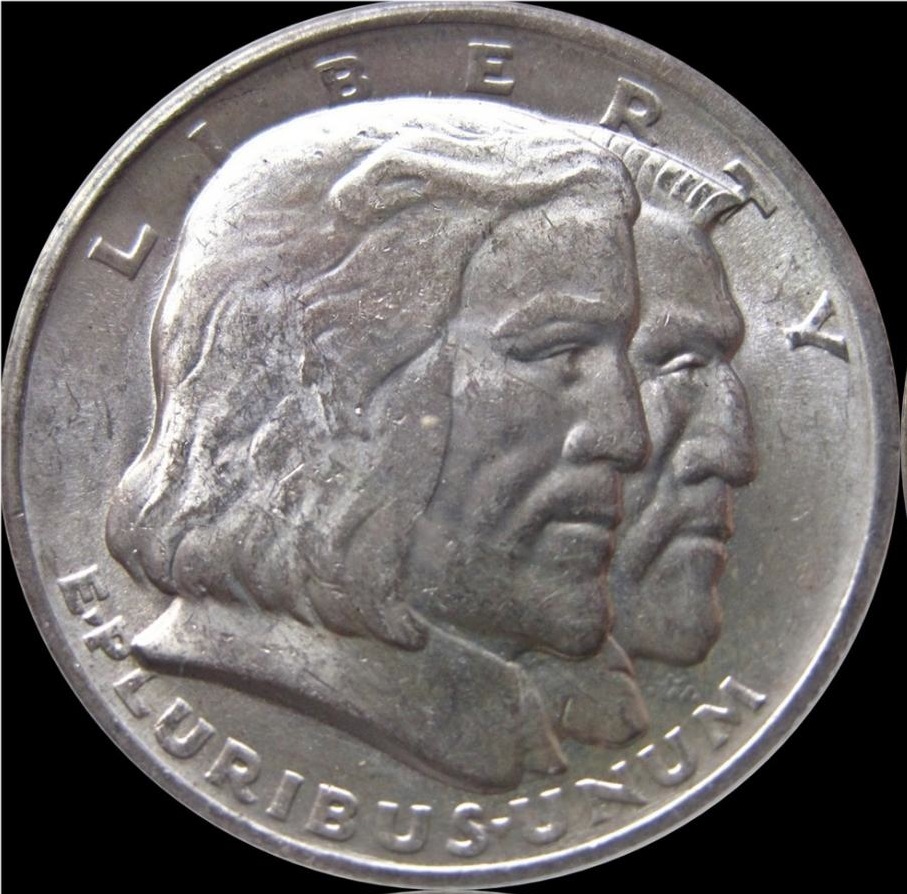
The story behind the coin
In 1636, a handful of Dutch settlers put down roots in what is now Flatlands, Brooklyn — the first lasting European foothold on Long Island. Three hundred years later, in 1936, the people of Long Island wanted to mark the moment the way a lot of American communities did that decade: with a silver half dollar of their very own.
The 1930s were the high-water mark for this idea. Congress would pass a law letting a local committee buy a run of special half dollars at face value — fifty cents apiece — straight from the Mint, then sell them to the public at a premium and pocket the difference to fund the festivities. The Long Island Tercentenary Committee got its law on April 13, 1936, signed by President Franklin Roosevelt.
There was just one problem. The committee, as one account put it, got off to a late start. The big anniversary celebrations happened in May. The coins were not struck until August — and only reached buyers well after the bunting had come down. A commemorative coin that missed the thing it commemorated.