Designer

Chester Beach

The San Francisco jeweler who became one of America's great medallists — and sculpted four commemorative half dollars.

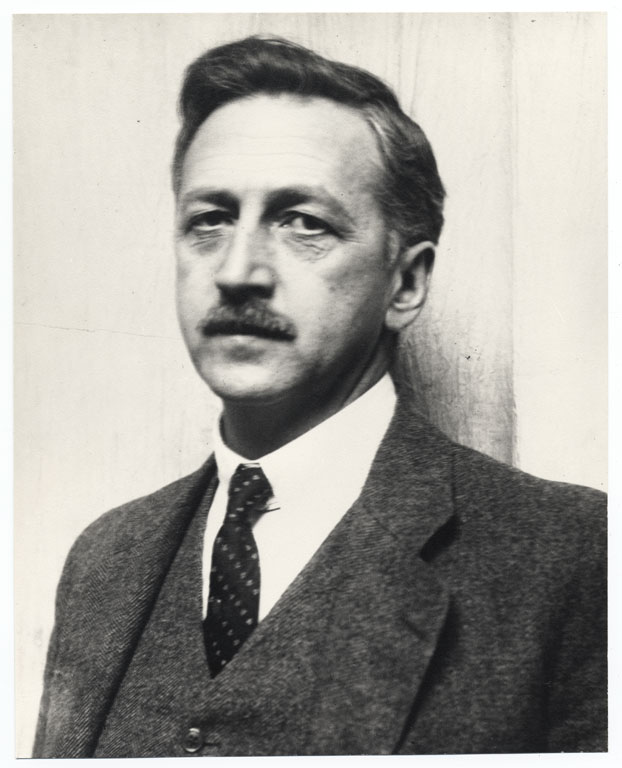
Chester Beach
Unidentified photographer (Smithsonian Archives of American Art) · public domain · source

He started at a jeweler's bench in San Francisco and ended up in the halls of the National Academy. Along the way, Chester Beach put his hand on four US commemorative coins — two of them now among the rarest classic commemoratives ever struck.

Who he was

Chester Beach was born in San Francisco on May 23, 1881, and learned his trade close to the metal. Before he was a sculptor, he was a jewelry designer — first training at the California School of Mechanical Arts, then working for the San Francisco firm Shreve & Company around the turn of the century. Small, precise, three-dimensional work was in his hands from the start.

In 1903 he moved to New York, and the next year he sailed for Paris. There he studied at the Académie Julian under the sculptor Raoul Verlet and at the École des Beaux-Arts — the standard pilgrimage for an ambitious American artist of his generation. He came home in 1907 and opened a Manhattan studio he would keep for the next forty-five years.

The recognition followed. Beach was elected to the National Academy of Design — by one account the youngest member at the time — and he served as president of the National Sculpture Society in 1926 and 1927. In 1946 the American Numismatic Society awarded him its J. Sanford Saltus Medal, the field's highest honor for medallic art. He died in Brewster, New York, on August 6, 1956.

The craft

Beach worked in two registers most sculptors keep apart: the monumental and the miniature. He made full-size public sculpture — the Fountain of the Waters at the Cleveland Museum of Art, statues for the 1915 Panama-Pacific International Exposition, and a set of portrait busts for the Hall of Fame for Great Americans in New York. But his lasting fame is in low relief, the art of making a face or a ship rise a fraction of a millimeter off a flat disc.

That low-relief skill is what coins demand. A coin is a sculpture you can stack — every line has to read at the size of a fingernail and survive being struck by the millions. Beach was fluent in it. His medal work ran from the 1909 Hudson-Fulton Celebration medal to the 1919 Peace of Versailles medal for the American Numismatic Society, and in 1937 he was the sixteenth artist chosen to issue a medal for the Society of Medalists — a who's-who of the craft.

His coin commissions came through that medallic reputation, and often through a single connection: the sculptor James Earle Fraser — the man who designed the Buffalo nickel — sat on the federal Commission of Fine Arts and steered work toward artists he trusted. It was Fraser who brought Beach in to execute the first of his four half dollars.

Key facts

Born
May 23, 1881, San Francisco, California
Died
August 6, 1956, Brewster, New York
Nationality
American
Trained
California School of Mechanical Arts; Académie Julian and École des Beaux-Arts, Paris
Role
Sculptor and medallist
Notable coins
Monroe Doctrine Centennial (1923), Lexington–Concord Sesquicentennial (1925), Hawaiian Sesquicentennial (1928), Hudson Sesquicentennial (1935) half dollars
Other works
Fountain of the Waters (Cleveland Museum of Art); Hall of Fame portrait busts; Society of Medalists issue No. 16 (1937)
Honors
President, National Sculpture Society (1926–27); J. Sanford Saltus Medal, American Numismatic Society (1946)

The four coins

Beach's first coin, the 1923-S Monroe Doctrine Centennial half dollar, also gave him his only public controversy. The obverse — the heads side — pairs the conjoined profiles of James Monroe and John Quincy Adams. The reverse turns the two American continents into two reclining female figures, meeting at the Panama Canal. An artist named Raphael Beck wrote to the Mint complaining that the design copied a Pan-American seal he had created back in 1899. The Mint stood by Beach, and the dispute faded — but later historians, including Q. David Bowers, have noted the resemblance is hard to wave away. Some 274,077 were struck in San Francisco.

His 1925 Lexington–Concord Sesquicentennial half dollar is the most-seen of the four, with 162,099 struck at Philadelphia. Here Beach was adapting, not inventing: the obverse is Daniel Chester French's famous 1874 Minute Man statue — a farmer with his coat over the plow and a rifle in hand — reduced to coin scale, with the Old Belfry of Lexington on the reverse. The coins sold for a dollar each in wooden boxes painted with the statue and the belfry.

The last two are the prizes. For the 1928 Hawaiian Sesquicentennial half dollar, Beach worked from sketches by the Honolulu artist Juliette May Fraser, turning her drawings of Captain James Cook and a Hawaiian chief into the plaster models the Mint needed. Only 10,008 were struck, with 10,000 offered to the public — making it one of the rarest and most expensive classic US commemoratives. The 1935 Hudson Sesquicentennial half dollar, which Beach designed outright, shows Henry Hudson's ship the Half Moon on one side and the city of Hudson's seal — Neptune riding a whale — on the other. It too had a mintage of just 10,008, snapped up mostly by dealers, and it remains a sought-after key date.

Questions collectors ask

Which US coins did Chester Beach design?

Four classic commemorative half dollars: the 1923 Monroe Doctrine Centennial, the 1925 Lexington–Concord Sesquicentennial, the 1928 Hawaiian Sesquicentennial, and the 1935 Hudson Sesquicentennial. He designed three of them and, on the Hawaiian issue, prepared the plaster models from another artist's sketches.

Did Chester Beach really design the Hawaiian half dollar?

Partly. The original sketches were by the Honolulu artist Juliette May Fraser; Beach made the three-dimensional plaster models the Mint used to cut the dies. So the imagery is Fraser's and the sculpture is Beach's — a common division of labor on commemorative coins.

Was the Monroe Doctrine half dollar copied from someone else's work?

An artist named Raphael Beck accused Beach of basing the reverse — the two American continents as female figures — on a Pan-American seal Beck made in 1899. The Mint defended the design, but later historians have noted the resemblance is striking. The claim was never formally resolved.

Why are the Hawaiian and Hudson half dollars so valuable?

Both had tiny mintages — about 10,008 coins each. The Hawaiian issue sold out fast at a then-high $2 price; the Hudson issue was bought up mostly by dealers. Scarcity from the moment of issue, not survival attrition, is what makes them key dates today.

What else is Chester Beach known for besides coins?

He was a leading American sculptor and medallist — president of the National Sculpture Society, a National Academician, and a Saltus Medal winner. His larger works include the Fountain of the Waters at the Cleveland Museum of Art and portrait busts for the Hall of Fame for Great Americans.

Sources