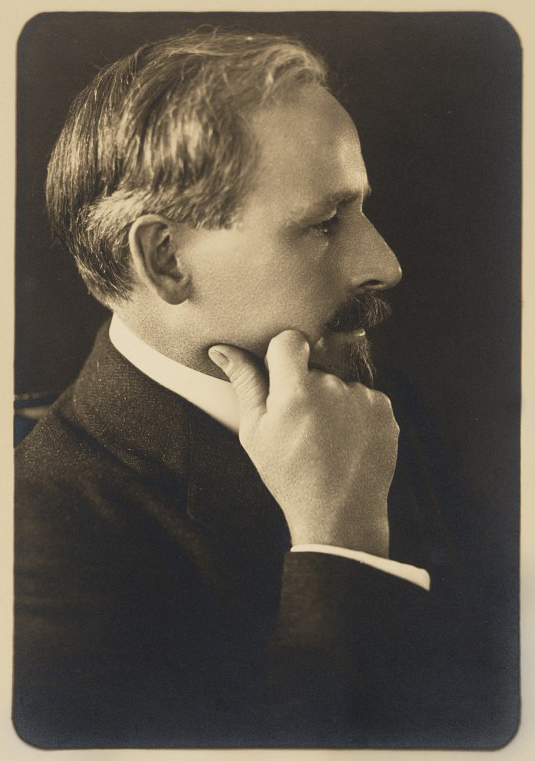
The boy who arrived at fourteen
Adolph Alexander Weinman was born on December 11, 1870, in Durmersheim, a village near Karlsruhe in southwestern Germany. In 1885, at fourteen, he sailed to the United States with his mother. He arrived speaking little English and with no money behind him.
What he had was a gift for shaping things. As a teenager he apprenticed to Frederick Kaldenberg, a New York carver of ivory and meerschaum pipes — close, patient work that trained his hands. At night he took classes at the Cooper Union, the free art and engineering school in Manhattan, and later at the Art Students League.
Then came the doors that mattered. Weinman went to work in the studios of the leading American sculptors of the age — Charles Niehaus, Olin Warner, Daniel Chester French (who would later carve the seated Lincoln in the Lincoln Memorial), and, above all, Augustus Saint-Gaudens. Saint-Gaudens was the towering figure of American sculpture; his $20 gold "Double Eagle" of 1907 is still called the most beautiful coin the country ever made. Weinman learned the Beaux-Arts tradition — graceful, idealized, classically grounded figures — straight from the master.
In 1904 he opened his own studio in Forest Hills, New York. He was now a sculptor in his own right. The coins were still a dozen years away.