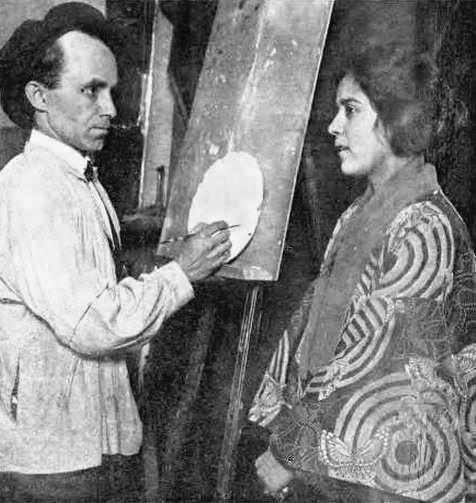
Who he was
Anthony de Francisci arrived in New York in 1905, a teenager from Palermo, Sicily, with the anglicized version of his birth name — Antonio — and not much else. Sixteen years later his work was in the pocket of nearly every American. That is a steep climb, and he made it with his hands.
He learned sculpting the slow way: as a studio assistant and student to the men who were already shaping America's coins. He trained under James Earle Fraser — the sculptor of the Buffalo nickel — and worked alongside Hermon Atkins MacNeil and Adolph Alexander Weinman, two more of the great medallic artists of the age. By his thirties he was an academician of the National Academy of Design and a Fellow of the National Sculpture Society. He had paid his dues.
Then, in late 1921, the Commission of Fine Arts ran a private contest. The country wanted a coin to mark the end of the Great War — a "peace dollar" to replace the old Morgan dollar. Eight sculptors were invited, several of them de Francisci's former teachers and far more famous than he was. He was the youngest, at 34, and the only one of the group with almost no real coin design behind him. His one prior Mint job — adapting the 1920 Maine commemorative half dollar — was work he later admitted he did "not consider it very favorably."
He won anyway. By his wife's own account he had bet money that he would lose.