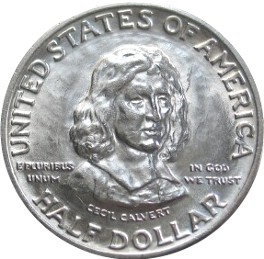
The story behind the coin
In March 1634, two small ships — the Ark and the Dove — landed English settlers on the shore of what would become Maryland, founding the colony at St. Mary's City. Three hundred years later, the state wanted a coin to mark the moment.
The timing was no accident. By 1934 the United States was deep in the Great Depression, and commemorative half dollars had become a favorite way for towns, states, and committees to raise money. The deal was simple: Congress would authorize a special coin, the Mint would strike it at face value, and a local sponsor would sell it to collectors at a premium — keeping the difference. The coin was, in effect, a fundraiser with a portrait on it.
Maryland's two senators, Millard Tydings and Phillips Lee Goldsborough, introduced the bill on March 6, 1934. It met no opposition, and President Franklin Roosevelt signed it into law on May 9 — making this the first commemorative coin authorized under his administration. Congress capped the run at 25,000 pieces and handed exclusive sales rights to the Maryland Tercentenary Commission.