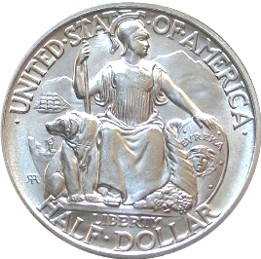
The story behind the coin
In the depths of the Great Depression, San Diego decided to throw a party. The California-Pacific International Exposition opened in Balboa Park in 1935 — a sprawling world's fair on more than a thousand acres, meant to pull tourists, jobs, and optimism into a city that badly needed all three.
Fairs cost money. So the organizers reached for a trick other expositions had used: ask Congress for a commemorative coin. The plan was simple and a little cheeky. The Treasury would sell the fair's promoters half dollars at face value — 50 cents each — and the promoters would sell them to fairgoers at a markup, pocketing the difference to fund the show.
President Franklin Roosevelt signed the authorizing act on May 3, 1935, clearing up to 250,000 half dollars with no opposition in either chamber. On paper, free money. In practice, it became one of the great cautionary tales of American commemorative coinage.
The coins simply didn't sell. The Bank of America's San Diego branch handled distribution, and of the first batch only a fraction moved. The rest came back to the Mint — to be melted.