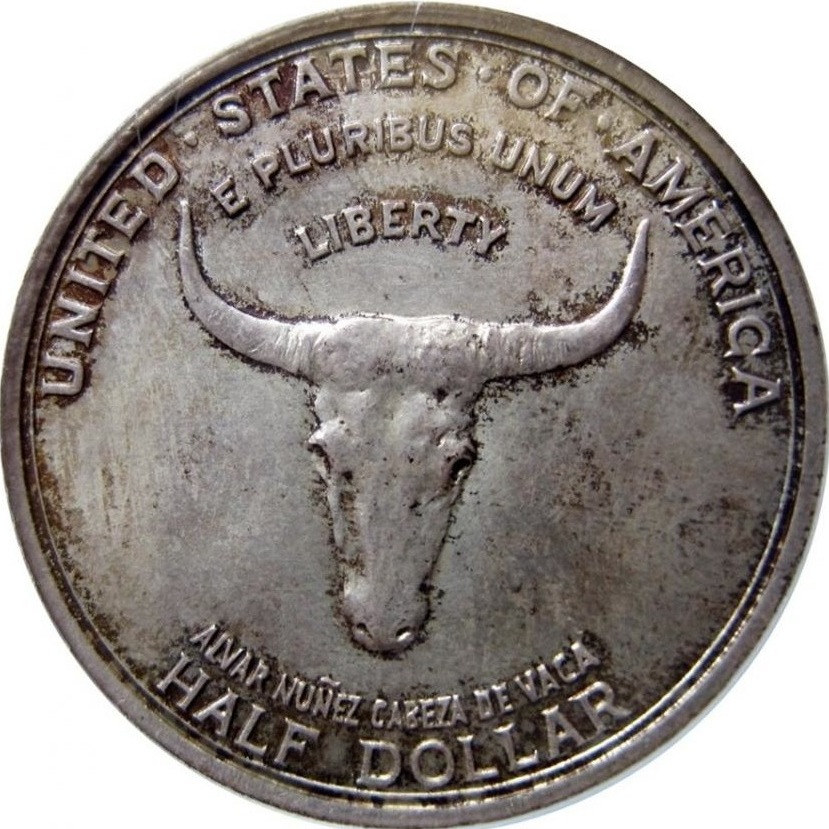
The coin one man willed into existence
Most U.S. coins are born from acts of state. This one was born from the ambition of a single coin dealer.
His name was Lyman William Hoffecker — "L.W." on the records — and in the mid-1930s he was, by his own account, the only coin collector in El Paso, Texas. The 1930s were a boom time for commemorative half dollars. A local committee could lobby Congress to authorize a special coin, buy the whole mintage from the Mint at face value, and resell it to collectors at a premium. The profits funded a monument, a celebration, sometimes just the promoters. It was a national craze, and Hoffecker wanted in.
So he found an anniversary. He latched onto Álvar Núñez Cabeza de Vaca, the Spanish explorer who, after a shipwrecked expedition, wandered the Gulf Coast and the Southwest from roughly 1528 to 1536 — one of the first Europeans to cross what is now the American South. Hoffecker tied the coin to a 400th anniversary and routed the explorer's path to end in his own hometown of El Paso.
There was just one problem. The dates didn't line up — 1935 marked no real milestone in Cabeza de Vaca's travels — and the explorer never reached El Paso at all. The route on the coin was, to put it plainly, invented. But Hoffecker's lobbying was smooth, and in the rush of the commemorative boom nobody in Congress challenged it. President Franklin D. Roosevelt signed the authorizing act on June 5, 1935. The bill had passed both houses without opposition.