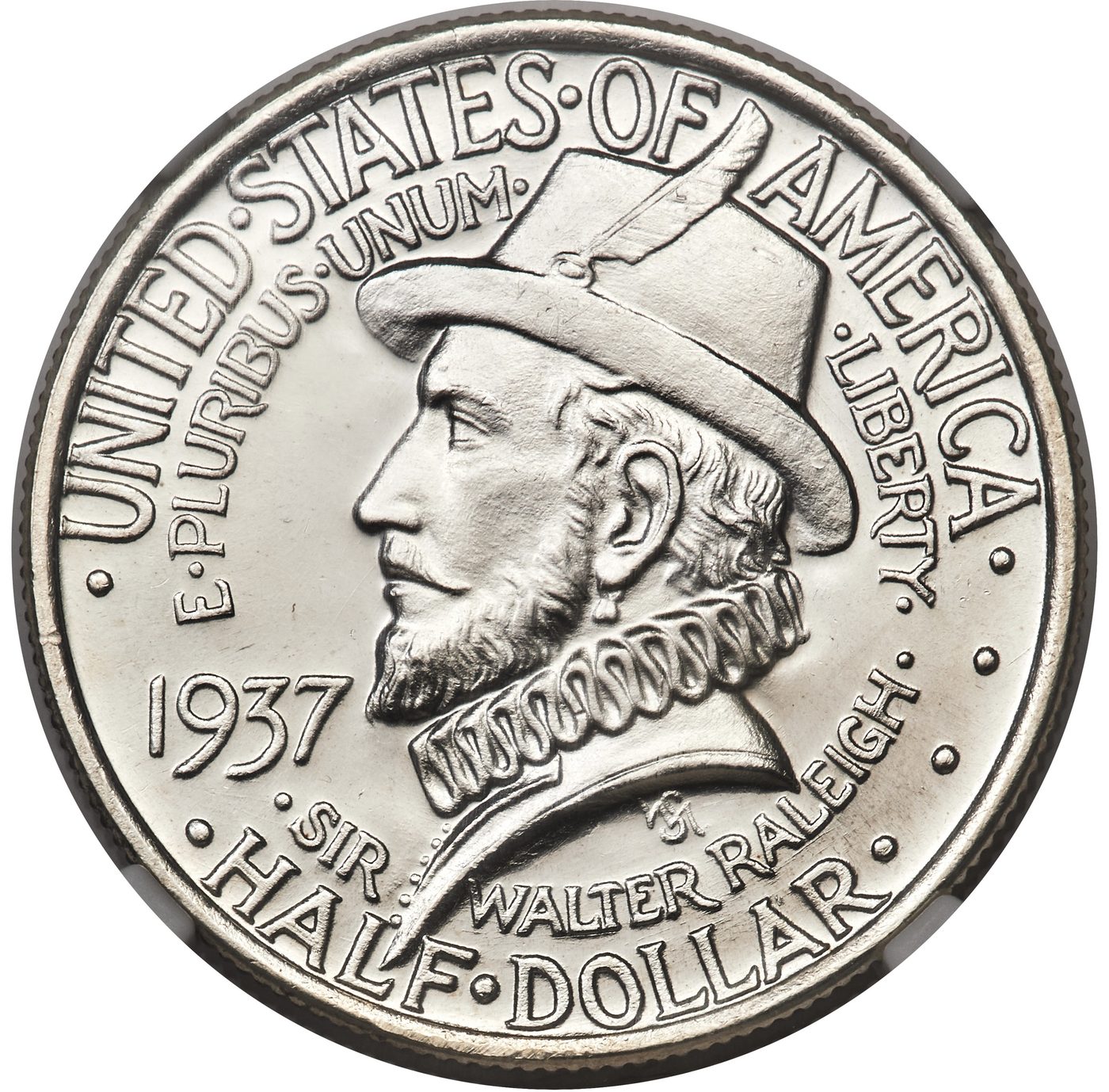
The story behind the coin
In 1587, more than a hundred English men, women, and children landed on Roanoke Island, off the coast of what is now North Carolina, hoping to build England's first permanent foothold in the New World. Their leader, John White, sailed back to England for supplies. War with Spain stranded him there for three years. When he finally returned in 1590, the settlement was empty. The colonists were gone — no bodies, no struggle, just a word carved into a post: CROATOAN. No one has ever proven what became of them. History remembers them as the Lost Colony.
In 1937, the 350th anniversary of that doomed landing, North Carolina wanted a monument the country could hold in its hand. The result was this half dollar — a 50-cent silver coin authorized by Congress and signed into law by President Franklin D. Roosevelt on June 24, 1936. Local groups, the Roanoke Memorial Association and the Roanoke Island Historical Association, would buy the coins from the Mint at face value and resell them to collectors and tourists, with the markup funding the anniversary celebrations.
This was the heyday of the U.S. commemorative coin — special-issue coins struck not for spending but for selling, each one a tiny fundraiser for a cause, a city, or an anniversary. Dozens poured out in the mid-1930s. The Roanoke coin arrived just as that boom was cooling, a timing problem that would shape its whole story.