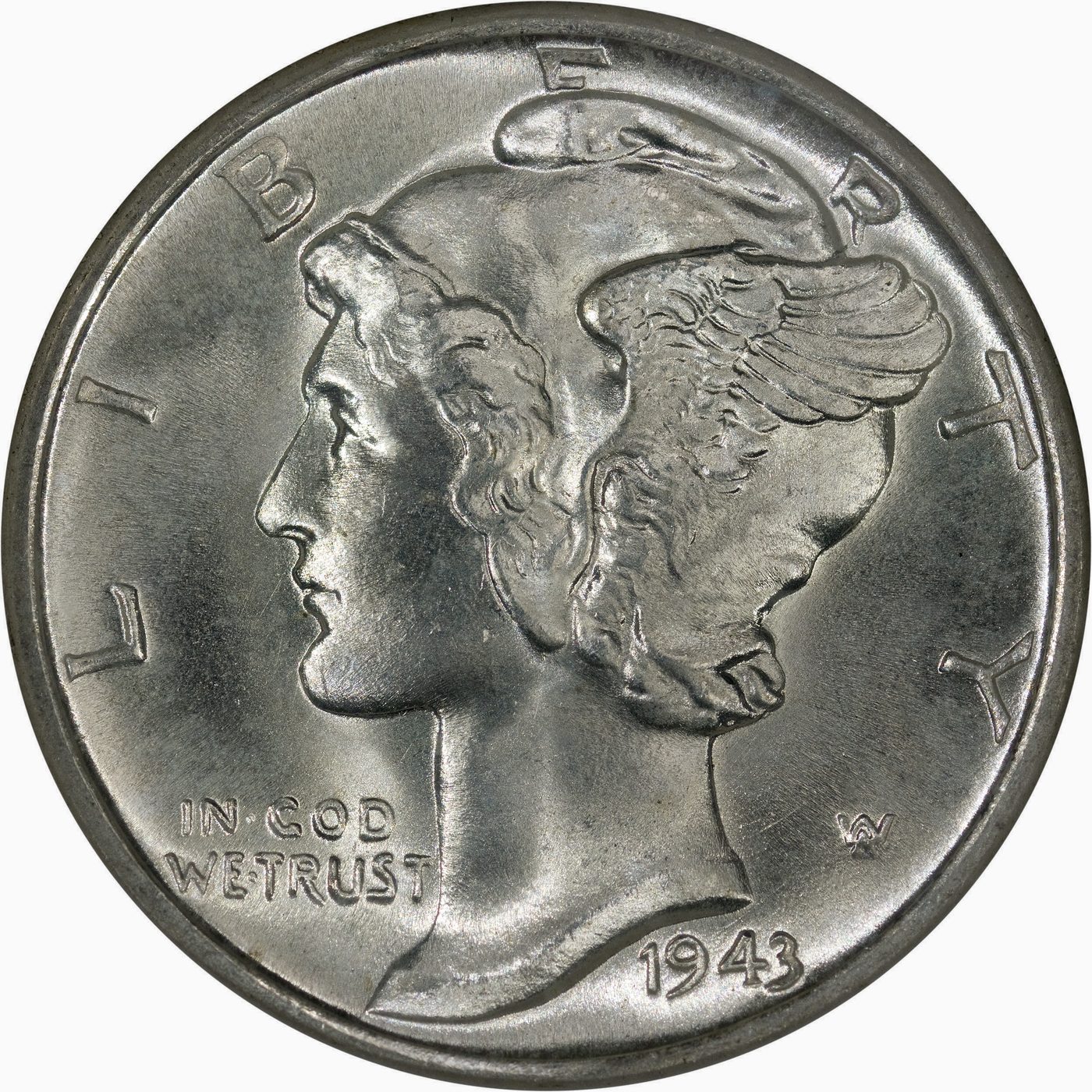
The story behind the coin
By 1915 the dime in your pocket was old news. The Barber dime — flat, sensible, named for the Mint engraver who drew it — had been struck since 1892. A quirk of U.S. law let the Mint redesign a coin without asking Congress once a design had run twenty-five years. The clock had nearly run out, and the country wanted something better.
This was the height of what collectors now call the Renaissance of American Coinage — a roughly fifteen-year stretch when the Mint, pushed by President Theodore Roosevelt's earlier crusade for art on money, replaced its plain Victorian designs with the work of America's finest sculptors. In 1915 Mint Director Robert W. Woolley ran a quiet competition among three of them — Adolph Weinman, Hermon MacNeil, and Albin Polašek — to redesign the dime, quarter, and half dollar all at once.
Weinman won twice. His designs were chosen for the dime and the half dollar (the Walking Liberty half). The new dime was released on October 30, 1916. It would outlast the war that was already raging in Europe, the boom that followed, and the Depression that followed that.