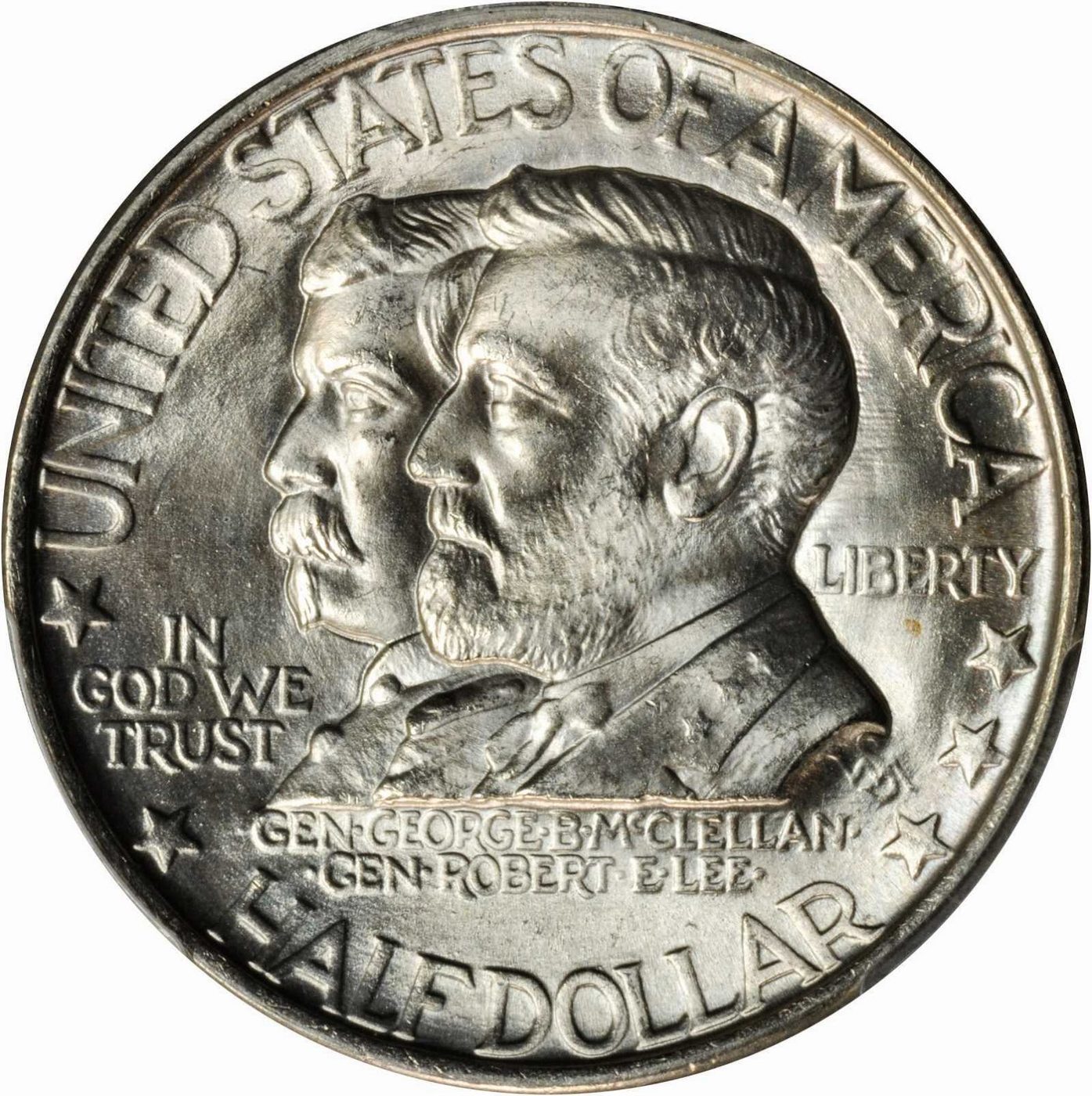
The story behind the coin
On September 17, 1862, near a sleepy Maryland creek called the Antietam, more Americans were killed or wounded than on any other single day in the nation's history. By nightfall, roughly 23,000 men lay dead, dying, or maimed. The fighting was a tactical draw, but it stopped Robert E. Lee's first invasion of the North cold — and that was enough.
The aftermath changed the war. Days later, with a Union army no longer in retreat, Abraham Lincoln issued the preliminary Emancipation Proclamation. The battle that fed the bloodiest day in American history also opened the door to ending slavery.
Seventy-five years later, the people of Washington County, Maryland — where the fields are still scarred — wanted to mark the anniversary. So they did what dozens of American towns did in the 1930s: they asked Congress for a coin. On June 24, 1937, lawmakers authorized a commemorative half dollar, capped at 50,000 pieces, all of one design, all from one mint. The Washington County Historical Society would sell them and keep the proceeds — the standard deal for these coins, where a local group buys the issue from the Mint at face value and sells it at a markup to fund a cause.