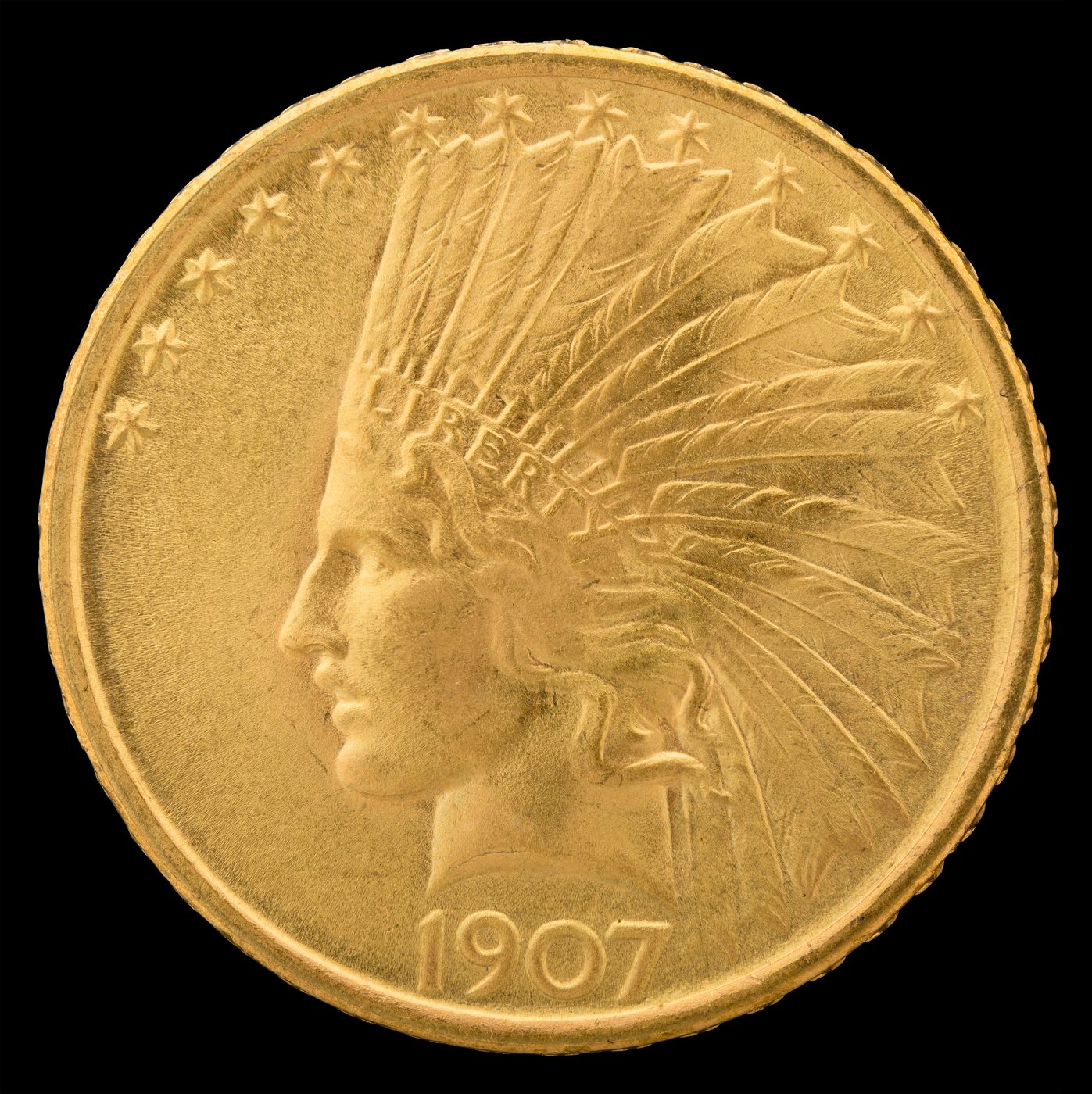
The story behind the coin
Theodore Roosevelt hated the money in his own pocket. He thought U.S. coins were dull, flat, and embarrassing next to the coins of ancient Greece. So around 1904 he did something no president had really tried: he set out to redesign the nation's coinage himself, and he hired the most celebrated sculptor in America to do it.
That sculptor was Augustus Saint-Gaudens — the man behind the Sherman Monument in New York and some of the finest public statuary of the age. Roosevelt called the whole project his "pet crime," and he meant it fondly. He wanted beauty, and he wanted it badly enough to push past the Mint's own engravers to get it.
Saint-Gaudens drew up two gold coins for Roosevelt: the $20 double eagle and the $10 eagle (an "eagle" was simply the old name for the ten-dollar gold piece). The double eagle became the most famous American coin ever struck. The eagle — the coin on this page — is its quieter, stranger sibling: the one with Liberty in a feathered war bonnet.
There was a deadline of a different kind hanging over the work. Saint-Gaudens was dying of cancer. He finished the models, handed the fight with the Mint to his assistant, and died on August 3, 1907 — before a single one of his eagles reached the public. The coin you can hold today is, in a real sense, the last thing he made.