Era
When Sculptors Remade American Money
1907–1921: the years U.S. coins stopped being mint-clerk work and became art.
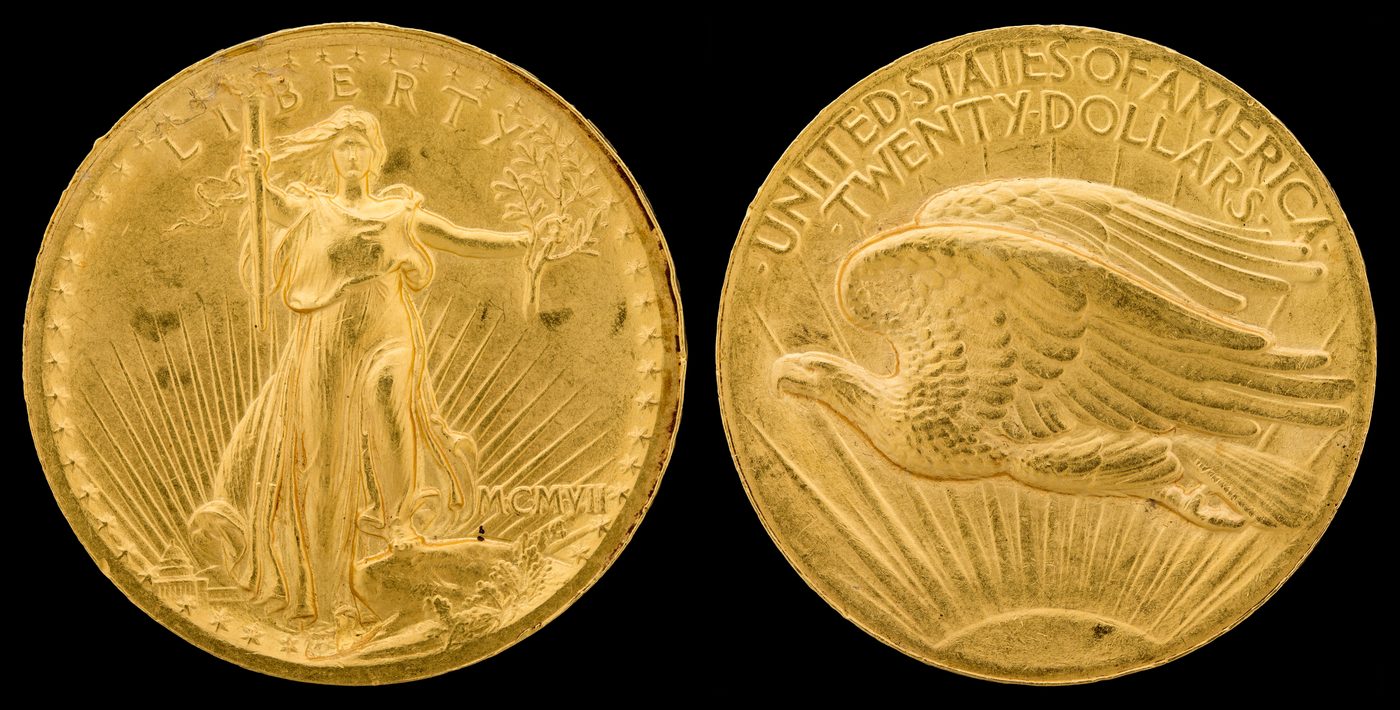
In 1904 the President of the United States looked at the change in his pocket and called it "artistically of atrocious hideousness." Then he did something no president had done before — he handed the nation's coinage to its greatest sculptor. What followed, in barely a decade, were the most beautiful coins America has ever made.
The world then
America at the turn of the century was rich, loud, and newly confident. The Civil War was two generations past. Factories ran day and night, immigrants poured through Ellis Island, and the country was beginning to think of itself as a great power rather than a frontier.
Its money did not match the mood. For decades, the coins in everyday pockets had been designed by Mint employees — competent engravers, not artists. The dime, quarter, and half dollar all wore the same stiff profile of Liberty by the Mint's chief engraver, Charles Barber. They were fine machines. Nobody called them beautiful.
Into this walked Theodore Roosevelt — a president with strong opinions about almost everything, including, it turned out, the change in his pocket. In December 1904 he wrote to his Treasury secretary that the state of the coinage was "artistically of atrocious hideousness," and asked whether a sculptor might be hired to fix it. He had a particular man in mind. The project became something he reportedly called his "pet crime" — a phrase collectors love to quote, though the story behind it has worn smooth with retelling.
The money
Roosevelt's first move was a quiet legal one. A coin's design can normally only be changed by act of Congress — unless it has been in use for 25 years, in which case the Treasury can change it on its own. That loophole, plus the cent and the gold coins coming due, gave Roosevelt room to act without asking permission. He used it.
He hired Augustus Saint-Gaudens, the finest American sculptor of the age, and pointed him at the coins he could legally touch. Saint-Gaudens looked, as Roosevelt did, to the coins of ancient Greece — struck in high relief, meaning the design rises dramatically off the surface, almost like a small sculpture rather than a stamp. For the twenty-dollar gold piece, the Double Eagle, he gave America a full-length Liberty striding out of the dawn, torch in one hand, olive branch in the other. The reverse: an eagle in flight over a rising sun. It is, by wide agreement, the most beautiful coin the United States has ever produced.
It was also a nightmare to make. The first version stood so high off the blank that the Mint's presses needed up to nine strikes to bring up the full design — hopeless for mass production, and the coins wouldn't even stack flat. Chief engraver Charles Barber, who answered to physics and deadlines rather than to art, fought the high relief at every turn and eventually flattened it down to something a press could strike in one blow. Saint-Gaudens never saw the coin circulate. He died of cancer on August 3, 1907, months before his Double Eagle reached the public. Only 12,367 of the cherished 1907 High Relief pieces were struck before reality won.
One more fight followed him. Saint-Gaudens' design left off the motto IN GOD WE TRUST — Roosevelt thought stamping God's name on money came close to sacrilege. The public disagreed loudly, and on May 18, 1908 Congress ordered the motto restored. Every U.S. gold coin struck after mid-1908 carried it again.
But the dam had broken. Over the next decade, one denomination after another was handed to an outside sculptor — and the change reached coins ordinary people actually carried:
- The cent went to Victor David Brenner, a Saint-Gaudens protégé, who in 1909 put Abraham Lincoln on it. It was the first time a real, identifiable person — let alone a president — had appeared on a regular U.S. coin.
- The nickel went to James Earle Fraser in 1913 — a Native American profile on the front (the obverse, the heads side), an American bison on the back. No allegory, no Liberty in a toga. Just America.
- The dime, quarter, and half dollar were all redesigned at once in 1916, by two more sculptors, when the Barber coins finally hit their 25-year limit.
In a single decade, the loose change of the United States went from clerk-work to a gallery.
The coins of this era
If you lay the whole set out on a table, you can read the story in four rows — the before, the gold, the pocket change, and the long echo.
The "before." The first row is what the renaissance swept away. The Barber dime, Barber quarter, and Barber half dollar — Charles Barber's stiff Liberty heads, struck from 1892 — and the Liberty Head "V" nickel beside them. The Indian Head cent, James B. Longacre's small bronze portrait that ran for half a century, ended in that same year of 1909, the very moment Brenner's Lincoln took its place. Solid, sensible, forgettable — they are here because you cannot feel the leap forward without seeing what came before. Each was eligible for replacement only after 25 years of service, and in 1916 the Barber silver trio hit that mark and was retired all at once.
The gold — Roosevelt's coins. This is where the revolution started, because gold was what the president could legally touch: the Saint-Gaudens Double Eagle ($20) and its breathtaking high-relief first version, and Saint-Gaudens' Indian Head Eagle ($10). Then the strangest experiment of the whole era — Bela Lyon Pratt's Indian Head quarter eagle ($2.50) and Indian Head half eagle ($5), the only U.S. coins ever struck with the design sunk into the surface rather than raised above it (see the section below). Together they remade every circulating gold denomination in American pockets.
The pocket change — the renaissance reaches everyone. These are the coins ordinary people actually carried: the Lincoln cent, the Buffalo nickel, and the 1916 trio — the Mercury dime, the Standing Liberty quarter, and the Walking Liberty half dollar. One thread runs through every piece: a working sculptor, not a Mint clerk, was finally allowed to decide what America looked like.
The commemoratives — the era in miniature. The same impulse spilled over into the special coins struck for fairs and anniversaries. The Lewis and Clark Exposition gold dollar (1904–1905) actually predates the renaissance — it's a Barber design from the very year Roosevelt wrote his famous letter, a last gasp of the old order in commemorative form. A decade later, at the height of the wave, the Panama-Pacific quarter eagle (1915-S) celebrated the opening of the Panama Canal with a Columbia riding a seahorse — Barber and Morgan, the Mint's old guard, working in the new ambitious key.
The long echo. The renaissance did not end cleanly in 1921 — it kept reappearing. Its last act in its own time was a coin born of the same ambition that started it: the Peace dollar of 1921, by Anthony de Francisci, struck in the same dramatic high relief as the Saint-Gaudens gold — and it met the same fate, flattened for 1922 by the Mint's old chief engraver George T. Morgan, whose own Morgan dollar had just made its final bow that same year. Decades later the designs proved simply too good to retire: in 2001 Fraser's nickel returned as the American Buffalo commemorative silver dollar; in 2006 it was struck in pure gold as the American Gold Buffalo; and in 2009 the Mint did what the 1907 presses never could, reviving Saint-Gaudens' original models as the one-ounce 24-karat Ultra High Relief Double Eagle. The wheel the renaissance set turning is still turning.
A timeline of the renaissance
- 1904Roosevelt calls U.S. coinage 'artistically of atrocious hideousness' and sets out to fix it — the same year Barber's Lewis & Clark gold dollar appears.
- 1907Saint-Gaudens' $20 Double Eagle debuts in High Relief (12,367 struck). Saint-Gaudens dies that August.
- 1908Bela Lyon Pratt's incuse Indian Head $2.50 and $5 gold coins released. Congress restores 'In God We Trust' to gold.
- 1909Victor David Brenner's Lincoln cent appears — the first real person on a circulating U.S. coin — replacing Longacre's Indian Head cent. The VDB initials are pulled within days.
- 1913James Earle Fraser's Buffalo (Indian Head) nickel enters circulation, retiring the Liberty Head 'V' nickel.
- 1915The Panama-Pacific Exposition commemoratives, including a $2.50 quarter eagle, mark the opening of the Panama Canal.
- 1916The trio — Weinman's Mercury dime and Walking Liberty half, MacNeil's Standing Liberty quarter — all redesigned together as the Barber silver hits its 25-year limit.
- 1921The era's last act: de Francisci's high-relief Peace dollar arrives the same year the Morgan dollar makes its final bow.
- 1922The Peace dollar's high relief is lowered for production — the same compromise that tamed Saint-Gaudens' gold. The wave settles.
- 2009The long echo: the Mint revives Saint-Gaudens' original 1907 models as the one-ounce 24-karat Ultra High Relief Double Eagle.
Key facts
- Region
- United States
- Span
- 1907–1921 (the design wave)
- The spark
- President Theodore Roosevelt's drive to beautify the coinage
- Sculptors involved
- Saint-Gaudens, Pratt, Brenner, Fraser, Weinman, MacNeil
- Signature gold coin
- Saint-Gaudens $20 Double Eagle (1907–1933)
- An odd experiment
- Pratt's incuse $2.50 and $5 gold — the design sunk INTO the coin, not raised
- The famous key date
- 1909-S VDB Lincoln cent — 484,000 struck
- The 1916 trio
- Mercury dime, Standing Liberty quarter, Walking Liberty half dollar
- The closing act
- 1921 Peace dollar — high relief, lowered for production in 1922
- The long echo
- Buffalo → Gold Buffalo (2006); Saint-Gaudens → Ultra High Relief (2009)
The strange case of the sunken coins
One pair of coins from this decade broke every rule, and almost nobody noticed at the time.
In 1908, the sculptor Bela Lyon Pratt redesigned the $2.50 and $5 gold pieces — and instead of raising the design off the surface, he carved it into the coin. The technique is called incuse: the Native American portrait and the eagle sit below the flat field, sunken, like a seal pressed into wax. It had never been done on U.S. money before, and it has never been done since.
The logic was clever. A sunken design can't wear down the way a raised one does, because the flat surface takes the friction and the details stay protected in their recesses. But the public was uneasy. Some grumbled the coins wouldn't stack properly; one persistent worry — half practical, half superstitious — was that the sunken grooves would trap germs. The two coins ran until 1929 regardless, the lone incuse experiment in the American series, and today they fascinate collectors precisely because there is nothing else like them.
Why it fascinates collectors
Most people who chase these coins aren't chasing rarity first. They're chasing the look. Hold a Walking Liberty half dollar to the light and you understand instantly why, in 1986, the U.S. Mint pulled Weinman's seventy-year-old design straight off the shelf and made it the face of the American Silver Eagle — the silver coin millions of people buy today. The renaissance never really ended; it just went on sale at the coin shop.
The history helps, too. Nearly every coin here has a real fight baked into it. Brenner's initials — VDB — sat so prominently on the back of the first Lincoln cents that newspapers cried "free advertising," and the Mint yanked them within days. San Francisco had struck only 484,000 of its cents before the change came down, and that number — the 1909-S VDB — became the most famous "key date" in American collecting, the coin every penny hunter dreams of finding in a roll. Fraser's buffalo wore its denomination on a raised mound that ground flat in months, so the Mint recut the die mid-1913 (collectors call the two versions Type 1 and Type 2). MacNeil's Standing Liberty quarter was modified in 1917, and its raised date wore away so fast that by 1925 the Mint had to recess the date into the design to save it.
And then there is the romance of the gold. The Saint-Gaudens Double Eagle outlived its creator, survived a motto war, and ran until 1933 — when it ran straight into the Great Depression and was pulled from circulation, most of the final years melted. A coin born of a president's vanity and a dying sculptor's stubbornness became, by the end, one of the rarest and most coveted objects in numismatics. You can read the whole American century in that arc.
Questions collectors ask
What was the Renaissance of American Coinage?
It was a roughly 15-year stretch, beginning in 1907, when the United States replaced its plain, Mint-engraved coins with designs by leading sculptors. President Theodore Roosevelt started it by hiring Augustus Saint-Gaudens to redesign the gold coins; over the next decade the cent, nickel, dime, quarter, and half dollar were all redesigned in turn.
Why did Theodore Roosevelt want to redesign the coins?
He thought they were ugly. In December 1904 he wrote that U.S. coinage was 'artistically of atrocious hideousness' and asked whether a sculptor could be hired to fix it. He admired the high-relief coins of ancient Greece and wanted American money to look that good.
Why is the Saint-Gaudens Double Eagle considered the most beautiful U.S. coin?
Its full-length Liberty striding out of a sunrise, struck in dramatic high relief, looks more like a small sculpture than a stamped coin. The original version was so high that the Mint's presses needed up to nine strikes to bring up the design — beautiful, but impractical, so the relief was lowered for mass production.
What is an incuse coin?
On an incuse coin the design is sunk into the surface rather than raised above it — like a seal pressed into wax. Bela Lyon Pratt's 1908 $2.50 quarter eagle and $5 half eagle are the only U.S. coins ever made this way. The idea was that a sunken design wears less, because the flat field takes the friction.
Why is the 1909-S VDB Lincoln cent so famous?
Designer Victor David Brenner's initials (VDB) appeared prominently on the first Lincoln cents, the public objected, and the Mint removed them within days. San Francisco had struck only 484,000 cents with the initials before the change — a tiny number that made the 1909-S VDB the most sought-after 'key date' in U.S. coin collecting.
What are the 1916 coins everyone talks about?
In 1916 three classic designs appeared at once: Adolph Weinman's Mercury dime (actually Liberty in a winged cap, not the god Mercury) and his Walking Liberty half dollar, plus Hermon MacNeil's Standing Liberty quarter. They're considered among the most beautiful regular coins the United States ever struck.
Do the renaissance era's commemorative coins belong to this story too?
Yes, on both ends of it. The 1904–1905 Lewis and Clark Exposition gold dollar is a Charles Barber design from the very year Roosevelt called the coinage 'hideous' — the old style in commemorative form. By contrast, the 1915 Panama-Pacific issues, struck for the opening of the Panama Canal, show the Mint's engravers working in the new, more ambitious spirit the renaissance had unleashed.
How did the Renaissance of American Coinage end?
Its last act was the 1921 Peace dollar by Anthony de Francisci, struck in the same dramatic high relief Saint-Gaudens had used on the gold — and it met the same fate. The relief was too hard on the dies, so for 1922 it was lowered, this time by chief engraver George T. Morgan, whose own Morgan dollar had just ended its run that same year. After that the new designs were simply the nation's money.
Are any of these renaissance designs still used today?
Yes — they were too good to retire. In 1986 the Mint revived Adolph Weinman's Walking Liberty for the American Silver Eagle. James Earle Fraser's Buffalo returned in silver as a 2001 commemorative dollar and in pure gold as the 2006 American Gold Buffalo. In 2009 the Mint even revived Saint-Gaudens' original 1907 models as the Ultra High Relief Double Eagle. The renaissance never really ended; it went back into production.
Sources
- Saint-Gaudens double eagle — Wikipedia
- Indian Head gold pieces (Pratt incuse) — Wikipedia
- 1909-S VDB Lincoln Cent — Wikipedia
- Buffalo nickel — Wikipedia
- Mercury dime — Wikipedia
- Standing Liberty quarter — Wikipedia
- Theodore Roosevelt's Coinage Revolution — CoinWeek
- The Controversial 1909 V.D.B. Lincoln Cent — PCGS
- Walking Liberty Half Dollar, 1916–1947 — CoinWeek
- The Class of 1916 — Victor-Li.com
- Barber coinage — Wikipedia
- Peace dollar — Wikipedia
- Collecting the 1921 Peace Dollars — PCGS
- Lewis and Clark Exposition dollar — Wikipedia
- Panama-Pacific commemorative coins — Wikipedia
- American Buffalo (coin) — Wikipedia
- Ultra High Relief Double Eagle (2009) — Wikipedia
- American Silver Eagle — Wikipedia