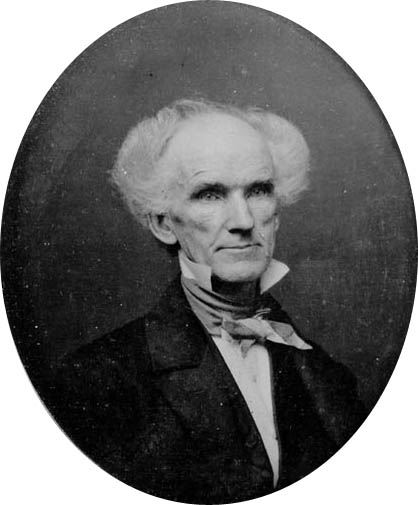
Who he was
James Barton Longacre was born on a farm in Delaware County, Pennsylvania, on August 11, 1794. His mother died when he was young, and after his father remarried, home turned bitter. At twelve he simply left — walking out for Philadelphia to make his own way.
He landed in a bookstore as an apprentice. The owner noticed the boy could draw and let him out of his contract early so he could learn engraving instead — the craft of cutting an image into a metal plate so it can be printed or struck. Longacre apprenticed at a busy Philadelphia firm, then opened his own shop in 1819. He had no formal art schooling. He taught himself by doing.
For two decades he was one of the country's best portrait engravers. His most ambitious project, the National Portrait Gallery of Distinguished Americans (published 1834–1839), sent him traveling to sketch the famous faces of the young republic. The work was admired; the timing was ruinous. The financial Panic of 1837 wiped out the venture's finances and pushed him into bankruptcy. He clawed back through banknote engraving.
Then luck — and the right friends — intervened. When the Mint's Chief Engraver, Christian Gobrecht, died in 1844, Longacre had a powerful backer in South Carolina Senator John C. Calhoun. On September 16, 1844, President John Tyler appointed him the fourth Chief Engraver of the United States Mint. He had never cut a coin die in his life. His enemies inside the Mint never let him forget it.