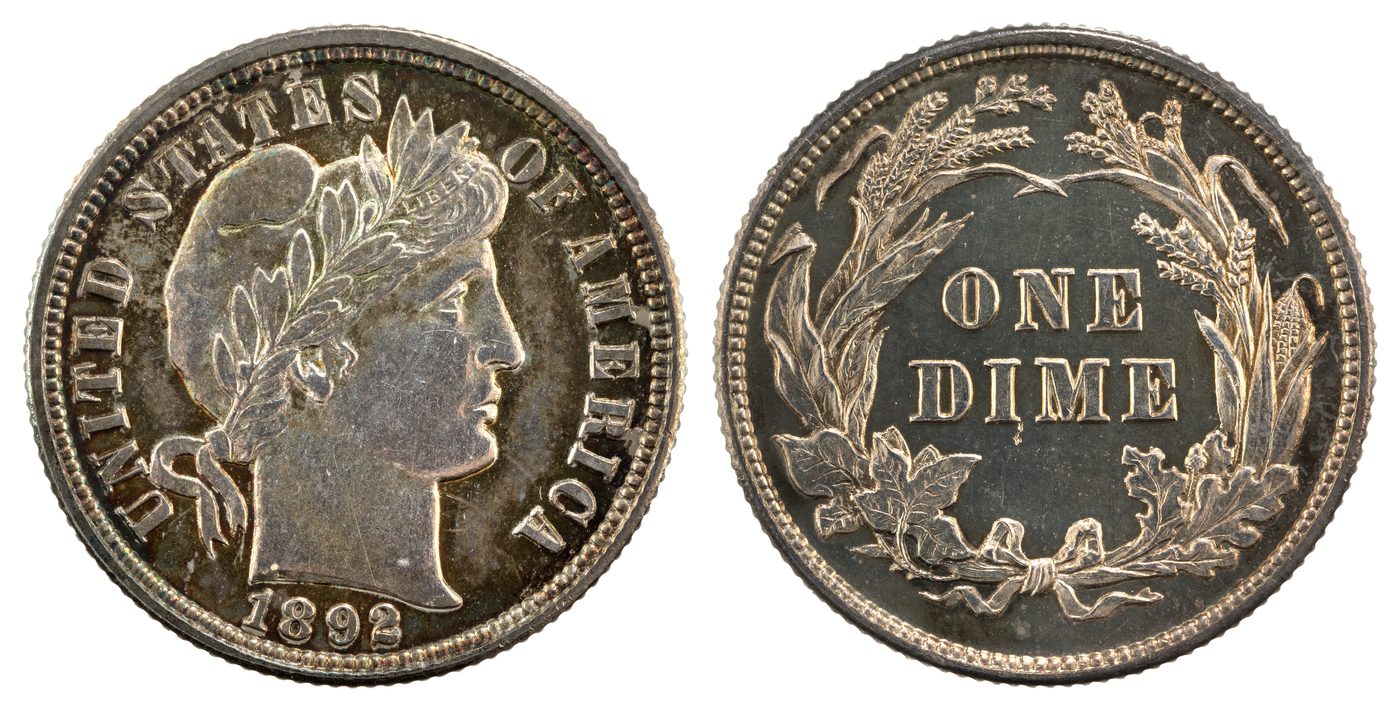
The story behind the coin
By the late 1880s, Americans were tired of looking at the same dime. The Seated Liberty design had been on the coin for over half a century, and the public wanted something new.
Congress gave them the opening. The Coinage Act of September 1890 let the Mint redesign any coin that had been in use for at least 25 years — without going back to Congress for permission. The dime, quarter, and half dollar all qualified. The hunt for a new look was on.
What happened next was a small disaster. In 1891 the Treasury announced a public competition with a $500 prize, and even put the sculptor Augustus Saint-Gaudens — the most admired medallic artist in America — on the jury. The entries poured in. Almost all of them were judged worthless. Mint Director Edward O. Leech called the contest a failure, and handed the job to the one man who had likely wanted it from the start: the Mint's own chief engraver, Charles E. Barber.
That is the quiet irony at the center of this coin. The government opened the design to the whole country, got nothing it liked, and ended up with an in-house design from the staff artist — a coin that would carry his name, and his reputation, for the next quarter century.