US coin · series

The Morgan Dollar: the coin Congress was forced to mint

A big silver dollar born from a mining-lobby fight, melted by the hundreds of millions, then rediscovered in forgotten Treasury vaults.

The Morgan Dollar: the coin Congress was forced to mint
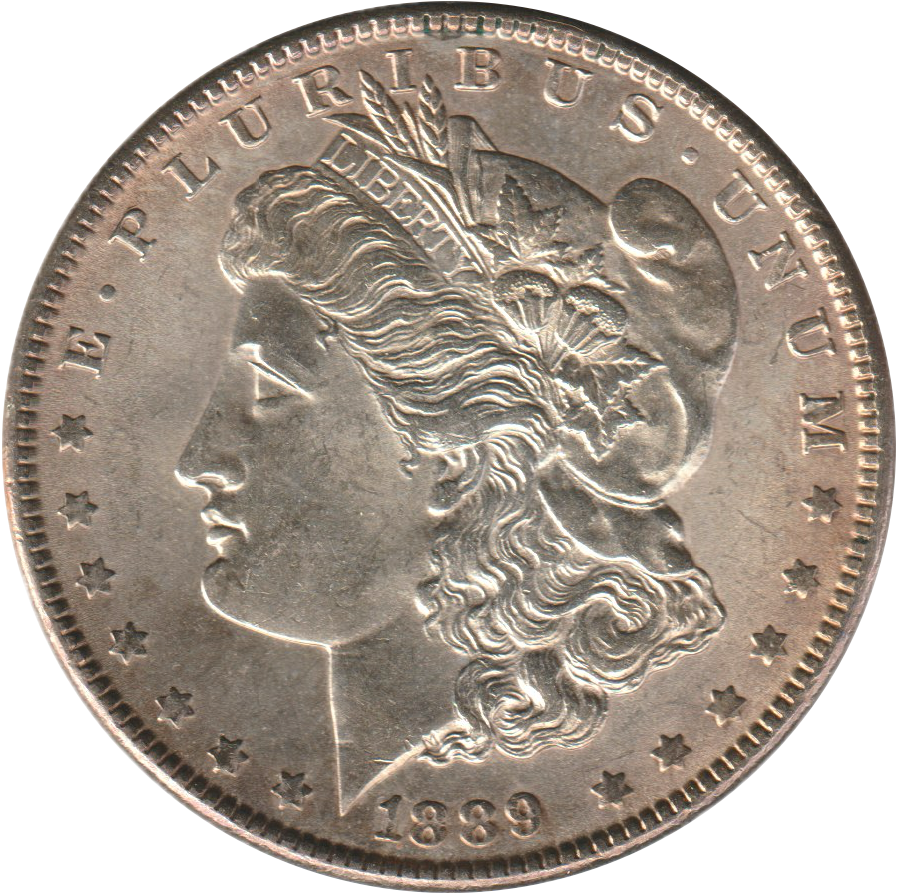
Scan by Gore2000; coin design by George T. Morgan · public domain · source

In 1878 the U.S. Treasury did not want to make silver dollars. Congress made it do so anyway — to prop up the price of silver for Western mining states. The result was the Morgan Dollar, a coin that nobody really needed and almost everybody now collects.

The story behind the coin

The Morgan Dollar exists because of a fight over money itself.

For most of the 1800s the United States minted both gold and silver coins at a fixed ratio — a system called bimetallism. Then the Coinage Act of 1873 quietly dropped the standard silver dollar. To the silver-mining West, where Nevada's Comstock Lode had just unleashed a flood of new metal, this was a betrayal. They called it the "Crime of '73." As silver prices fell, mine owners and their allies in Congress wanted the government to start buying silver again — and turning it into coins.

They got their way. The Bland–Allison Act of February 28, 1878 forced the Treasury to buy between two and four million dollars' worth of silver every month and strike it into silver dollars. It was, in plain terms, a subsidy for the mining industry dressed up as coinage policy. The Treasury complied without enthusiasm. Most of the coins never circulated — they were struck, bagged, and stacked in vaults, backing paper Silver Certificates while the actual dollars sat in the dark.

That is the strange truth of the Morgan Dollar: tens of millions were made, but they were minted to satisfy a law, not a need. The consequences of that — vast hoards, vast meltings, and coins that surfaced generations later in original condition — are exactly what makes the series so rich to collect today.

The design and who made it

The coin is named for its designer, George T. Morgan — an English engraver who never expected to leave home. Born in Birmingham in 1845 and trained at the Royal Mint in London, Morgan came to Philadelphia in 1876 as an assistant engraver, recruited because Mint officials wanted fresh talent. When the Mint needed a new dollar design in 1878, Director Henry Linderman chose Morgan's over one by the Mint's own chief engraver, William Barber — a slight that reportedly stung the Barber family for years.

The obverse — the "heads" side — shows Liberty in profile, facing left, wearing a Phrygian cap wreathed in cotton and wheat, a deliberate nod to both the agricultural South and West. Morgan wanted a real American face, not a Greek ideal. He modeled Liberty on a Philadelphia schoolteacher named Anna Willess Williams, after several sittings; he is said to have called her profile the most perfect he had seen. Look closely at the truncation of the neck and you'll find a tiny M — Morgan's initial, hidden in plain sight, repeated again on the reverse.

The reverse — the "tails" side — is an eagle with wings spread wide, clutching arrows and an olive branch, ringed by a laurel wreath. It is bold, almost heraldic, and it gave collectors their first great variety: on the earliest 1878 coins the eagle had eight tail feathers, which the Mint then corrected to seven mid-year, because eagles don't have an even number. Some dies were re-engraved over the old ones, leaving a doubled "7-over-8" ghost that variety hunters still chase.

Key facts

Years struck
1878–1904, 1921, and 2021–present
Designer
George T. Morgan (obverse and reverse)
Composition (classic)
90% silver, 10% copper (1878–1904, 1921)
Composition (2021 revival)
99.9% silver
Weight
26.73 g (412.5 grains)
Diameter
38.1 mm
Silver content
0.7734 troy oz pure silver
Mints
Philadelphia (no mark), New Orleans (O), Carson City (CC), San Francisco (S), Denver (D, 1921 only)
Lowest mintage
1893-S — 100,000 struck
Famous melt
Pittman Act of 1918 — 270,232,722 silver dollars melted

Collecting it: key dates, varieties, and why high grades are scarce

The Morgan Dollar is the most collected U.S. silver dollar, and its appeal comes down to one word: survival. Two great destructions and one great discovery shaped which coins are common and which are nearly impossible.

First, the destruction. The Pittman Act of 1918 authorized melting hundreds of millions of silver dollars to ship silver to wartime Britain; the Mint melted 270,232,722 of them — many of them Morgans — and turned the bullion back into fresh 1921 coins. Whole dates vanished into the crucible. That is why mintage alone never tells the story: a coin's survival rate matters more than how many were struck.

The classic key dates flow from this. The 1893-S has the lowest mintage of the series at 100,000, and after the melts, very few survive — making it the genuine king of the circulation-strike Morgans. The 1889-CC had a higher mintage (350,000) but most never reached circulation, so high-grade examples are punishingly rare. And the 1895 Philadelphia issue is the legend collectors call the "King of Morgan Dollars": the Mint struck only 880 proofs that year and apparently no regular coins survive, so a complete date-set is impossible without this single proof — which sells for a small fortune.

Then there are the varieties, mapped exhaustively by the "VAM" system (named for researchers Leroy Van Allen and A. George Mallis). Beyond the 1878 tail-feather varieties, collectors prize the 1888-O "Hot Lips," a doubled-die obverse so strong you can see two sets of lips without a loupe.

Now the discovery — and the reason pristine Morgans even exist. In the early 1960s the Treasury inventoried its old silver-dollar vaults and found roughly three million coins still in their original bags, many from the Carson City Mint, untouched since the 1800s. The General Services Administration sold them to the public in a famous run of sales between 1972 and 1980. These GSA hoard dollars, often still in their hard plastic government holders, are why a coin struck before the telephone can look as if it left the press yesterday.

A note on grade: because most Morgans sat in bags, they jostled against each other and picked up tiny abrasions ("bag marks"). Truly clean, fully struck, high-grade examples are far scarcer than the big mintages suggest — which is why the same date can be cheap in worn condition and extraordinary in gem state.

Questions collectors ask

What is the rarest Morgan Dollar?

Two coins compete for the title. The 1893-S has the lowest mintage of any business strike at 100,000, and few survived the melts, making it the rarest regular-issue Morgan. The 1895 Philadelphia issue — the 'King of Morgan Dollars' — exists only as 880 proofs, so a complete set is impossible without it. Collectors generally rank the 1893-S, the 1895, and the 1889-CC as the trio of great keys.

Why was the Morgan Dollar created?

Congress passed the Bland–Allison Act in 1878, which forced the Treasury to buy millions of dollars of silver each month and strike it into dollars. It was largely a subsidy for Western silver-mining interests after the Coinage Act of 1873 had dropped the silver dollar. The coins were minted to satisfy the law more than to meet any demand for money.

Who designed the Morgan Dollar, and what is the tiny 'M'?

George T. Morgan, an English-born engraver at the U.S. Mint, designed both sides. The 'M' you can find at the truncation of Liberty's neck — and again on the reverse — is his own initial, a small signature hidden in the design.

What is the GSA hoard?

When the Treasury inventoried its vaults in the 1960s, it found roughly three million uncirculated silver dollars still in original bags, many struck at the Carson City Mint decades earlier. The General Services Administration sold them to the public from 1972 to 1980. 'GSA Morgans' still housed in their government holders are prized for their originality.

Why are there Morgan Dollars dated 2021?

In 2021 the U.S. Mint revived the design for the 100th anniversary of the last original Morgan (and the first Peace Dollar) in 1921. These modern coins are struck in 99.9% silver and sold to collectors, with some carrying 'CC' or 'O' privy marks that honor the historic Carson City and New Orleans mints. They are commemorative collector coins, not the circulating money the originals were.

Sources