Designer

Bela Lyon Pratt: the sculptor who carved a coin the wrong way round

He sank the design below the surface — and made the only incuse coins the United States has ever struck.

Bela Lyon Pratt: the sculptor who carved a coin the wrong way round
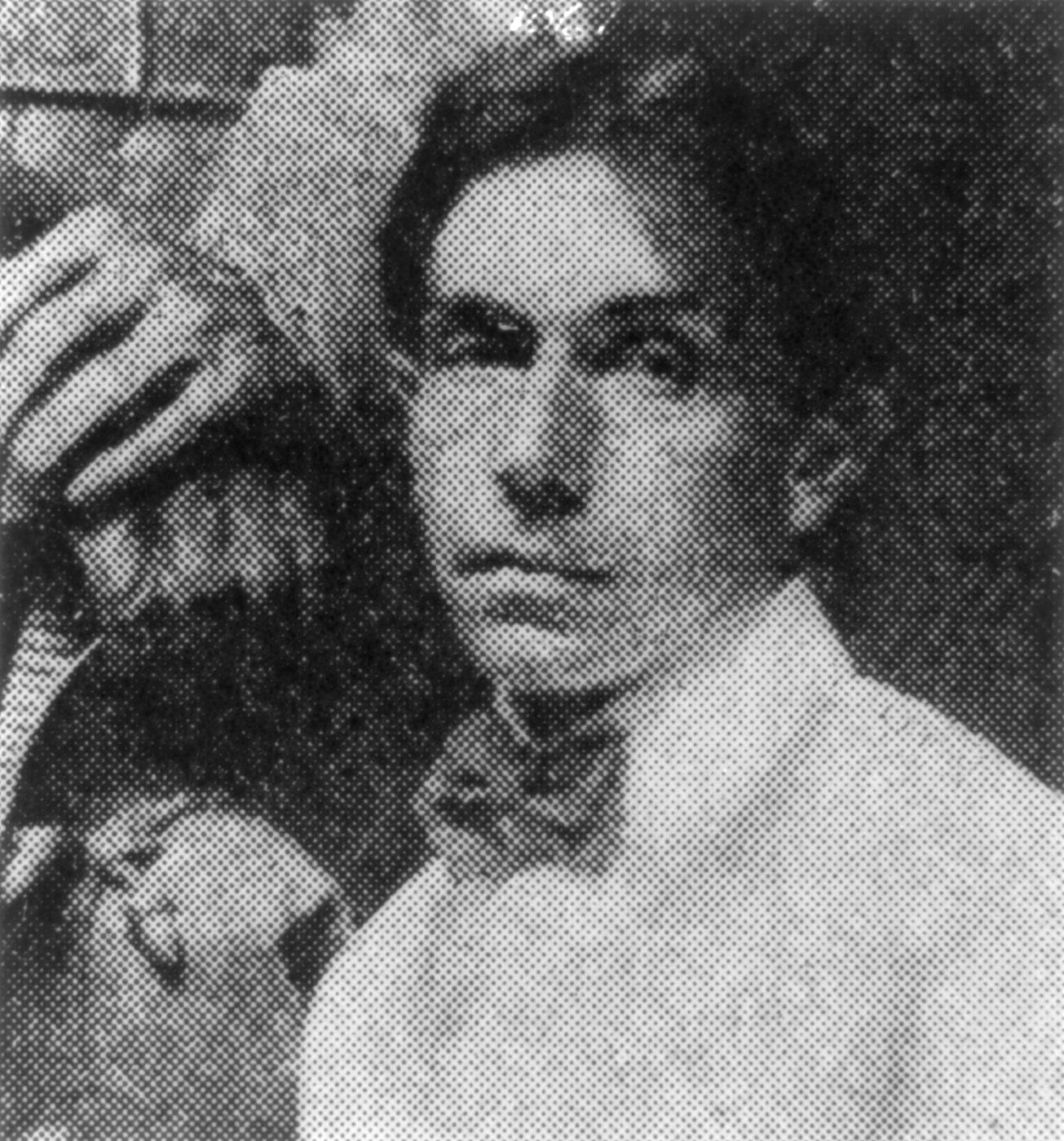
Unknown author — Library of Congress Prints and Photographs Division, digital ID cph.3a01013 · public domain · source

In 1908 a Boston sculptor did something no one at the U.S. Mint had done before. Instead of raising the design above the surface of a gold coin, Bela Lyon Pratt cut it into the metal — the picture lives below the rim, not above it. The result was strange, controversial, and unlike anything in American money before or since.

Who he was

Bela Lyon Pratt was born in Norwich, Connecticut, on December 11, 1867, into a family that already had art in its bloodstream — his grandfather had founded one of the country's first music schools. By sixteen he was studying at the Yale School of Fine Arts. That was fast, and it set the pattern for a career that never really slowed down.

From Yale he went to New York and the Art Students League, where he fell into the orbit of the man who would shape him for life: Augustus Saint-Gaudens, the greatest American sculptor of the age. Then came Paris and the École des Beaux-Arts, training under Henri Chapu and Alexandre Falguière — the classic finishing school for an ambitious American artist of the 1880s.

He came home with a continent's worth of technique and almost immediately got the kind of break sculptors dream of. For the 1893 World's Columbian Exposition in Chicago — the great white city of fairs — he modeled two monumental allegorical groups, The Genius of Navigation and The Genius of Discovery. He was in his mid-twenties.

That same period, in 1893, he took a teaching post at the School of the Museum of Fine Arts in Boston. He held it for the rest of his life — about twenty-five years — and built a reputation as one of New England's busiest public sculptors. His studio in the Jamaica Plain neighborhood of Boston turned out statues, memorials, and architectural figures by the dozen. He died in May 1917, at just 49, of heart disease. He had made, by one local account, more than 180 sculptures in under fifty years of life.

The craft — and the fight with the Mint

Pratt was a monument man. His hands knew bronze and marble at architectural scale — the kind of figure that has to read from across a plaza. So the commission that made him famous to coin collectors is almost a joke of scale: the two smallest U.S. gold coins, each barely an inch across.

Here's how he got it. President Theodore Roosevelt had launched a campaign to drag American coinage out of what he saw as dull mediocrity, and he'd handed the first jobs to Saint-Gaudens. But Saint-Gaudens died in 1907. Into the gap stepped Dr. William Sturgis Bigelow, a Boston physician, art collector, and Roosevelt friend, fresh from years steeped in the art of Japan and the ancient world. Bigelow had an idea, and he had a sculptor in mind for it — Pratt, his fellow Bostonian.

The idea was radical. Every coin in your pocket has relief — the design (the heads, the eagle) stands up off the surface. Bigelow proposed the opposite: incuse relief, where the design is sunk below the flat field of the coin, like a footprint pressed into clay. The inspiration was ancient — Egyptian carving, where figures are cut into the stone rather than raised from it. Bigelow argued it was practical too: a coin with nothing sticking up would stack neatly and the design would be protected from wear, tucked safely below the rim.

Bigelow pitched it to Roosevelt over lunch at the White House on April 3, 1908. Pratt did the modeling. His plaster models went to the Mint that June, and by autumn the first coins were struck. For the obverse — the heads side — Pratt put a Native American man in a feathered war bonnet, facing left, his own initials BLP tucked above the date. The reverse carried a standing eagle on a bundle of arrows, gripping an olive branch.

It was a genuine break with the past. Earlier "Indian Head" coins had really been Liberty in a borrowed headdress. Pratt's was meant to be an actual Native American face. (Collectors have long named the model as the Brulé Lakota chief Hollow Horn Bear — the attribution is supported by research but was never confirmed by the Mint, so treat it as the likely story rather than settled fact.)

Not everyone was charmed. The Philadelphia coin dealer Samuel H. Chapman fired off a letter to Roosevelt in December 1908 with a list of objections that has delighted historians ever since: the sunken design, he warned, would harbor dirt and germs, the coins couldn't be stacked properly, they'd be easy to counterfeit, and — for good measure — he thought the Indian looked "emaciated." Bigelow's reply was pure dry wit: the photograph showed a man "whose health was excellent," and perhaps Chapman had in mind "the fatter but less characteristic type of Indian sometimes seen on the reservations." The design stayed exactly as Pratt made it.

A career in dates

  1. 1867Born December 11 in Norwich, Connecticut.
  2. 1883Enters the Yale School of Fine Arts at sixteen.
  3. late 1880sStudies at the Art Students League in New York under Augustus Saint-Gaudens, then at the École des Beaux-Arts in Paris.
  4. 1893Models 'The Genius of Navigation' and 'The Genius of Discovery' for the World's Columbian Exposition; joins the faculty of the School of the Museum of Fine Arts, Boston.
  5. 1908Designs the incuse Indian Head quarter eagle and half eagle; models sent to the Mint that June, first coins struck that autumn.
  6. 1917Dies in May, aged 49, of heart disease.

Key facts

Born
December 11, 1867 — Norwich, Connecticut
Died
May 1917, aged 49
Nationality
American
Training
Yale School of Fine Arts; Art Students League (under Augustus Saint-Gaudens); École des Beaux-Arts, Paris
Day job
Sculptor and teacher, School of the Museum of Fine Arts, Boston (~25 years)
Signature coins
Indian Head $2.50 quarter eagle and $5 half eagle (1908) — the only incuse U.S. coins
Coin innovation
Incuse (sunken) relief — design cut below the coin's surface

Questions people ask

What did Bela Lyon Pratt design?

He designed the Indian Head $2.50 quarter eagle and $5 half eagle, introduced in 1908. They are the only United States coins ever struck in incuse relief — with the design sunk below the surface instead of raised above it. He was primarily a monumental sculptor; the gold coins are his most famous numismatic work.

Why are his coins designed 'backwards'?

The incuse technique was suggested by Dr. William Sturgis Bigelow, who proposed cutting the design into the metal rather than raising it, an approach borrowed from ancient Egyptian carving. The idea was that the coins would stack flat and the design, sitting below the rim, would be protected from wear.

Who is the Native American on the coin?

Collectors have long identified the model as the Brulé Lakota chief Hollow Horn Bear. Historical research supports the attribution, but the Mint never officially confirmed it, so it's best treated as the likely story rather than established fact. Whoever the model was, it was a real face rather than the older convention of Liberty wearing a feathered headdress.

Did people object to the design?

Yes. The Philadelphia dealer Samuel H. Chapman wrote to President Roosevelt in 1908 arguing that the sunken recesses would collect dirt and germs, that the coins couldn't stack, and that they would be easy to counterfeit. The objections were noted and the design was kept as Pratt made it.

How does Pratt connect to Augustus Saint-Gaudens?

Saint-Gaudens was Pratt's teacher at the Art Students League and a lifelong influence. When Saint-Gaudens died in 1907, the campaign to redesign U.S. gold coinage lost its lead artist, and the quarter eagle and half eagle work passed to Pratt.

Sources