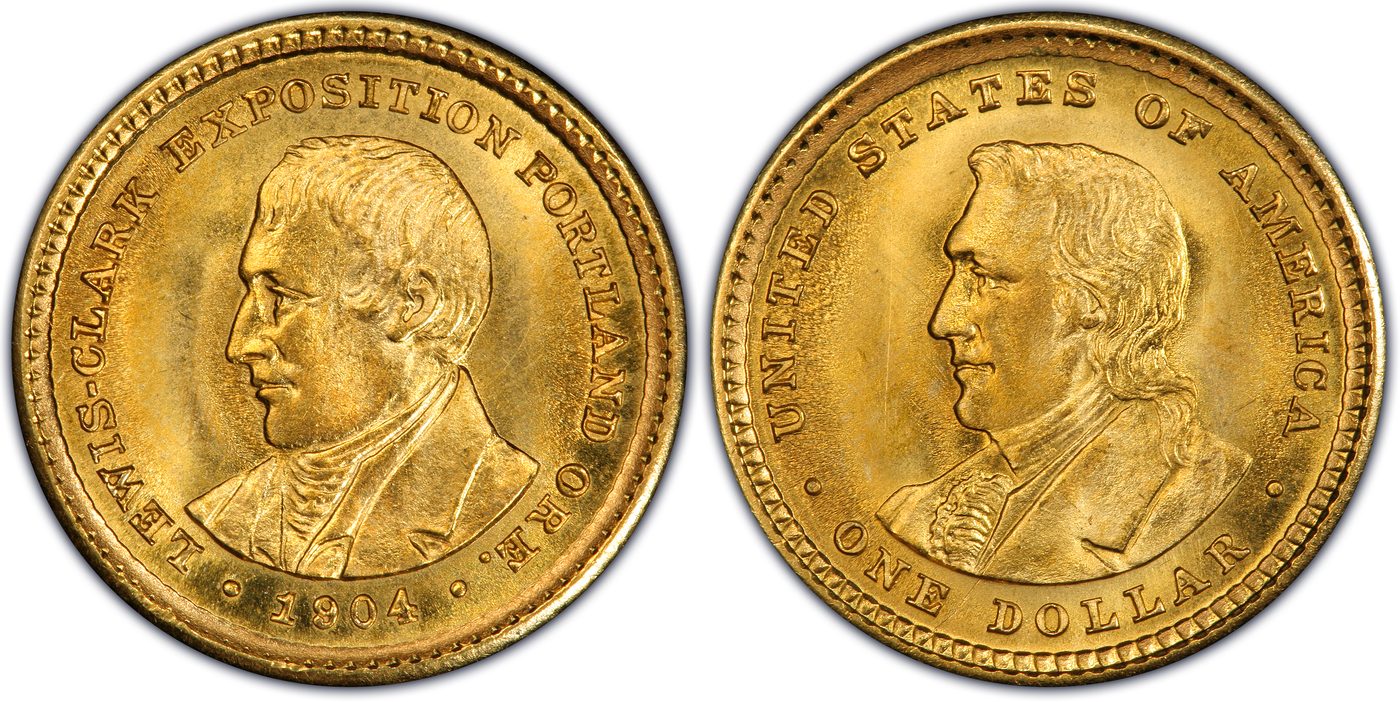
The story behind the coin
A hundred years after Meriwether Lewis and William Clark walked across the continent, Portland, Oregon threw a party. The 1905 Lewis and Clark Centennial Exposition was the city's bid to put itself on the map — a world's fair to mark a century since the Corps of Discovery reached the Pacific.
Fairs needed money, and one reliable way to raise it was a commemorative coin. On April 13, 1904, President Theodore Roosevelt signed the appropriations bill that funded the exposition and authorized a gold dollar to mark the fair. Congress allowed up to 250,000 of them.
The plan was simple. The Mint would strike the coins, the fair would sell them above face value to collectors and visitors, and the difference would help pay for the celebration — including a statue of Sacagawea, the young Shoshone woman who guided the expedition, for Portland's Washington Park. The coins did help fund that statue. What they did not do was sell.