The story behind the coin
In 1883 the U.S. Mint released a brand-new five-cent coin — and almost immediately had to fix it.
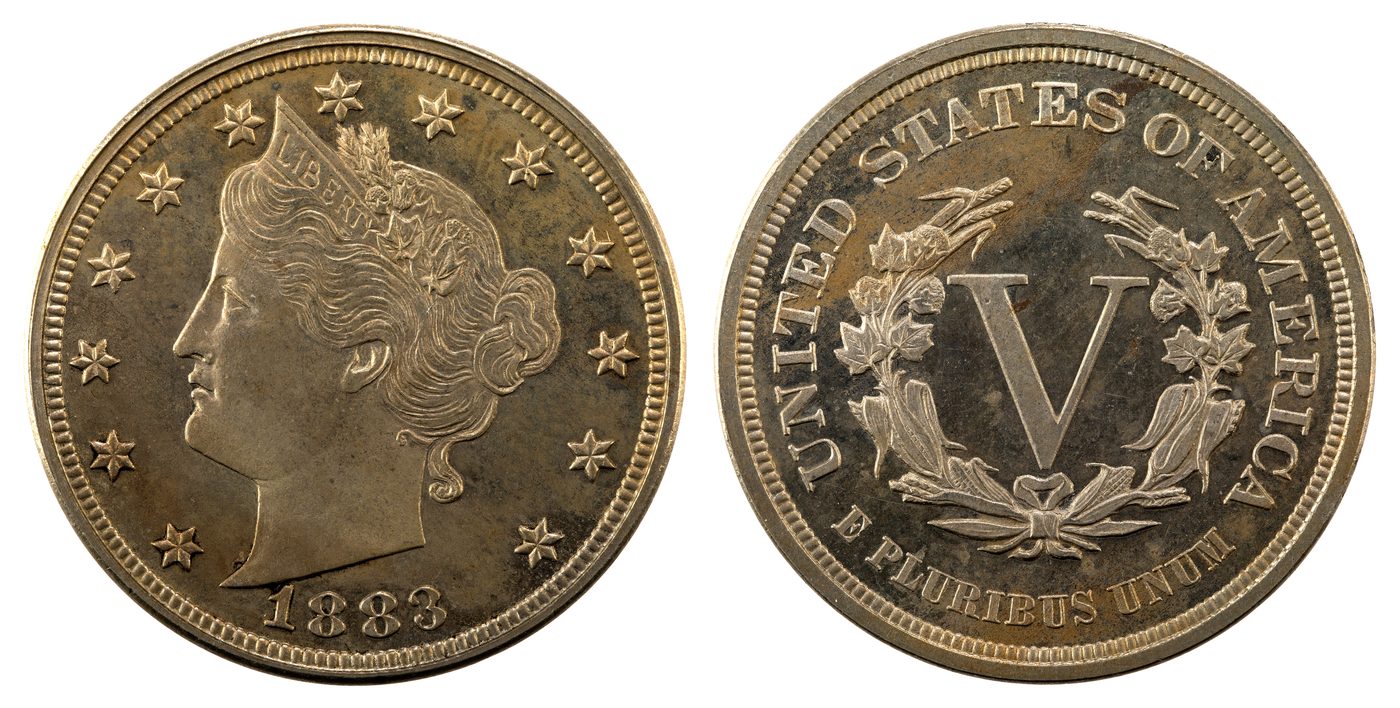
The problem was a word that wasn't there. The new nickel showed a large Roman numeral V (five) on the reverse — the "tails" side — but nowhere did it say cents. Five what? A V-shaped denomination on a coin about the size of a five-dollar gold piece was an invitation, and sharp operators took it. They gold-plated the new nickels and spent them as if they were $5 gold coins. The U.S. Secret Service put out a warning within days. By early March, the Mint had a fix in the works: a new reverse die with the word CENTS added at the bottom.
That makes 1883 a two-design year. The Mint struck the "No CENTS" coin first, then switched to the "With CENTS" version once the scam came to light — so a single date carries two distinct types, and the flawed first version became an instant curiosity. (More on the gold-plated "racketeer nickels," and the legend that grew around them, below.)
Why a new nickel at all? The coin it replaced — the Shield nickel of the Civil War era — was a headache to strike. Its dense, fussy design wore out dies fast and produced weak, uneven coins. The Mint wanted something cleaner and more durable. In 1881 Chief Engraver Charles E. Barber was asked to prepare a fresh, classical Liberty design for the one-cent, three-cent, and five-cent pieces at once. Only the five-cent design was approved, and it went into production in early 1883.