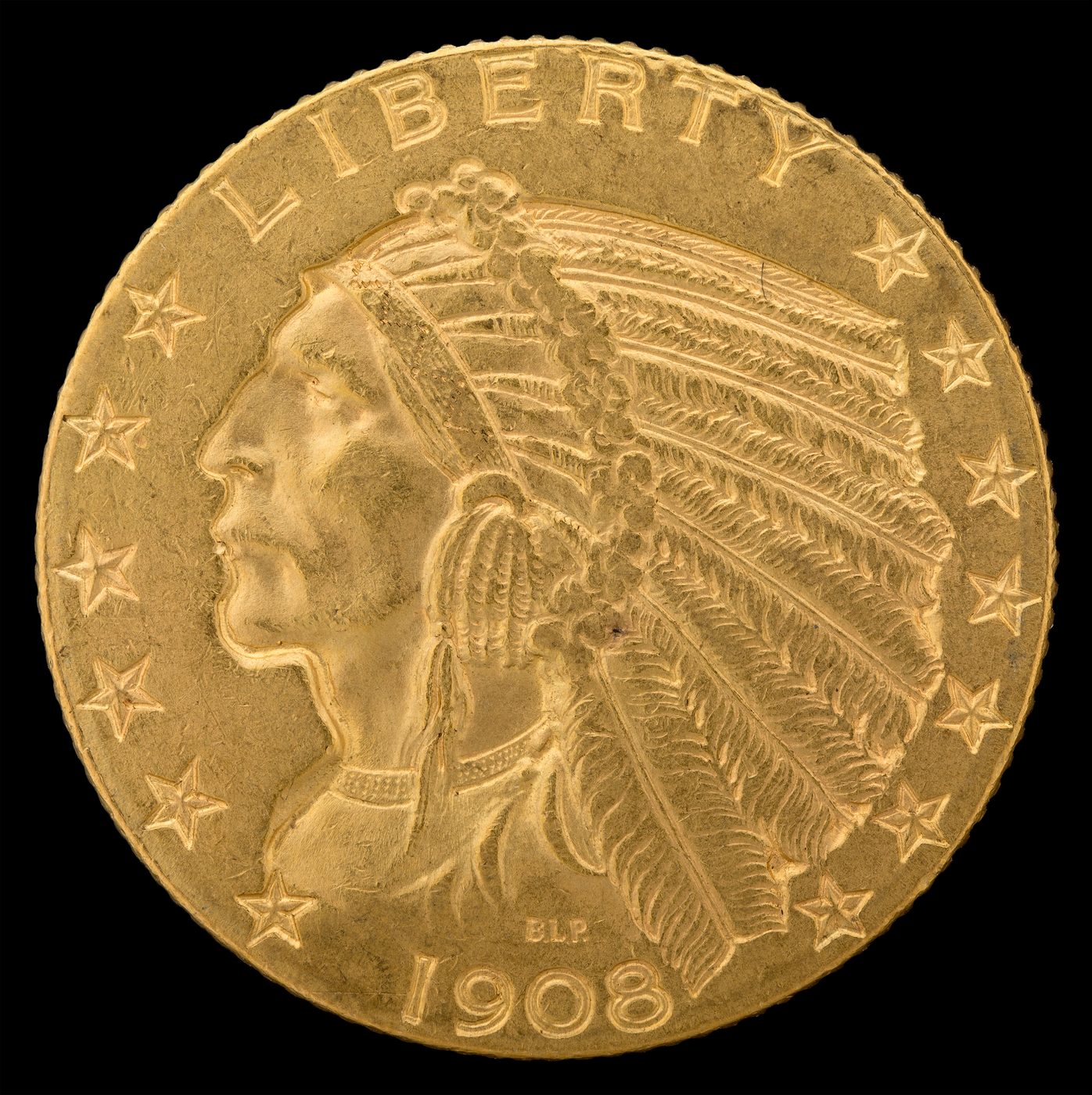
The coin that turned the design inside out
Every coin you have ever held works the same way: the design stands up from the surface. The portrait, the lettering, the eagle — they rise above the flat field, protected by a raised rim around the edge. That rim is what takes the wear when coins rub together in a pocket or a bank drawer.
The $5 Indian Head half eagle threw that rule out. Its design is incuse — sunk into the metal, like a footprint pressed into sand. The Indian's profile and the standing eagle sit flush with the surface around them. There is no raised relief anywhere on the coin. It is, to this day, the only design the U.S. Mint ever put on a circulating coin this way (along with its little sibling, the $2.50 quarter eagle, struck the same way in the same years).
The idea came from a Boston physician and art collector named William Sturgis Bigelow, a friend of President Theodore Roosevelt. Roosevelt was already deep in a personal crusade to make American coins beautiful again — he'd recruited the great sculptor Augustus Saint-Gaudens to redesign the gold coinage. Bigelow's twist was practical as much as artistic: sink the design below the surface, the theory went, and the highest points of the coin would never touch anything, so the art would never wear. Roosevelt approved the obverse design over a White House lunch in mid-May 1908.