Era
The End of Silver & the Clad Era
1965–1978 — the decade America took the silver out of its pocket change
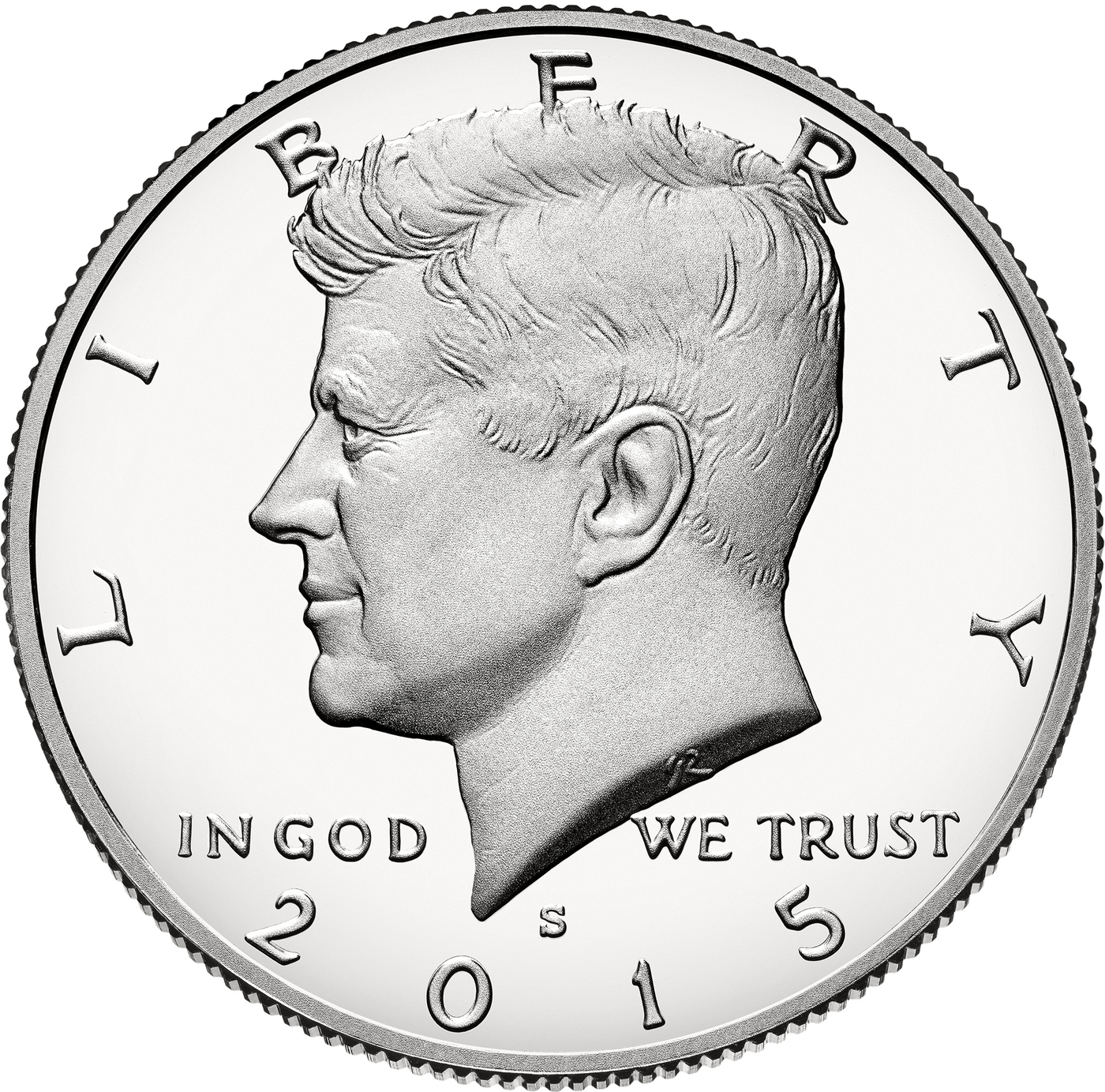
For 173 years, an American dime, quarter, and half dollar were small slices of real silver. Then, almost overnight in 1965, they weren't. This is the story of the coins that changed in your hand.
The world then
For 173 years an American dime, quarter, and half dollar were small slices of real silver — 90% of it, by law, since George Washington signed the first coinage act in 1792. Then, almost overnight, they weren't.
The reason was simple and a little embarrassing: by the early 1960s the silver in a coin was starting to be worth more than the coin itself. As the price of silver climbed, ordinary people did the rational thing — they kept the silver coins and spent the rest. The Treasury watched its dimes and quarters vanish from circulation. By one estimate, around $460 million in silver coins had been pulled out of everyday use and tucked into drawers, jars, and safe-deposit boxes.
A coin shortage is not an abstraction. Cash registers ran short of change; vending machines and parking meters went hungry. The government tried small fixes first. In September 1964 it froze the date — coins struck well into 1965 still read "1964," a deliberate trick to make hoarders think fresh silver was always on the way. From 1965 through 1967 the Mint also dropped all mint marks — the tiny letter (D for Denver, S for San Francisco) that says where a coin was struck — so collectors couldn't single out a scarce branch and hoard it. None of it was enough.
The money
The real fix came on July 23, 1965, when President Lyndon Johnson signed the Coinage Act of 1965. It did something no American law had ever done: it took the silver out of the nation's circulating coins.
The dime and the quarter lost their silver entirely. In its place came clad coinage — a metal sandwich. Two outer layers of 75% copper and 25% nickel are bonded to a core of pure copper, which is why a clad quarter shows a faint copper stripe along its edge. Add it all up and a modern quarter is about 91.67% copper and 8.33% nickel. It was cheap, it held up in vending machines, and — crucially — it was worth far less than its face value, so no one had any reason to hoard it. The half dollar got a softer landing: its silver was cut from 90% to 40% rather than removed outright, then dropped entirely after 1970.
Behind that switch sat a quiet little experiment most people never heard of. To choose the new metal, Mint engravers struck test pieces on a made-up design they could use freely — a portrait of Martha Washington above the fake date "1759" — and ran candidate alloys through real coining presses to see which behaved. That obscure pattern, cut by Edward R. Grove and Philip Fowler, is the literal proving ground of the clad era: the device the Mint used to decide what would replace silver in your pocket. The same Martha Washington tooling came back in 1982 to test the copper-plated zinc that would later hollow out the cent, too.
Johnson framed the law itself as housekeeping — "a stable and dignified coinage… adequate in quantity," he said at the signing. But the deeper shift was philosophical. American money had always been worth something because of what it was made of. Now its value rested on nothing but the government's say-so. That same logic was about to be tested at a far higher altitude.
On August 15, 1971, President Nixon "closed the gold window." Until that night, foreign governments could still hand the U.S. Treasury dollars and demand gold in return, at a fixed $35 an ounce — the last anchor of the post-war Bretton Woods system. Nixon cut the line. The dollar would no longer convert to gold for anyone. The decision was announced as temporary; the window never reopened. From 1971 on, the U.S. dollar was a pure fiat currency — money because the state declares it so, backed by nothing you can hold.
Then came the bill. The 1970s were the decade of the Great Inflation. Year-over-year price increases, under 2% in the early 1960s, hit roughly 12% in late 1974 and would peak near 15% in early 1980, whipped along by the 1973 oil shock. Gold, freed to float, climbed from $35 an ounce toward $455 by the decade's end. The coins in people's pockets were now base metal — and even those base-metal dollars bought less every year.
It is one of the era's quiet ironies that its grandest coins arrived in the middle of this. The Eisenhower dollar (1971–1978), designed by Mint chief engraver Frank Gasparro, was a huge, heavy clad disc honoring the late president and the Apollo program — its reverse adapted the Apollo 11 mission patch, an eagle landing on the Moon. Americans admired it and refused to carry it; it was too big and too heavy for a pocket. Much of it ended up on Nevada casino floors instead of in commerce. The Mint also struck a 40% silver collector version for those who wanted a keepsake with real metal in it.
The coins of this era
Here is the strange beauty of the clad era: almost none of its workhorse coins were new. The denominations had been around for decades, and most kept the same faces they'd always worn. What changed was what they were made of — and that one change quietly rewrote the meaning of every coin in the drawer.
Start with the cent, the one coin that never had silver to lose. The Lincoln Memorial cent of this period still carried Victor David Brenner's 1909 profile of Lincoln on the obverse — the heads side — and, since 1959, Frank Gasparro's view of the Lincoln Memorial on the reverse. It rode through the era almost unchanged, a small constant while everything around it was being hollowed out. The Jefferson nickel did the same: Felix Schlag's 1938 design, with Monticello on the back, and a copper-nickel recipe that the 1965 law never had to touch — the nickel had been base metal all along (apart from the silver "war nickels" of 1942–1945). Decades later this same series would get a new Jefferson portrait by Jamie Franki, a reminder that even the era's "unchanging" coins eventually moved.
The silver coins are where the era actually lands. The clad Roosevelt dime, whose portrait Mint engraver John R. Sinnock cut in 1946, kept his face but switched from 90% silver to copper-nickel clad in 1965 — the clad dime is functionally a new coin wearing an old one's portrait. The clad Washington quarter, John Flanagan's 1932 design, made the same jump in the same year, which is exactly why a 1964 quarter and a 1965 quarter look like twins but weigh on a collector's scale as two different things.
And quietly underneath all of it sits the coin that started the whole experiment: the Martha Washington test cent. It never spent a day in circulation. It is the pattern the Mint coined on its own presses to choose the clad recipe — the only "coin" of this era whose entire job was to decide what the others would be made of. For a collector, it is the era's Rosetta stone hiding in plain sight.
Then the era reaches for grandeur. The Eisenhower dollar (1971–1978) was Gasparro's big swing — a dollar-sized clad coin with an eagle landing on the Moon, the only circulating coin to mark Apollo 11. And for the nation's 200th birthday, the Mint did something it had never done: it threw the reverse designs open to the public for the 1776–1976 Bicentennial coinage. Three citizens won. A colonial drummer (Jack L. Ahr) took the quarter; Independence Hall (Seth G. Huntington) the half dollar; and the Liberty Bell against the Moon (Dennis R. Williams, then a 22-year-old student) the Bicentennial Eisenhower dollar. For one set of coins the back of America's pocket change was designed by Americans who weren't Mint engravers at all.
The era doesn't end at 1978, though, and neither does the collection. Decades later the U.S. Mint returned to these same presses to strike a run of commemorative silver dollars that turn the clad era's own logic on its head — coins made of real silver again, but as keepsakes rather than money. The 1991 Korean War Memorial dollar (John Mercanti's soldier cresting a hill, with T. James Ferrell's divided-Korea reverse), the 1994 Vietnam Veterans Memorial dollar (Mercanti's hand reaching for a name on the Wall, with Thomas D. Rogers's three service medals on the back), and the 1995 Civil War Battlefield dollar (the battle artist Don Troiani's wounded soldier, with Mercanti's Gettysburg reverse) are 90% silver collector pieces — proof that once silver left circulation, it didn't disappear so much as change job, from spending money to commemoration.
It's worth knowing that these denominations carry a far longer line of designers than the clad era alone. The clad era is one chapter in each of those stories. But it is the chapter where the metal changed — and that is what makes it the hinge of the whole collection.
A timeline
- 1964The date freeze
- 1965Silver leaves the coinage
- 1971Two shocks in one year
- 1974Inflation bites
- 1975–1976The Bicentennial coins
- 1978End of the Ike
- 1991–1995Silver returns as a keepsake
Key facts
- Region
- United States
- Span
- 1965–1978 (clad transition); silver commemoratives 1991–1995
- Defining law
- Coinage Act of 1965 (signed July 23, 1965)
- Clad composition
- Outer layers 75% copper / 25% nickel over a pure copper core (≈91.67% Cu / 8.33% Ni overall)
- Half dollar silver
- Cut 90% → 40% (1965–1970), then removed
- How the alloy was chosen
- Martha Washington test pieces, struck on Mint presses to trial candidate metals
- Signature coins
- Clad Roosevelt dime, Washington quarter; Eisenhower dollar (1971–1978); 1776–1976 Bicentennial; 1990s silver commemorative dollars
- Monetary turning point
- Nixon closes the gold window, August 15, 1971
Why it fascinates collectors
This is the era you can sort with your fingers. A 1964 quarter and a 1965 quarter look almost identical — but one is 90% silver and one is copper-nickel sandwich. That single year is the most consequential break in modern U.S. coinage, and "junk silver" — pre-1965 90% coins bought for their metal — is built entirely on that line.
The era also handed collectors one of the most beloved sets in American numismatics: the 1776–1976 Bicentennial coins. The Treasury ran a national design contest open to any citizen, with a $5,000 prize for each winning reverse, and unveiled the new designs in 1974. A colonial drummer boy (by Jack L. Ahr) went on the quarter; Independence Hall (by Seth G. Huntington) on the half dollar; and the Liberty Bell superimposed on the Moon (by Dennis R. Williams, a 22-year-old art student whose entry began as a class assignment) on the Eisenhower dollar. Because the coins were struck across 1975 and 1976 but all carry the dual date, there is no 1975-dated quarter, half dollar, or dollar — a quirk that still surprises new collectors.
There is the Eisenhower dollar itself — admired, photographed, and almost never spent. The Apollo-11 reverse makes it one of the few coins to commemorate a moment most living Americans actually watched happen. The 40% silver collector versions, and the high-grade survivors of a coin that mostly got beaten up in casinos, are where the interest concentrates today.
And then there are the era's two oddballs at opposite ends of the spectrum. At one extreme, the Martha Washington test cent — a piece that was never legal tender and never meant for the public, yet is the most historically honest object the era produced, because it is the experiment itself. At the other, the silver commemorative dollars of the 1990s — Korean War, Vietnam Veterans, Civil War Battlefield — coins that brought 90% silver back, but as deliberate keepsakes you buy and keep rather than money you spend. Together they bracket the whole story: the coin that decided silver would leave, and the coins that welcomed it back on entirely different terms.
Questions collectors ask
When did U.S. coins stop being silver?
The Coinage Act of 1965, signed July 23, 1965, removed silver from circulating dimes and quarters and cut the half dollar from 90% to 40% silver. The half dollar's silver was removed entirely after 1970. Pre-1965 dimes, quarters, and halves are 90% silver.
What does 'clad' mean?
A clad coin is layered like a sandwich: two outer layers of 75% copper and 25% nickel bonded to a pure copper core. Look at the edge of a modern quarter and you can see the copper stripe. It made coins cheap enough that no one bothered to hoard them.
What is the Martha Washington test cent?
It's a non-circulating Mint test piece. To choose the metals that would replace silver after 1965, Mint engravers struck experimental pieces on a made-up Martha Washington design dated '1759' so they wouldn't be confused with real coins. The same tooling was used again in 1982 to test the copper-plated zinc cent. It is, in effect, the proving ground of the clad era.
Why are there no 1975 quarters, half dollars, or dollars?
For the 1976 Bicentennial, the Mint struck these three denominations with the dual date 1776–1976 across both 1975 and 1976. No regular 1975-dated quarter, half dollar, or Eisenhower dollar was made — the dual-dated coins covered both years.
What was the 'Nixon shock' and what did it do to coins?
On August 15, 1971, Nixon ended the dollar's convertibility to gold at $35 an ounce, closing the 'gold window' and ending the Bretton Woods system. It didn't change a coin's metal directly, but it confirmed the era's logic: U.S. money was now fiat — valuable because the government says so, not because of what it's made of.
Are Eisenhower dollars silver?
Most aren't. Circulating Eisenhower dollars (1971–1978) are copper-nickel clad, the same recipe as the quarter. The Mint also struck a 40% silver collector version sold to the public, which is the one with real precious metal in it.
If silver left circulation in 1965, why are there silver dollars from the 1990s?
Those are commemoratives, not circulating money. The Korean War (1991), Vietnam Veterans (1994), and Civil War Battlefield (1995) dollars are 90% silver collector coins the Mint sold directly to the public. Silver came back, but as a keepsake you buy and keep rather than spend.
Sources
- Coinage Act of 1965 — Wikipedia
- Why U.S. Coins From 1965–1967 Have No Mint Marks — APMEX
- USA Coin Album: The US Mint Coins Dated 1964 — NGC
- Martha Washington pattern / test pieces — Coin World
- Martha Washington 'Test' Pattern — The Coin Show
- Eisenhower dollar — Wikipedia
- Eisenhower Dollar (1971-1978): History & Value — CoinWeek
- Bicentennial coinage — Wikipedia
- Bicentennial Dollar Release — U.S. Mint
- Nixon Ends Convertibility of U.S. Dollars to Gold — Federal Reserve History
- Coin Specifications — U.S. Mint
- Lincoln Memorial Cent (1959–1982): History and Value — CoinWeek
- Jefferson nickel — Wikipedia
- Roosevelt dime — Wikipedia
- Washington quarter — Wikipedia
- Korean War Memorial silver dollar — Wikipedia
- 1991-P Korean War Memorial Dollar Proof — CoinWeek
- Vietnam Veterans Memorial silver dollar — Wikipedia
- The 1994 Vietnam Veterans Memorial Dollar — CoinWeek
- Civil War Battlefields commemorative coins — Wikipedia
- 1995-P $1 Civil War — PCGS CoinFacts
- Frank Gasparro — Chief Coin Engraver and Designer — USA Coin Book