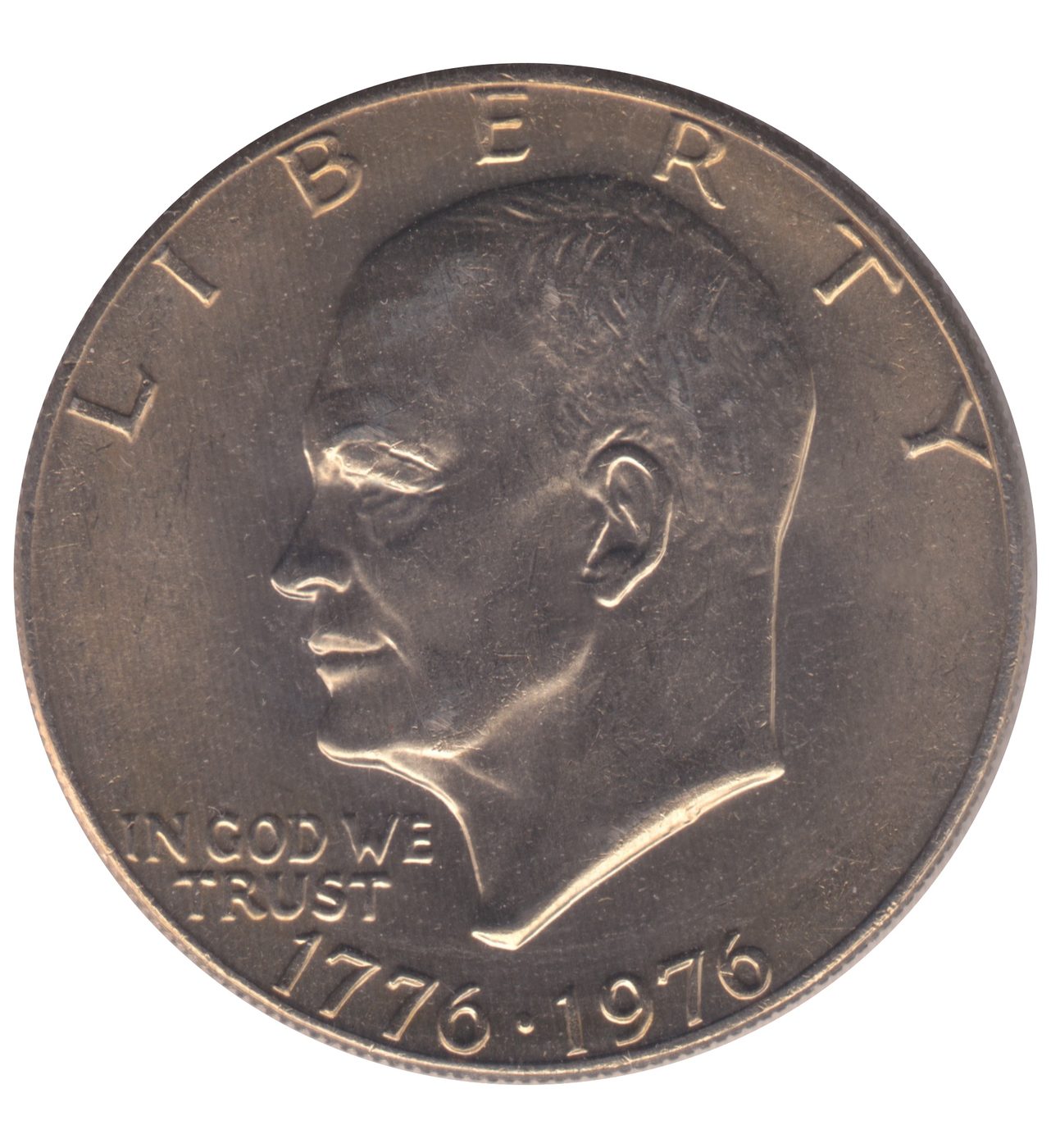
The story behind the coin
In 1973, the United States was about to turn 200, and Congress wanted the milestone in people's pockets. The law it passed in October that year did something the Mint almost never does: it temporarily rewrote the back of three circulating coins — the quarter, the half dollar, and the dollar — and stamped them all with a dual date, 1776-1976.
The dollar in question was the Eisenhower dollar, nicknamed the "Ike." It was already a young coin. After President Dwight D. Eisenhower died in March 1969 and Apollo 11 landed on the Moon that July, Congress created a big new dollar to honor both — the eagle on its reverse (the "tails" side) was lifted from the Apollo 11 mission patch. Production started in 1971. So when the Bicentennial program arrived, the Ike was the natural coin to carry the nation's birthday.
Here is the part that makes it unusual. Instead of handing the new reverse to its own engravers, the Mint threw it open to the public — a national design competition with a $5,000 prize for each winning denomination. Thousands entered. The dollar went to Dennis R. Williams, a 22-year-old art student. The most famous coin of the Bicentennial year was, in part, homework.