Designer

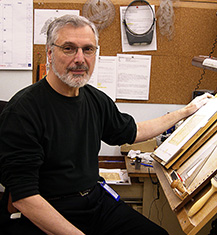
John Mercanti

The 12th Chief Engraver of the U.S. Mint — and the hand behind the eagle on more silver than almost any coin in history.

John Mercanti
United States Mint (image from usmint.gov sculptor/engravers section) · public domain · source

For 35 years, anyone who picked up a one-ounce American Silver Eagle was holding John Mercanti's work. He drew the heraldic eagle on the back — and over a 36-year career he designed more United States coins and medals than any artist in the Mint's history.

Who he was

John Mercanti was born in Philadelphia on April 27, 1943 — a few miles from the Mint that would one day make him its chief artist. He grew up drawn to drawing and sculpture, and he chased that the only way a working-class kid could: piece by piece, school by school. He studied at the Pennsylvania Academy of the Fine Arts, the Philadelphia College of Art, and the Fleisher Art Memorial, the free art school that has trained Philadelphians since 1898. Before the Mint, he served six years in the Pennsylvania Army National Guard and worked as a commercial illustrator.

He joined the United States Mint in 1974 as a sculptor-engraver — the person who turns a flat drawing into the three-dimensional master from which coin dies (the hardened steel stamps that strike the metal) are made. His mentor there was Frank Gasparro, the Mint's chief engraver and the man who had designed the Lincoln Memorial cent reverse and the Eisenhower dollar. Gasparro became a friend as well as a teacher, and the apprenticeship stuck: Mercanti spent the next three and a half decades quietly becoming the most prolific designer the Mint has ever employed.

The numbers are the part that stops people. By the time the Mint named him its 12th Chief Engraver on May 19, 2006, he had already produced more coin and medal designs than any other artist in the institution's history — well over a hundred. He held the top job until his retirement in late 2010, capping roughly 36 years of service. Most people who have spent money in America have handled his work without ever knowing his name.

The craft

Mercanti was a classicist in an age of committees. His instinct ran to formal, balanced, heraldic compositions — the visual language of seals and medals — rather than the loose, naturalistic style that later Mint programs favored. You can read that instinct most clearly in the work he is remembered for.

In 1985 Congress passed the Liberty Coin Act, signed by President Reagan on July 9, ordering up a government-guaranteed silver bullion coin struck from the nation's Defense National Stockpile of silver. The Mint needed a reverse — the "tails" side — and Mercanti delivered a heraldic eagle: a shield across its breast, an olive branch of peace in one talon and a bundle of arrows of war in the other, thirteen stars for the original colonies above. It is, deliberately, the Great Seal of the United States rendered in relief — relief being the raised height of the design above the coin's flat field. The eagle balances strength against peace, the same idea the Founders' seal was built on. The obverse paired it with Adolph Weinman's Walking Liberty from the 1916 half dollar — so a Silver Eagle is, neatly, two eras of American coin art on one disc, with Mercanti supplying the modern half. His initials, JM, sit on the reverse.

That design ran from the first coin in 1986 until 2021 — 35 years, hundreds of millions of coins. When the Mint finally retired it, replacing it mid-2021 with Emily Damstra's flying eagle (the so-called "Type 2" reverse), it was the first design change in the program's history. Mercanti's eagle had become the default picture of American silver.

He also looked outward. For the American Platinum Eagle, introduced in 1997, Mercanti designed the obverse — a portrait of the Statue of Liberty he titled Liberty Looking to the Future (the reverse that first year was Thomas D. Rogers's Soaring Eagle over America). Across his career the same hand turned up on the 1984 Olympic ten-dollar gold coin, the 1986 Statue of Liberty silver dollar, the 1989 Congress Bicentennial five-dollar gold coin, five of the State Quarters, and a long shelf of Congressional Gold Medals.

Career timeline

  1. 1943Born April 27 in Philadelphia, Pennsylvania.
  2. 1960s–70sTrains at the Pennsylvania Academy of the Fine Arts, the Philadelphia College of Art, and the Fleisher Art Memorial; serves six years in the Pennsylvania Army National Guard.
  3. 1974Joins the U.S. Mint as a sculptor-engraver, working under Chief Engraver Frank Gasparro.
  4. 1986His heraldic eagle debuts as the reverse of the first American Silver Eagle.
  5. 1997Designs the obverse of the new American Platinum Eagle, 'Liberty Looking to the Future.'
  6. 2006Named the 12th Chief Engraver of the United States Mint (May 19).
  7. 2010Retires after roughly 36 years of service.
  8. 2021His Silver Eagle reverse is retired after 35 years — the first design change in the program's history.

Key facts

Born
April 27, 1943 — Philadelphia, Pennsylvania
Nationality
American
Role
12th Chief Engraver of the U.S. Mint (2006–2010)
At the Mint
1974–2010 (sculptor-engraver, then Chief Engraver)
Mentor
Frank Gasparro, 10th Chief Engraver
Signature work
American Silver Eagle reverse — heraldic eagle (1986–2021)
Also designed
American Platinum Eagle obverse, 'Liberty Looking to the Future' (1997)
Distinction
Designed more U.S. coins and medals than any artist in Mint history (100+)

Questions collectors ask

Did John Mercanti design the whole Silver Eagle?

No — he designed the reverse, the heraldic-eagle side. The obverse is Adolph Weinman's 'Walking Liberty,' adapted from his 1916 half dollar. So a Silver Eagle pairs Weinman's 1916 figure with Mercanti's modern eagle.

What do the 'JM' initials on a Silver Eagle mean?

They're John Mercanti's. His initials appear on the reverse he designed, the standard marking for the artist who created a coin's design.

Why was Mercanti's Silver Eagle reverse replaced in 2021?

The Mint refreshed the program for its 35th year. Mercanti's heraldic eagle (now called 'Type 1') ran from 1986 through early 2021; a new flying-eagle reverse by artist Emily Damstra ('Type 2') took over mid-year. It was the first design change in the series' history.

Is it true he designed more U.S. coins than anyone?

Yes. The Mint and numismatic sources credit Mercanti with more coin and medal designs than any other artist in its history — over a hundred — earned across a 36-year career from 1974 to 2010.

What was Mercanti's role on the American Platinum Eagle?

He designed the obverse introduced in 1997, a Statue of Liberty portrait he titled 'Liberty Looking to the Future.' The first-year reverse, 'Soaring Eagle over America,' was by Thomas D. Rogers.

Sources