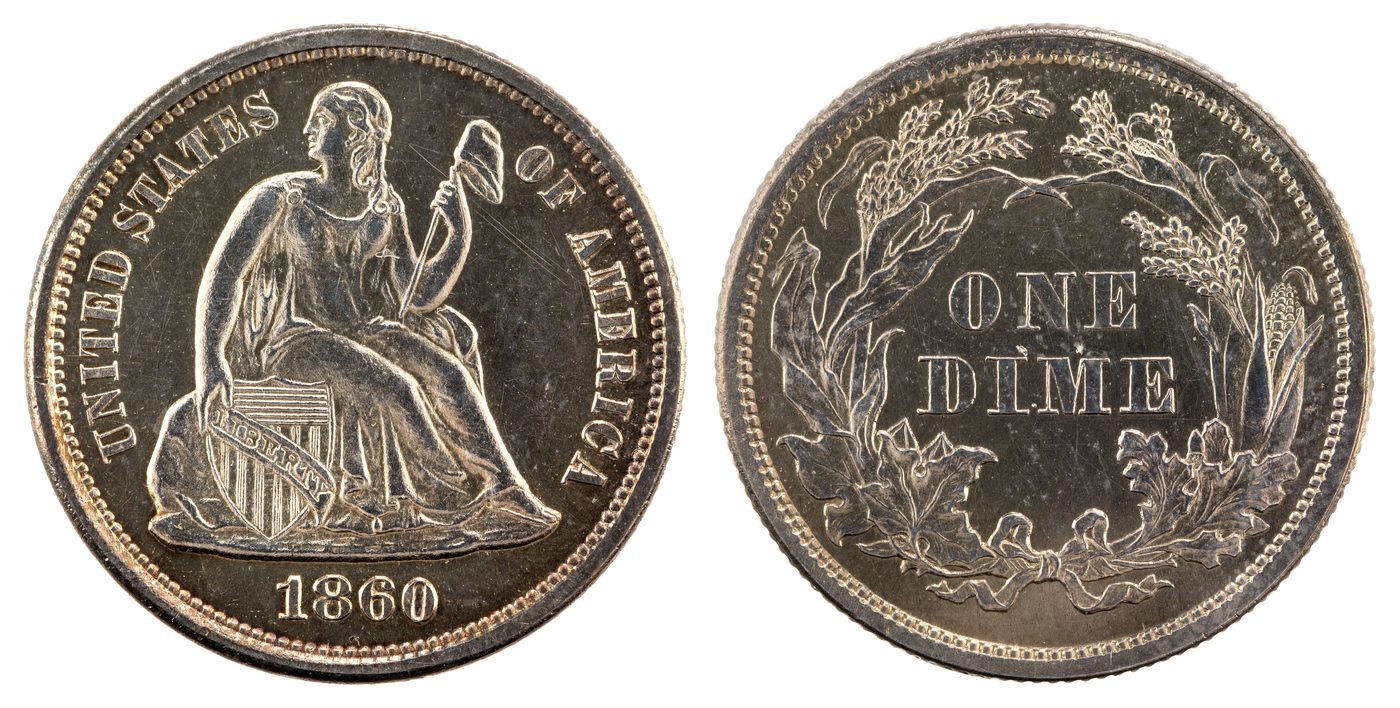
The story behind the coin
In the 1830s the U.S. Mint wanted its silver to look serious. The old "bust" coins — a chunky portrait of Liberty in a cap — felt dated. Mint Director Robert M. Patterson wanted something grander, closer to the seated figures the British put on their copper. So he commissioned a goddess: Liberty, seated on a rock, the very picture of a young republic at rest but ready.
The design first reached the public on the half dimes and dimes of 1837, and it stuck. For the next fifty-four years the same seated figure rode in American pockets through some of the country's most turbulent decades — the Panic of 1837, the California gold rush, the Civil War, the silver and gold fights of the Gilded Age. Few U.S. coin designs have ever lasted that long. The dime's longevity is exactly why it's so collectable: one design, dozens of years, four different mints, and a string of varieties that turn a simple ten-cent piece into a 54-year puzzle.
It was a true workhorse — a dime was real money in the 1800s, enough for a meal or a drink — and the Mint quietly tinkered with it the whole way. Stars came and went. Arrows appeared beside the date. The whole front was redrawn. Each change is a fingerprint of what was happening to American money at that moment.