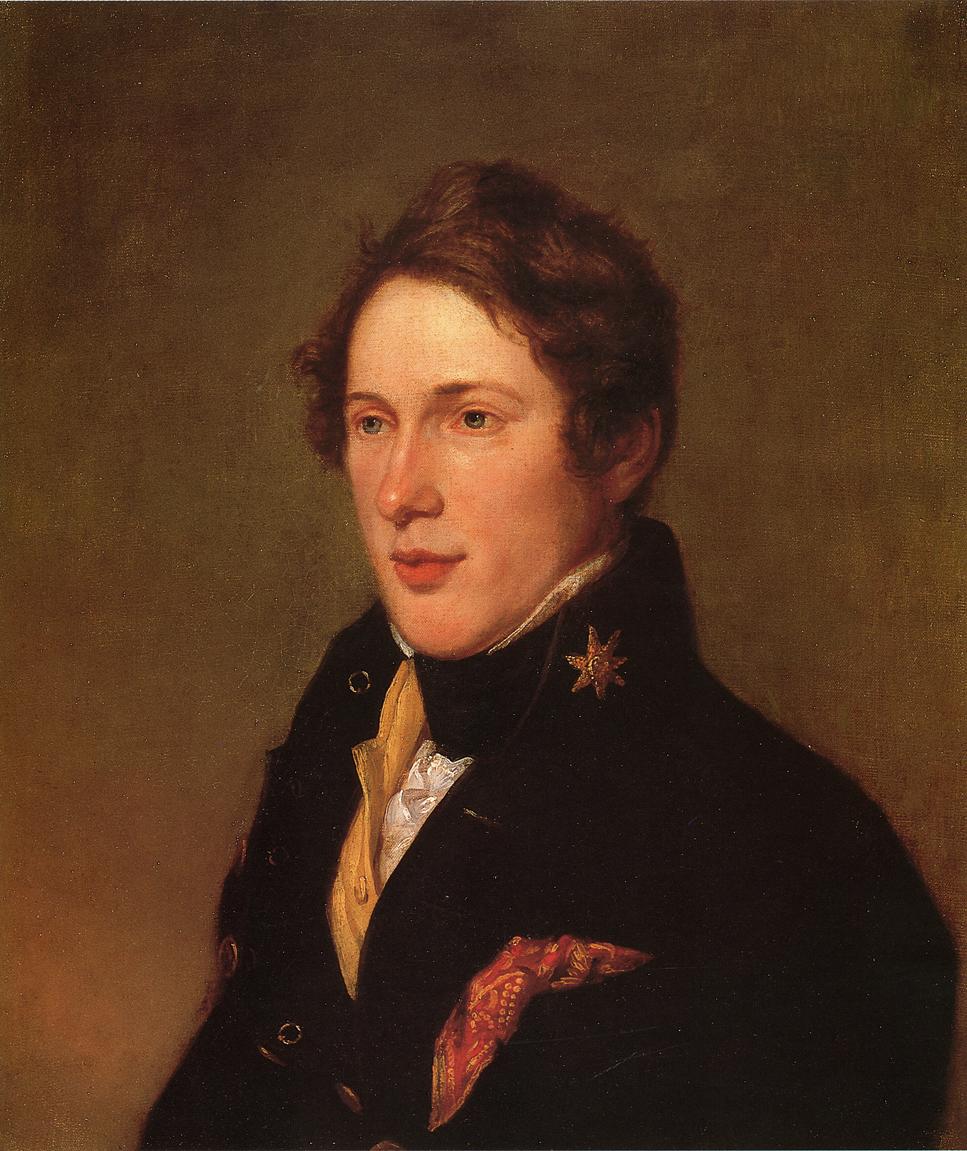
The Peale who drew from life
Titian Ramsay Peale was born in Philadelphia on November 17, 1799, into the most artistic family in early America. His father was Charles Willson Peale — portraitist of the Revolution, founder of one of the country's first natural history museums. Charles named his sons after the masters: Raphaelle, Rembrandt, Rubens. Titian was named after the great Venetian painter.
But Titian did not become a portraitist. He became a naturalist who could draw. While still a teenager he was illustrating specimens; at eighteen he was elected to Philadelphia's Academy of Natural Sciences. In 1819 and 1820 he crossed the plains to the Rocky Mountains with Major Stephen Long's expedition, sketching animals and landscapes no Eastern artist had seen. His drawings later filled the plates of Alexander Wilson's American Ornithology and Thomas Say's American Entomology. Peale drew the natural world the way other men wrote it down — patiently, from the living thing.
That is the key to understanding his one famous coin. When the Mint needed an eagle, it did not ask a sculptor for a heraldic emblem. It asked a man who had spent his life watching real eagles fly.