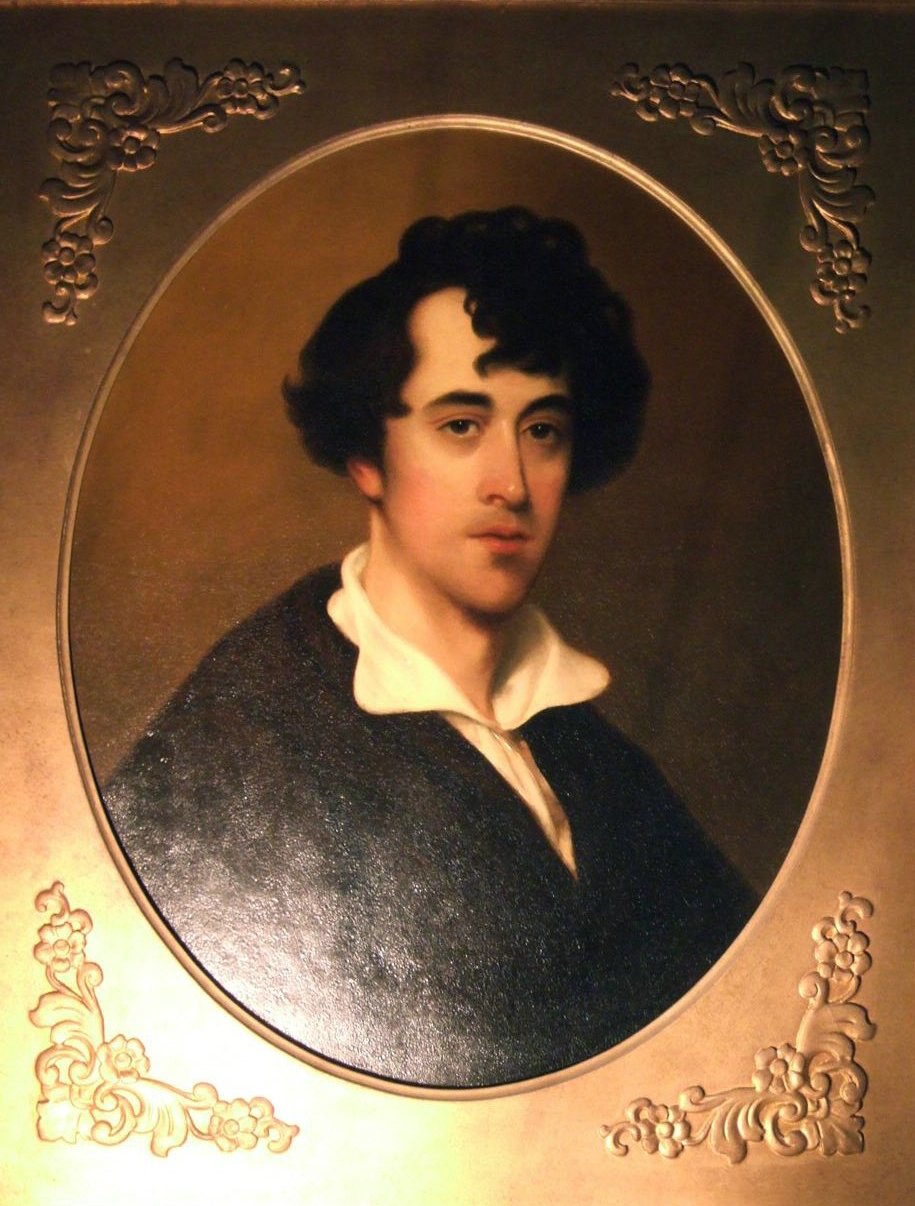
The prodigy who crossed an ocean
Robert Ball Hughes was modeling masterworks before most boys could be trusted with a pocketknife. The story handed down is that at twelve he shaped a small relief — a scene of the wisdom of Solomon — out of melted candle ends, and that it was good enough to be cast in silver. Whether or not every detail of that tale survives scrutiny, the talent it points to was real.
He was born in London on 19 January 1804 — some older sources say 1806 — and trained for seven years under Edward Hodges Baily, one of the most sought-after British sculptors of the age. At the Royal Academy the young Hughes collected medals, modeling careful copies of famous antique statues and, eventually, work of his own.
Then, around 1829, he did the unlikely thing: he left a thriving art world for a young country that had almost none. America in 1829 had no sculpture schools, no foundries equal to Europe's, barely a market. Hughes arrived in New York and started building the thing he wanted to belong to.
The commissions came fast. A high-relief marble memorial to Bishop John Henry Hobart for Trinity Church in New York. A statue of Governor DeWitt Clinton. A statue of Alexander Hamilton — the first life-size marble figure carved in the United States — set inside New York's Merchants' Exchange. That Hamilton burned in the Great Fire of New York in 1835, a heartbreak for any sculptor. Hughes moved on, to Philadelphia and then to the Boston area, where he settled for good.