Designer

Thomas Sully

The portrait painter whose seated Liberty became the face of American silver.

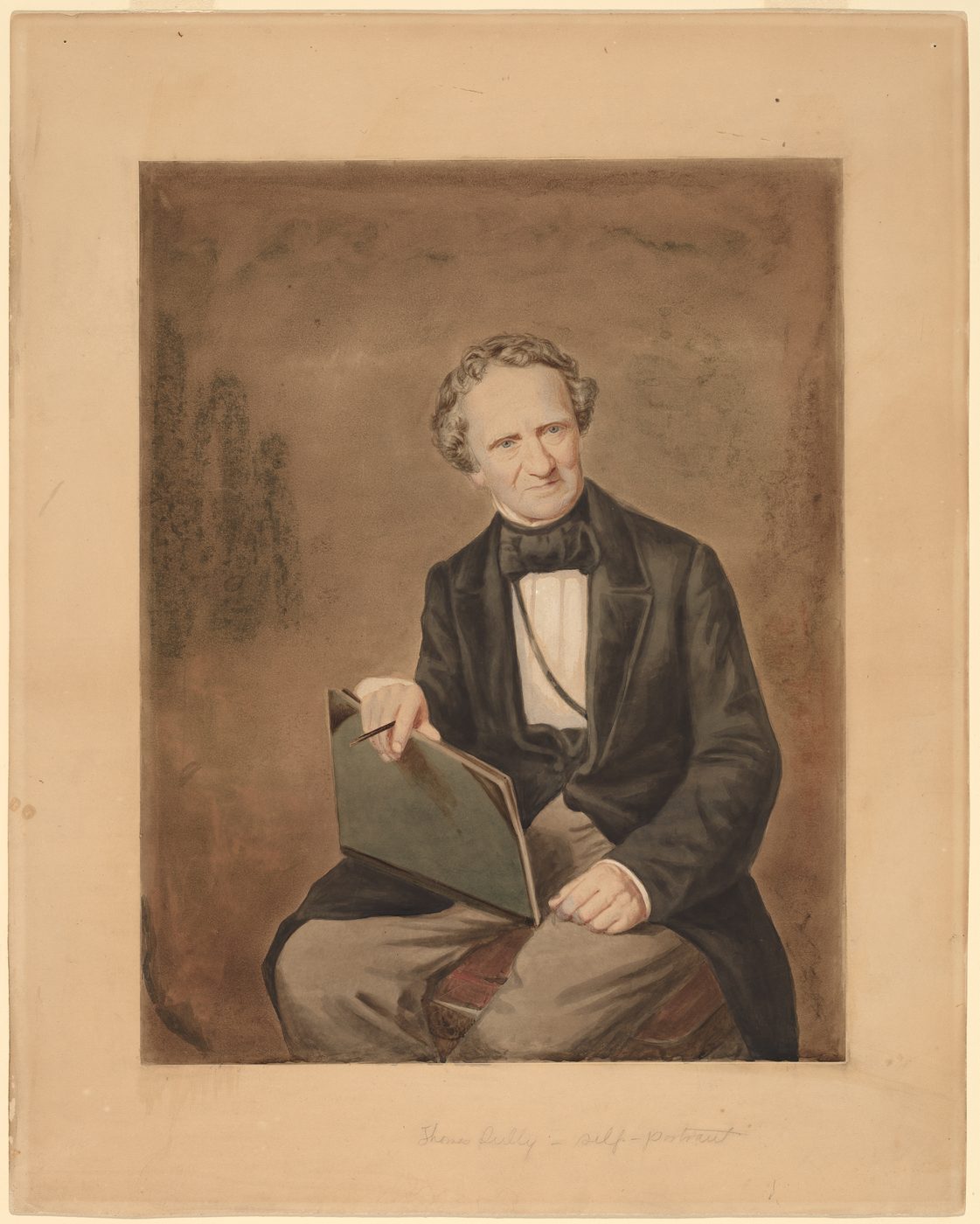
Thomas Sully
Self-portrait by Thomas Sully; donated to Wikimedia Commons by the National Gallery of Art (Open Access) · CC0 · source

In 1835 the U.S. Mint asked one of the most famous portrait painters in America to draw a woman sitting on a rock. His three rough sketches became Seated Liberty — the design struck on U.S. silver for more than fifty years. Almost nobody knows his name.

The painter who never made a coin

Thomas Sully painted queens. In 1838 he traveled to London and was given five sittings with the newly crowned Queen Victoria at Buckingham Palace — a young American artist face to face with the most photographed-before-photography woman in the world. The portrait that came out of it became one of his most celebrated works.

That tells you the league Sully played in. By the 1830s he was the leading portrait painter in the United States, the man Philadelphia society sat for when it wanted to be remembered well. So when the Mint came knocking in 1835, it wasn't hiring a coin engraver. It was hiring a star.

He was born in Horncastle, England, on June 19, 1783, the son of two actors, and crossed the Atlantic as a boy of eight — the family settling in Charleston, South Carolina, in 1792. He learned his craft the long way: apprenticed to a French miniaturist brother-in-law, then three intense weeks under Gilbert Stuart in Boston, then nine months in London studying under Benjamin West. He came home and made Philadelphia his base for the rest of his life. Across roughly seventy working years he produced more than 2,000 paintings.

Here is the strange part. Sully never cut a die, never struck a coin, never worked a day at the Mint. His hand touched American money exactly once — as a drawing. And that drawing outlived almost everything else he made.

What the Mint actually asked him for

In 1835 a new Mint Director took over: Robert Maskell Patterson. He wanted a fresh national coinage, and he had a specific picture in his head — an allegory, a single human figure standing in for an idea. The idea was Liberty. The model in his mind was Britannia, the seated woman who had personified Britain on British coins for over a century. Patterson wanted an American answer to her.

He didn't draw it himself. He commissioned two respected Philadelphia artists — Sully and the naturalist-painter Titian Peale — and gave them unusually precise instructions. In a letter dated August 1, 1835, Patterson told Sully he wanted Liberty seated — sitting, he suggested, on a rock. Sully sent back three rough sketches in early October: a woman in flowing classical robes, one arm steadying a shield marked LIBERTY, the other raising a pole topped with a liberty cap, the ancient Roman symbol of a freed slave.

That figure — the obverse, the "heads" side — is Sully's. Peale drew the soaring eagle for the reverse. Neither man engraved anything. That job fell to the Mint's assistant engraver, Christian Gobrecht, who took the artists' drawings and cut them into steel and copper — translating a painter's loose pencil into the shallow, durable relief (the raised surface) a coin die needs. The first coins carrying the design were struck in late 1836: the silver dollars collectors now call Gobrecht dollars.

And there's the quiet injustice of the story. Gobrecht signed some of the dies. Collectors saw the name, and the whole coin became "the Gobrecht dollar." The man who engraved it got the credit; the man who designed it — Sully — was largely forgotten. Numismatic writers have been trying to set the record straight ever since.

The craft: a painter's instinct on a coin

Sully's reputation rested on grace. He painted in the manner of Britain's Sir Thomas Lawrence — soft light, flattering line, an idealized warmth — so completely that he was nicknamed "the American Lawrence." His sitters looked like the best version of themselves. He sold elegance.

You can see that instinct in Seated Liberty. Compare her to the blunt, severe Liberty heads on earlier American coins and the difference is obvious: Sully gave the nation a figure, not just a face. A full body, a posture, a sense of repose and quiet readiness. She isn't snarling defiance; she's seated, composed, holding the shield rather than brandishing it. That calm is a painter's choice, not an engraver's.

It's worth being honest about how collaborative the result was. Patterson dictated the concept and even the pose. The Mint's chief engraver, William Kneass, had roughed out an Americanized Britannia before a stroke took him off the project. Peale handled the eagle. Gobrecht did the hard work of making it strikeable. Sully's contribution was the human heart of the obverse — the seated woman herself — and that is the part that endured, recut and refined, across denomination after denomination for the rest of the century.

Career timeline

  1. 1783Born June 19 in Horncastle, Lincolnshire, England, son of two actors.
  2. 1792Emigrates with his family to the United States; they settle in Charleston, South Carolina.
  3. 1807Studies briefly under Gilbert Stuart in Boston.
  4. 1809–1810Studies in London under Benjamin West; absorbs the style of Sir Thomas Lawrence. Becomes a U.S. citizen (1809).
  5. 1819Completes 'The Passage of the Delaware,' his ambitious history painting of Washington.
  6. 1835Commissioned by Mint Director Robert Patterson; sends three sketches of a seated Liberty in October.
  7. 1836Christian Gobrecht's dies, based on Sully's figure, strike the first Gobrecht dollars.
  8. 1837–1838Travels to London and paints Queen Victoria at Buckingham Palace.
  9. 1872Dies November 5 in Philadelphia, where he had worked for over sixty years.

Key facts

Born
June 19, 1783 — Horncastle, Lincolnshire, England
Died
November 5, 1872 — Philadelphia, Pennsylvania
Nationality
English-born American
Known for
Romantic portraiture; the leading U.S. portrait painter of his era
Coin work
Drew the seated Liberty obverse figure (1835)
Engraved by
Christian Gobrecht, from Sully's sketches
Design lifespan
Struck on U.S. silver 1836–1891
Famous painting
Portrait of Queen Victoria (1838)

Questions collectors ask

Did Thomas Sully design the Gobrecht dollar?

He designed the obverse figure of it. In 1835 the Mint commissioned Sully to draw a seated Liberty, and his sketches became the 'heads' side. Christian Gobrecht engraved the dies and signed some of them, which is why the coin carries Gobrecht's name — but the seated woman is Sully's design, and the reverse eagle was drawn by Titian Peale.

Why is it called the Gobrecht dollar if Sully designed it?

Because Gobrecht engraved the dies and his signature appears on several of them. Collectors saw the name on the coin and the label stuck. It's one of numismatics' best-known cases of the engraver getting the credit the designer earned.

What coins use Thomas Sully's design?

His seated Liberty figure was adapted onto U.S. silver across decades — the Gobrecht dollar, then the Seated Liberty dime, half dime, quarter, half dollar, and dollar, plus the twenty-cent piece. In total the design appeared on American coins from 1836 through 1891.

Was Thomas Sully a coin engraver?

No. He was a portrait painter — arguably the most famous in America in his day. He drew the design on paper; trained Mint engravers turned it into coin dies. He never worked at the Mint.

What else is Thomas Sully famous for?

His portraits. He painted thousands of them over a seventy-year career, including Thomas Jefferson and Andrew Jackson, and traveled to London in 1838 to paint the young Queen Victoria — one of his most celebrated works.

Sources