Designer

William Kneass

The mapmaker who became the Mint's second Chief Engraver — and whose career ended at his own workbench.

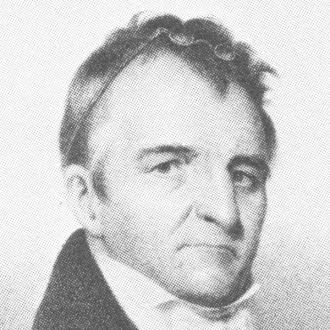
William Kneass
Unknown author (engraving of William Kneass) · public domain · source

For sixteen years his initials never appeared on a single coin, yet his hand shaped the face of American money — the Classic Head gold, the trim new silver of the 1830s. Then, on a August day in 1835, a stroke at the Mint took his right side and, quietly, his career.

The mapmaker who took the Mint

William Kneass never set out to make coins. He set out to make pictures on copper.

Born in Lancaster, Pennsylvania, in 1780, he built a name in Philadelphia as a commercial engraver — bank notes, book illustrations, portraits, the title-page vignettes that decorated early American print. He was good at the fine, patient work: line engraving and stipple, the craft of scratching an image into a metal plate one stroke at a time. When the War of 1812 came, he volunteered with the field engineers who threw up fortifications west of the city, and afterward engraved a plan of the works. By 1815 he was well enough known to run his own shop on Fourth Street, above Chestnut.

So when Robert Scot — the Mint's first Chief Engraver, the man who cut the very first US silver dollar — died in office in 1823, the job needed filling. Kneass got it. On January 29, 1824, he was appointed engraver and die-sinker to the United States Mint, the second person ever to hold the post. He would hold it until he died.

Here is the thing that makes Kneass easy to overlook and hard to forget: in the early 1800s the Chief Engraver did not sign his coins. No initials, no monogram. So for sixteen years one man quietly set the look of American pocket change and gold — and almost nobody knew his name. The coins were the signature.

The craft: reworking another man's Liberty

Kneass rarely started from a blank plate. His genius — and his limit — was the revision.

The Liberty he inherited came from John Reich, a brilliant German immigrant engraver whose "Capped Bust" portrait (Liberty in a soft cloth cap, her curls spilling out) had dressed American silver since 1807. Kneass took Reich's design and refined it. Through the late 1820s and into 1831 he reworked the Capped Bust for the half dime, dime, quarter, and half dollar — slimming the portrait, making Liberty look younger, tidying the eagle on the reverse.

The 1831 quarter shows his hand best. The Mint shrank the coin — from about 27 mm down to 24.3 mm — and switched to a new tool called a close collar: a steel ring that held the blank coin (the planchet) in place during striking so it couldn't spread, and pressed a reeded — ridged — pattern into the edge in the same blow. The result was a smaller, sharper, more uniform quarter. Kneass cut the dies that married the old design to the new technology.

Then in 1834 came the work he's most remembered for: the Classic Head gold. He gave the quarter eagle ($2.50) and half eagle ($5) a fresh Liberty — head bound with a band reading LIBERTY, an echo of the "classical" portrait Reich had cut for the large cent back in 1808. Honest historians note Kneass's version was a close adaptation of that earlier head, "neither as complex in detail nor as refined in execution" as the elegant Capped Head it replaced. He was a competent engraver, not a visionary one. But the coin did exactly the job it was asked to do — which was never really about beauty at all.

Why the Classic Head gold had to exist

The Classic Head gold is one of the rare cases where you can read an act of Congress straight off a coin.

For decades, US gold coins carried more gold than their face value was worth abroad. America's law still tied gold to silver at a 15-to-1 ratio while Europe had drifted to 16-to-1, so a US gold piece was worth more melted down than spent. The predictable happened: speculators bought up American gold, shipped it overseas, and melted it. Gold coins all but vanished from everyday circulation.

The Coinage Act of June 28, 1834, fixed it by trimming the weight of every gold coin — just enough that face value finally edged above bullion value, and the coins could circulate again. Kneass's redesign was the visible flag for the change. He pointedly left the motto E PLURIBUS UNUM off the reverse, so the public and the banks could tell the new, lighter gold from the old, heavier coins at a glance. The design isn't just decoration — it's a deliberate signal stamped into metal. That's the story worth knowing: the Classic Head exists because American gold was being melted faster than the Mint could make it.

A career timeline

  1. 1780Born September 25 in Lancaster, Pennsylvania.
  2. 1812–1815Volunteers with the field engineers fortifying Philadelphia; engraves a plan of the works.
  3. 1817–1820Runs the engraving partnership Kneass, Young & Co. in Philadelphia.
  4. 1824Appointed second Chief Engraver of the US Mint (January 29), succeeding Robert Scot.
  5. 1831Reworks the Capped Bust silver for the new close-collar, reeded-edge minting — including the smaller-diameter quarter.
  6. 1834Cuts the Classic Head gold quarter eagle and half eagle after the Coinage Act of 1834 reduces gold weight.
  7. 1835Suffers a stroke at the Mint on August 27, paralyzing his right side; Christian Gobrecht is hired as second engraver.
  8. 1835–1840Remains Chief Engraver in title while Gobrecht does nearly all the pattern and die work.
  9. 1840Dies August 27 in Philadelphia, still in office. Gobrecht succeeds him as Chief Engraver on December 21.

Key facts

Born
September 25, 1780 — Lancaster, Pennsylvania
Died
August 27, 1840 — Philadelphia, Pennsylvania (in office)
Nationality
American
Mint role
2nd Chief Engraver, US Mint (1824–1840)
Succeeded
Robert Scot
Succeeded by
Christian Gobrecht
Signature work
Classic Head gold (quarter eagle & half eagle, 1834)
Also known for
Reworking John Reich's Capped Bust silver; the 1831 small-diameter quarter

The stroke that ended a career

On August 27, 1835 — five years to the day before he would die — Kneass had a stroke at the Mint. It paralyzed his right side. For an engraver, whose entire trade lived in a steady right hand, it was a quiet catastrophe.

He kept the title. But the Mint needed work done, so it hired a second engraver: Christian Gobrecht, a gifted machinist and die-cutter who would soon be reckoned one of the finest the Mint ever employed. From late 1835 onward, Gobrecht did nearly all of the design and die work while Kneass remained Chief Engraver in name.

This is where attribution gets genuinely tangled, and where an honest page has to slow down. Many of the celebrated coins of these years — the Seated Liberty portrait, the reeded-edge half dollar that arrived with the Mint's new steam-powered press in 1836, the famous Gobrecht dollar — were Gobrecht's work, executed while Kneass held the office. Because Kneass's illness wasn't widely known, some of those patterns were credited to him at the time. Untangling who actually cut what in 1835–1840 is a recurring puzzle for collectors and historians alike. The safe rule: the silver reworkings of 1829–1834 and the 1834 Classic Head gold are Kneass's; the great leap to Seated Liberty belongs to Gobrecht.

Kneass died on August 27, 1840, still Chief Engraver. Gobrecht formally took the post that December.

Questions collectors ask

What is William Kneass best known for designing?

The Classic Head gold coinage of 1834 — the quarter eagle ($2.50) and half eagle ($5). He also reworked John Reich's Capped Bust portrait across the silver coins of the late 1820s and early 1830s, including the smaller-diameter 1831 quarter.

Did Kneass invent the Classic Head?

No. The 'classic' Liberty head — bound with a LIBERTY band, in the style of antique portraits — was John Reich's, first used on the large cent in 1808. Kneass adapted that earlier head for the 1834 gold. His version is generally judged a workmanlike copy rather than an original masterwork.

Why did the Classic Head gold leave the motto off the reverse?

On purpose. The Coinage Act of 1834 reduced the weight of US gold coins to stop them being melted for bullion. Dropping E PLURIBUS UNUM from the reverse gave the public and banks an instant way to tell the new, lighter coins from the old, heavier ones.

What happened to Kneass in 1835?

He suffered a stroke at the Mint on August 27, 1835, which paralyzed his right side. He kept the title of Chief Engraver, but the newly hired Christian Gobrecht did almost all the engraving work from then until Kneass died in 1840.

Did Kneass or Gobrecht design the Seated Liberty coinage?

Gobrecht. The Seated Liberty design and the reeded-edge half dollar of the late 1830s were Gobrecht's work, done while Kneass was Chief Engraver in title but unable to cut dies. Because his illness wasn't public, a few designs of these years were wrongly credited to Kneass at the time.

Why are there no initials on Kneass's coins?

Chief Engravers of the early 1800s didn't sign their coins. The practice of placing a designer's initials on US coinage came later, which is part of why Kneass — and his predecessor Robert Scot — are far less famous than the work they produced.

Sources