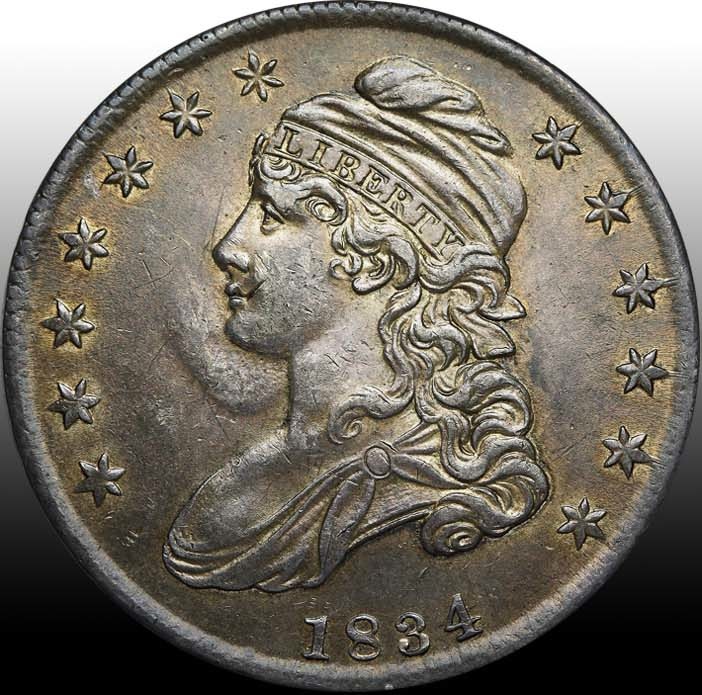
The story behind the coin
In the early United States, the half dollar did a job no one intended for it: it became the nation's silver vault.
Here is the strange part. From 1804 through the mid-1830s, the U.S. Mint struck no silver dollars for circulation. The dollars it had made were vanishing — merchants shipped them to the Caribbean to swap, one-for-one, for slightly heavier Spanish coins, then pocketed the difference. So the Mint gave up on the dollar and let the half dollar become the biggest silver coin in everyday American money.
But "everyday" is misleading. Banks didn't spend half dollars — they stored them. A bag of half dollars was a convenient, countable unit of silver, so banks held them as reserves and shuffled them from one institution to another to settle accounts. Many coins went from the Mint to a vault and stayed there. That's the accepted explanation numismatists give for a remarkable fact: a surprising number of these coins, struck between Jefferson's second term and the eve of the railroad age, survive today looking far fresher than their age suggests.
So the Capped Bust half dollar is, in a sense, the coin America saved instead of spent — which is exactly why so much of it is still here to collect.