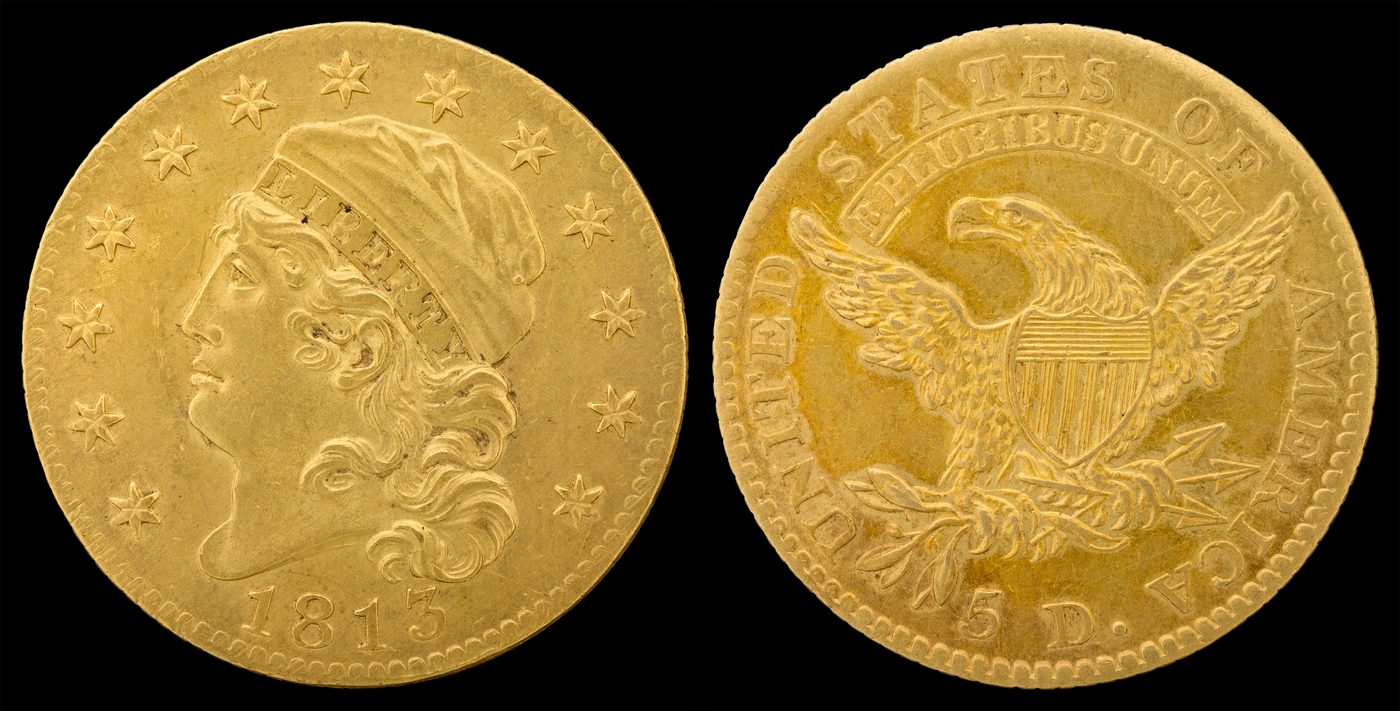
The coin that was worth more melted than spent
Picture a $5 gold coin fresh from the Philadelphia Mint in 1820. You could spend it as five dollars. Or you could melt it and sell the gold for more than five dollars. For most of this coin's life, melting won.
That sounds like a glitch. It was the law. When Congress set up American money in 1792, it fixed how much gold a dollar was worth against silver — a ratio of 15 to 1. The world market, though, valued gold higher than that. As the years passed the gap widened, and by the 1820s an American gold coin carried more metal than its face value could buy. Ship it to Europe, melt it, and you came out ahead.
So that's what people did. The half eagle — the name Americans gave the $5 gold piece — barely circulated. Much of the mintage went straight from the Mint counter into the hands of bullion dealers and bankers, who sent it abroad to be melted into bars or restruck as foreign coin. One often-cited account describes some forty thousand recently struck U.S. gold pieces destroyed in a single Paris melt in 1831. Coin after coin, year after year, the survivors thinned out.
That is the whole strange story of the Capped Head Half Eagle. The mintages were respectable — over 1.38 million across the series. The survival rates are catastrophic. Which is exactly why collectors chase it: this is a coin that was made to disappear, and the few that dodged the furnace are some of the most coveted objects in American numismatics.