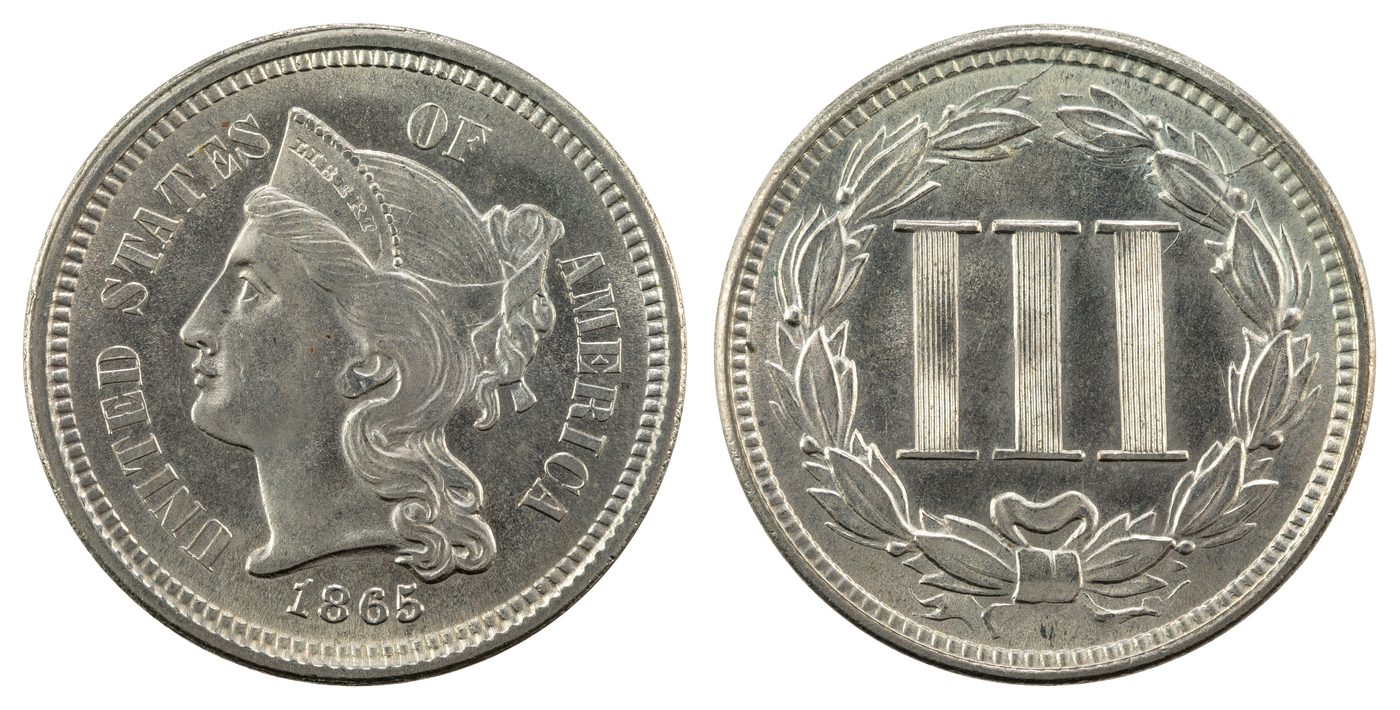
The story behind the coin
By the middle of the Civil War, Americans had stopped trusting paper and started hoarding metal. Gold and silver coins vanished into mattresses and bank vaults almost as fast as the Mint could strike them — a coin made of silver was worth its silver no matter who won the war. The little silver three-cent piece, struck since 1851, disappeared with the rest.
To keep commerce moving, the government printed tiny paper notes for three, five, ten, and twenty-five cents — "fractional currency," which people mockingly called shinplasters because the flimsy notes seemed about as useful as a bandage. They tore, they faded, they were easy to fake. The country needed real coins again, but coins people wouldn't melt or hoard.
The answer was nickel — specifically a hard alloy of three parts copper to one part nickel. It looked respectable, wore well, and had almost no melt value, so there was no profit in hiding it. A Pennsylvania industrialist named Joseph Wharton, who happened to control much of the country's nickel ore, had been lobbying hard for exactly this. In April 1864 he published a pamphlet arguing that all of America's base-metal coinage should be 75% copper and 25% nickel. He had a mine to fill, and Congress was listening.
The bill that created the three-cent nickel was pushed through by Representative John Adam Kasson on March 3, 1865, on the chaotic final night of the Congressional session. President Lincoln signed it within days — among the last coinage acts of his life. The new coin had two jobs: drive the hated three-cent shinplasters out of circulation, and make change for a first-class stamp, which then cost exactly three cents.