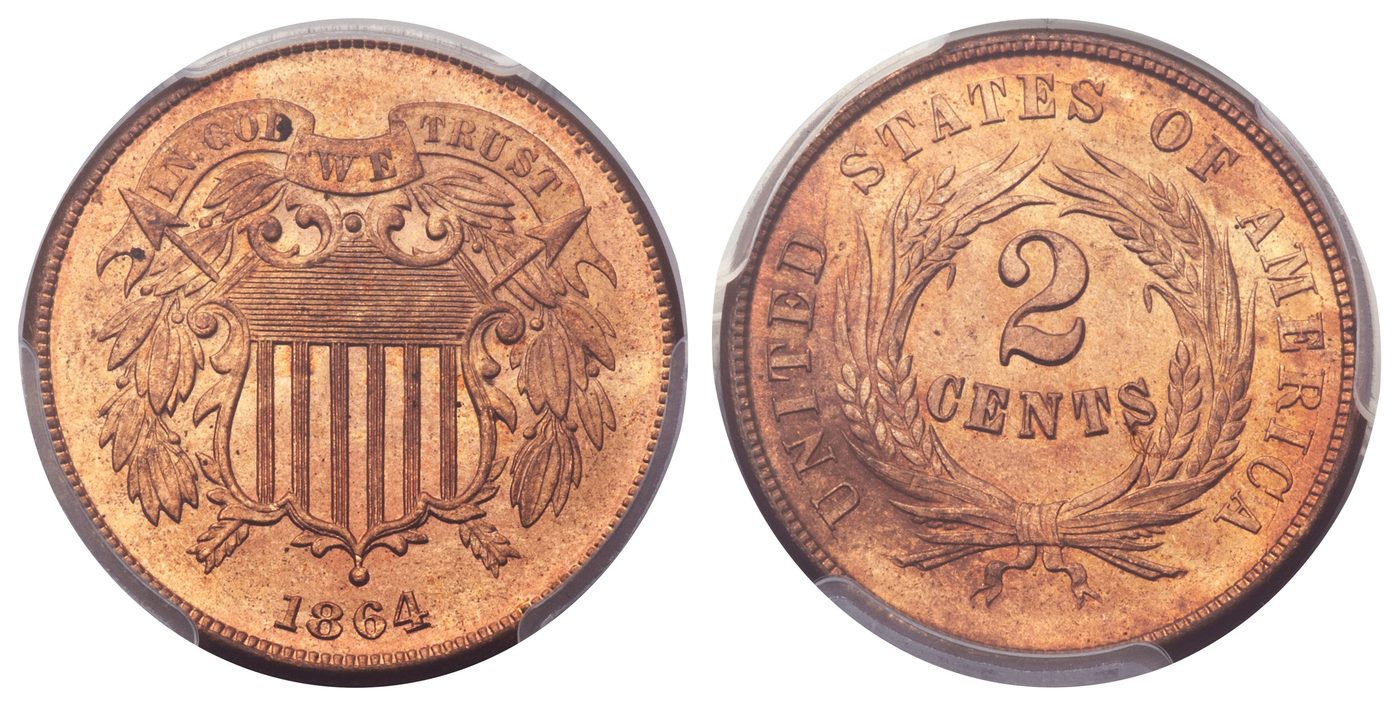
The story behind the coin
By 1862 the small change had simply disappeared. The Civil War had people hoarding anything made of silver or gold, and even the humble copper-nickel cent was being squirreled away faster than the Mint could replace it. Shopkeepers improvised — postage stamps stuffed in little brass frames, privately made tokens, paper "shinplasters" for a few cents. The country was running on IOUs and stamps.
The Mint's answer was a brand-new denomination: a fat bronze coin worth two cents. Mint Director James Pollock pushed for it in December 1863, partly to ease the shortage and partly to get away from nickel, whose hard alloy chewed up the Mint's dies. Congress agreed in the Coinage Act of 1864, which President Abraham Lincoln signed on April 22, 1864 — the same law that made base-metal coins legal tender for the first time, in small amounts.
But the coin's real fame came from four words. Back in late 1861, a Pennsylvania minister named Reverend Mark R. Watkinson had written to Treasury Secretary Salmon P. Chase, urging that the nation put God on its coins so that future generations would know it was a religious people, not a godless one. Chase liked the idea. The pattern coins read "God Our Trust"; Chase preferred a phrasing borrowed from the final verse of "The Star-Spangled Banner." When the two-cent piece rolled out, it became the first U.S. coin ever to carry In God We Trust — the motto now on every American coin and bill.