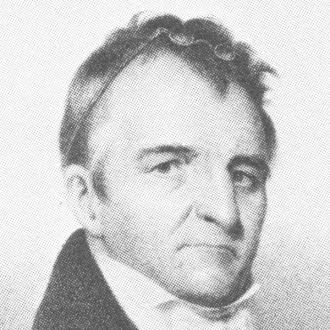
The mapmaker who took the Mint
William Kneass never set out to make coins. He set out to make pictures on copper.
Born in Lancaster, Pennsylvania, in 1780, he built a name in Philadelphia as a commercial engraver — bank notes, book illustrations, portraits, the title-page vignettes that decorated early American print. He was good at the fine, patient work: line engraving and stipple, the craft of scratching an image into a metal plate one stroke at a time. When the War of 1812 came, he volunteered with the field engineers who threw up fortifications west of the city, and afterward engraved a plan of the works. By 1815 he was well enough known to run his own shop on Fourth Street, above Chestnut.
So when Robert Scot — the Mint's first Chief Engraver, the man who cut the very first US silver dollar — died in office in 1823, the job needed filling. Kneass got it. On January 29, 1824, he was appointed engraver and die-sinker to the United States Mint, the second person ever to hold the post. He would hold it until he died.
Here is the thing that makes Kneass easy to overlook and hard to forget: in the early 1800s the Chief Engraver did not sign his coins. No initials, no monogram. So for sixteen years one man quietly set the look of American pocket change and gold — and almost nobody knew his name. The coins were the signature.