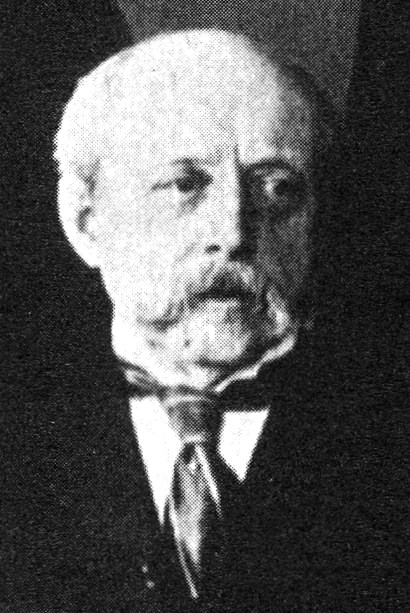
Designer

Charles E. Barber

The Mint's chief engraver for 37 years — the man whose name we still stamp on a quarter.

Charles E. Barber
Unknown author; credit: Denver Mint, U.S. Mint (via David Lange, History of the United States Mint and Its Coinage) · public domain · source

For an entire generation, the coins jingling in American pockets carried the work of one man. Charles E. Barber designed the dime, the quarter, the half dollar, and the five-cent piece — and he held the most powerful job in American coin design for 37 years, longer than anyone before or since.

The man who outlasted nine presidents

Charles Edward Barber was born in London in 1840, the son of an engraver. When he was a boy the family crossed the Atlantic, and engraving was the family trade he was raised into — his father, William Barber, would himself become chief engraver of the United States Mint.

The chief engraver is the Mint's senior artist: the person who designs the nation's coins and cuts the master tools they are struck from. In 1869 the younger Barber joined the Mint in Philadelphia as an assistant under his father. When William died in 1879, Charles stepped into his shoes. President Rutherford B. Hayes made it official in January 1880.

He held the post until the day he died — February 18, 1917. That is 37 years at the head of American coinage, through the administrations of nine presidents. No chief engraver has ever served longer. When he was buried, the flags at the Philadelphia Mint were lowered to half-staff, an honor said never to have been given to any Mint official since.

Barber's reputation is a genuine argument among collectors, and the page is more honest for saying so. To his critics he was the cautious civil servant whose designs were competent and a little dull. To his defenders he was a superb craftsman boxed in by the brutal practical demands of mass production — a coin has to strike cleanly millions of times, stack flat, and survive decades of pockets and cash drawers. The numismatic scholar R.W. Julian put the case for the defense plainly: Barber, he argued, was capable of superb work when he was given a free hand. He rarely was.

The craft — and the fights

Barber's signature is the clean, durable, low-relief coin. Relief is how far a design rises off the coin's flat surface; high relief looks sculptural and dramatic but is hard to strike and quick to wear. Barber's instinct ran the other way — toward designs the presses could stamp in a single blow and that would still read clearly after twenty years in circulation. His Liberty heads are firm and shallow, his lettering crisp. It is the look of a man who thought first about the coining room.

His best-known work came from a failure that wasn't his. The Mint Act of 1890 let the Treasury redesign coins that had been in service 25 years, and in 1891 it opened a public competition for new silver designs. Artists balked at the terms; the open contest drew some 300 entries and produced nothing usable. Mint Director Edward Leech called it a "wretched failure" and handed the job to Barber. The result — the dime, quarter, and half dollar of 1892 — carries his name to this day. Collectors simply call them Barber coinage.

The fight that defined him came in 1907. President Theodore Roosevelt wanted American coins to be beautiful, and commissioned the sculptor Augustus Saint-Gaudens to redesign the gold double eagle. Saint-Gaudens delivered a soaring high-relief masterpiece — and it could not be mass-produced. Barber said so, repeatedly and with force; by accounts of the episode he held that no mint could strike such a coin in volume. The original relief took multiple blows of the press for a single coin. Saint-Gaudens died in August 1907, and the running battle passed to his assistant, Henry Hering. In the end Roosevelt forced the issue, and it fell to Barber to lower the relief until the coin could be struck in one blow. The Saint-Gaudens double eagle that circulated for the next 26 years is the artist's vision rendered practical by the engraver who fought it — an uncomfortable, very real collaboration.

One caution on the lore. Barber has long been painted as a jealous rival of the Mint's other great engraver, George T. Morgan — and as a thorn in Roosevelt's side. More recent research, drawing on material held by Barber's own descendants, has challenged both stories, arguing the Morgan relationship was actually a warm one across four decades of close work, and that Barber and Roosevelt got on personally despite the double-eagle clash. Treat the "feud" framing as the contested legend it is, not settled fact.

Career timeline

  1. 1840Born in London, England, son of engraver William Barber.
  2. 1869Joins the U.S. Mint in Philadelphia as an assistant engraver under his father.
  3. 1879–1880Designs the Flowing Hair obverse of the experimental four-dollar Stella pattern.
  4. 1880Appointed sixth Chief Engraver of the U.S. Mint by President Hayes, succeeding his late father.
  5. 1883His Liberty Head ('V') nickel debuts — and is hastily revised after fraudsters gold-plate the 'no CENTS' version.
  6. 1892The Barber dime, quarter, and half dollar enter circulation after the failed 1891 design competition.
  7. 1893Designs the Isabella quarter for the World's Columbian Exposition.
  8. 1907Lowers the relief of Saint-Gaudens's double eagle so it can be mass-produced, after opposing the design.
  9. 1915Co-designs commemoratives for the Panama-Pacific Exposition.
  10. 1916His silver coinage is retired as the Mercury dime, Standing Liberty quarter, and Walking Liberty half arrive.
  11. 1917Dies in Philadelphia, still in office; Mint flags fly at half-staff.

Key facts

Born
November 16, 1840 — London, England
Died
February 18, 1917 — Philadelphia, Pennsylvania
Nationality
British-born American
Role
Sixth Chief Engraver, U.S. Mint (1880–1917)
Tenure
37 years — the longest of any Mint chief engraver
Signature U.S. work
Barber dime, quarter & half dollar; Liberty Head ('V') nickel
Notable commemoratives
Isabella quarter (1893); Panama-Pacific issues (1915)
Famous pattern
Flowing Hair four-dollar Stella (1879–1880)

Questions collectors ask

What coins did Charles Barber design?

His best-known U.S. designs are the Barber dime, quarter, and half dollar (struck 1892–1916) and the Liberty Head 'V' nickel (1883–1913). He also designed the obverse of the Isabella quarter (1893), the Flowing Hair four-dollar Stella pattern (1879–1880), and several Exposition commemoratives. He held the chief engraver's post for 37 years, so his hand is on a large share of the period's coinage.

Why are the coins called 'Barber' coinage?

They simply carry the name of the man who designed them. After a public design competition in 1891 failed to produce anything usable, the Mint director assigned the redesign of the dime, quarter, and half dollar to chief engraver Charles Barber. The new coins arrived in 1892, and collectors have called the whole group Barber coinage ever since.

Did Barber really design the Liberty Head nickel?

Yes. The 'V' nickel of 1883 is his. Its first version left the word CENTS off the reverse, showing only a large Roman numeral V for five cents. Some people gold-plated those coins and passed them as five-dollar gold pieces, so the Mint had Barber add CENTS to the design within months.

Was Barber a good designer or a bad one?

Collectors genuinely disagree. His coins were built to strike easily and survive decades of circulation, which some read as conservative or unimaginative. Others, including the scholar R.W. Julian, argue he did superb work when allowed creative freedom and was constrained mostly by the practical demands of mass production. Both views are defensible — which is part of why his work is still discussed.

Why did Barber clash with Augustus Saint-Gaudens?

In 1907 President Roosevelt had Saint-Gaudens redesign the gold double eagle in dramatic high relief. The design was beautiful but couldn't be struck efficiently — the original took multiple blows of the press per coin. Barber, responsible for production, opposed it and ultimately lowered the relief so the coin could be mass-produced. The double eagle that circulated for decades is the result of that forced collaboration.

Sources