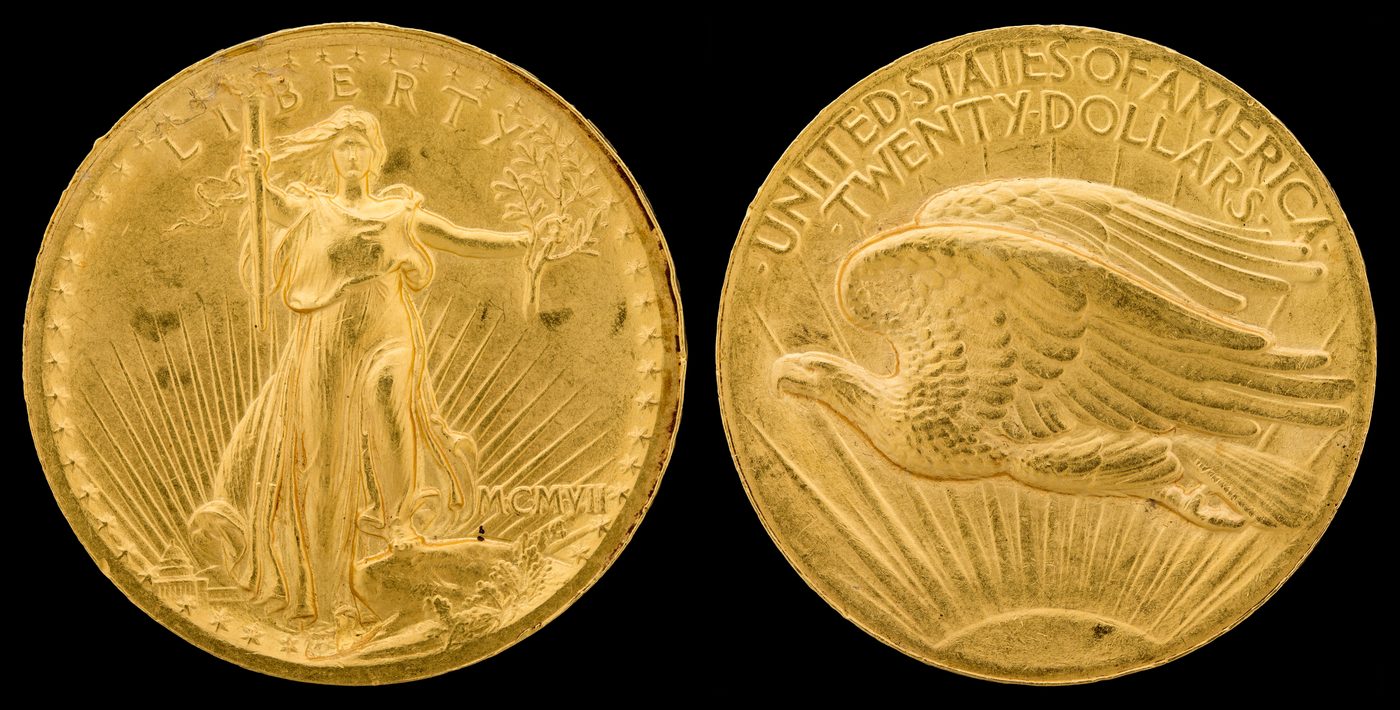
The story behind the coin
Theodore Roosevelt was not a coin collector. He was something more dangerous: a man with taste and the power to act on it. In December 1904 he wrote to his Treasury secretary that American coinage was "artistically of atrocious hideousness," and he had a fix in mind — hand the job to a real artist. He later called the project his "pet crime," because he knew he was bending the Mint to his will.
The artist was Augustus Saint-Gaudens, the leading American sculptor of the age. Roosevelt didn't ask for a tweak. He wanted coins that could stand next to the high-relief coins of ancient Greece — pieces struck so deeply that the figures seem to rise off the metal. Relief simply means how far the design stands up from the flat surface of the coin; high relief means it stands up a lot, which is gorgeous to look at and a nightmare to mass-produce.
The two men got their wish and paid for it. Saint-Gaudens was dying of cancer through the whole project. He never saw a finished coin in circulation — he died on August 3, 1907, months before the design reached the public. His studio assistant, Henry Hering, carried the work the rest of the way to the Mint.
Then there was the engineering problem. Saint-Gaudens' original vision was so deep that the first experimental pieces — the Ultra High Relief strikes — needed up to nine blows of the press to bring up the full detail. That's wonderful for a museum and impossible for commerce. The Mint's chief engraver, Charles E. Barber, flattened the design down so an ordinary coin could be struck in a single blow. The masterpiece you can actually hold is a compromise — but what a compromise.