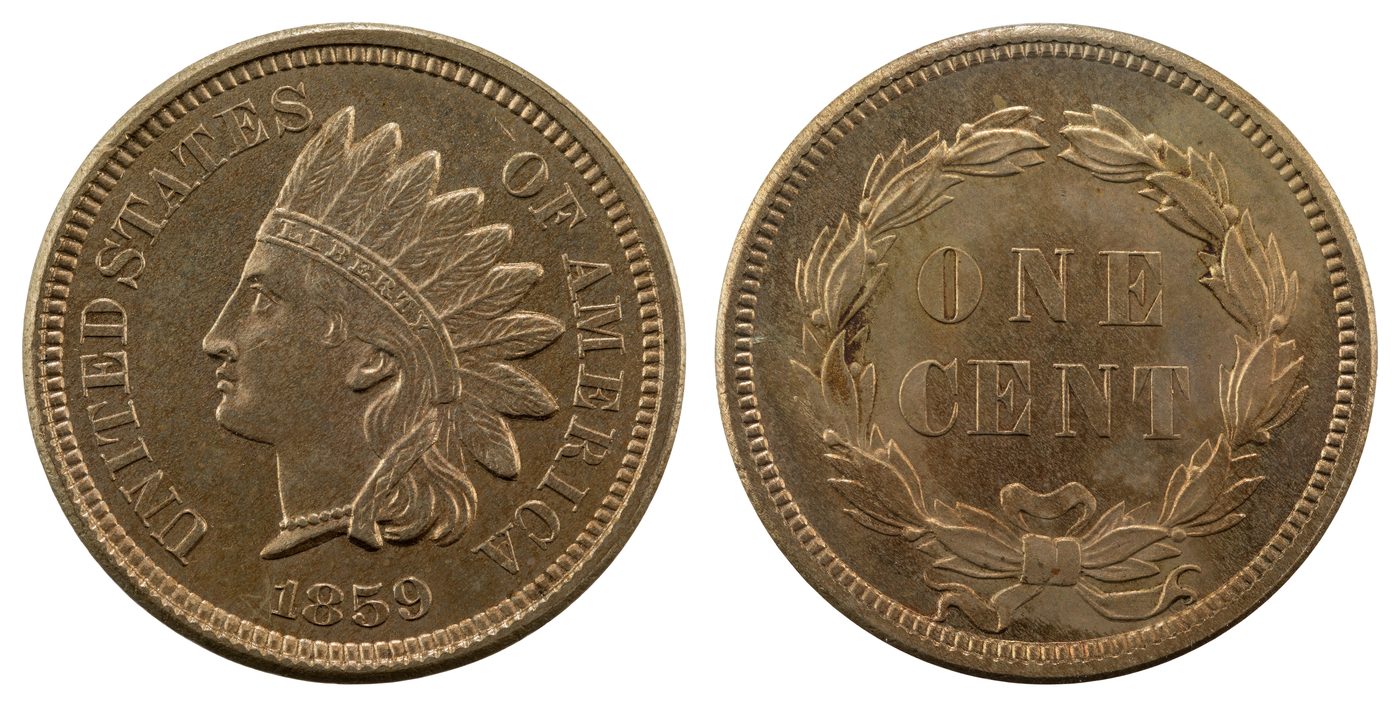
The story behind the coin
In 1859 the United States Mint had a problem with its smallest coin. The cent that came before this one — the Flying Eagle cent — looked handsome but struck badly. The eagle on one face and the wreath on the other sat back-to-back in the dies, fighting each other for metal, so the high points never came up sharp. The Mint needed a design with lower relief — a flatter, gentler image that would fill a die cleanly. (Relief is just how far the design rises off the coin's surface; high relief looks dramatic but is murder to strike.)
The man who solved it was James Barton Longacre (1794–1869), the Mint's Chief Engraver. He kept the wreath idea but replaced the eagle with the head of Liberty — and crowned her with a feathered war bonnet. The result, struck from 1859, would outlast the man who made it by forty years and become one of the most collected coins America ever produced.
It was also born into the worst monetary chaos the young country had seen. Two years into the Civil War, frightened citizens hoarded every coin with real metal value, and small change vanished from circulation. Into that vacuum poured privately made bronze tokens — some carrying as little as a fifth of a cent's worth of metal — and people spent them happily. That fact did not go unnoticed at the Mint, and it would reshape the cent itself.