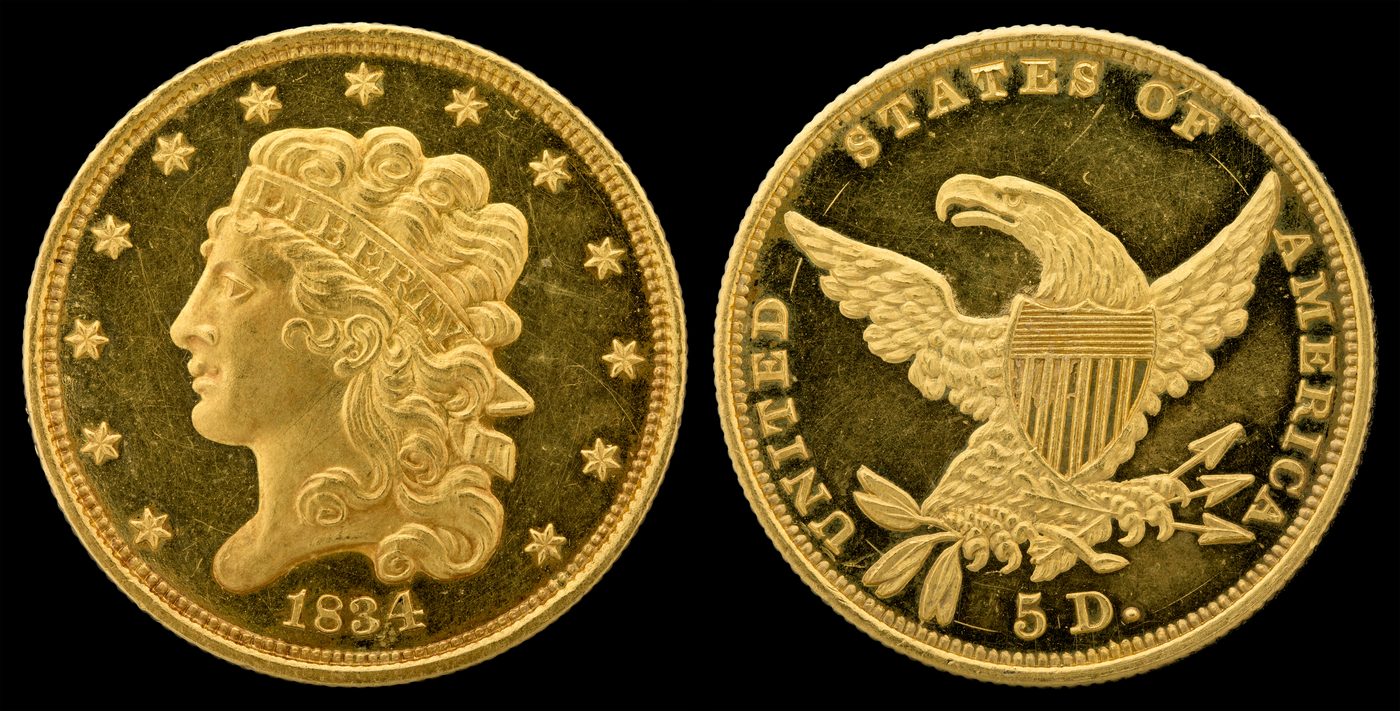
The story behind the coin
For most of the 1820s, the half eagle - the United States' $5 gold piece - had a strange problem: almost nobody used it. Not because people didn't want gold, but because the coin was worth more as metal than as money.
The math was simple and ruinous. The Coinage Act of 1792 had fixed the value of gold to silver at 15 to 1. But across the Atlantic, gold traded at closer to 16 to 1. That gap was a standing invitation: buy a U.S. gold coin, ship it to Europe or drop it in a crucible, and walk away with a profit. So that is exactly what happened. American gold coins were exported and melted by the thousands, and ordinary commerce ran on bank notes and foreign silver instead.
Congress finally moved on June 28, 1834. The new law cut the amount of gold in each coin - a lighter half eagle was no longer worth melting - and reset the official gold-to-silver ratio to 16 to 1, bringing the Mint in line with the world market. The change rode in on the politics of the moment: Andrew Jackson's war on the Second Bank of the United States and a hard-money movement that wanted real gold and silver in people's pockets, not paper.
There was one practical catch. The old, heavier coins and the new, lighter ones would circulate side by side, and they had to be told apart at a glance - the old ones were now worth keeping back and melting. The Mint's answer was a brand-new design. A coin that looked different was a coin you could trust to be the new, lighter standard.