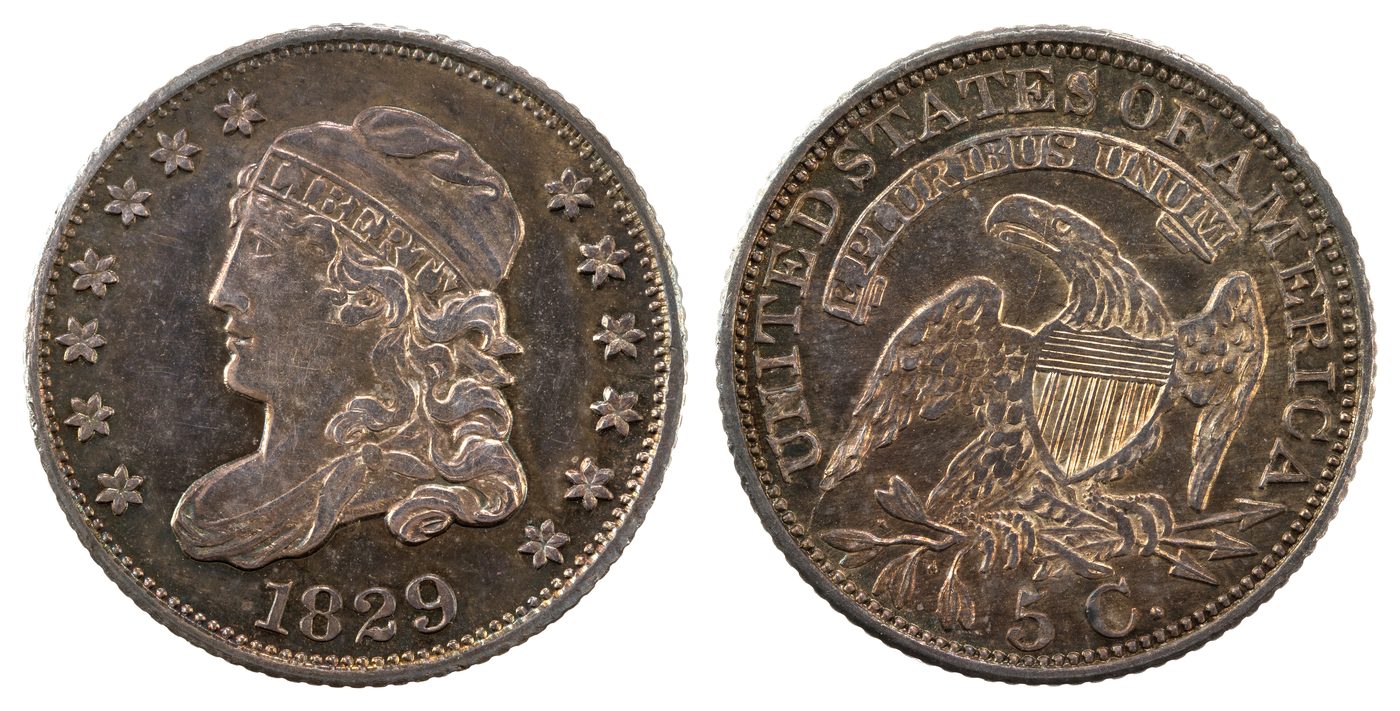
The coin sealed in a wall
On the Fourth of July, 1829, a crowd gathered in Philadelphia to lay the cornerstone of the second United States Mint. Into that cornerstone went the founding documents of the country — copies of the Declaration of Independence, the Constitution, and George Washington's Farewell Address. Beside them went two coins: a 1792 half disme, the very first silver coin the young Mint ever struck, and a brand-new 1829 half dime, struck that same morning for the occasion.
The pairing was deliberate. The half dime — five cents in silver — had launched American coinage in 1792, then quietly disappeared. The Mint had not made one since 1805. For 24 years there was no half dime at all. Bringing it back, on Independence Day, and sealing it next to its 1792 ancestor was the Mint telling a story about itself: we started here, and we are still here.
Why revive a coin nobody had missed for a generation? The honest answer is that the records don't fully say. The likeliest reason is plain commerce — a country running short of small change needed a piece worth more than a copper cent but less than a dime. Whatever the cause, the half dime came roaring back: across just nine years the Mint struck more than thirteen million of them. The tiny coin that opened the cornerstone ceremony went on to fill pockets and tills across the early republic.