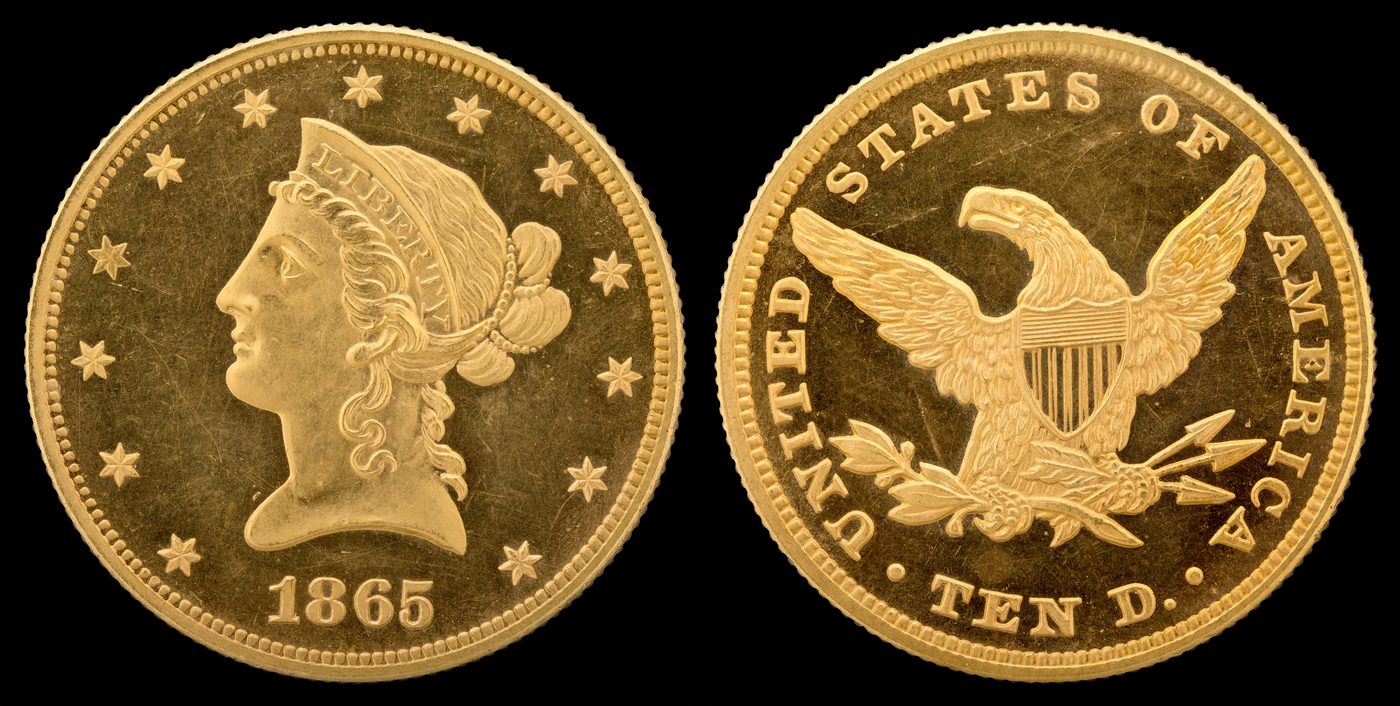
The story behind the coin
By the 1830s, America had a problem: it could barely keep its own gold coins at home. A law from 1804 had set the values wrong, so a U.S. gold coin was worth more melted than spent. Bullion dealers shipped them abroad and melted them down. The ten-dollar gold eagle simply stopped being made — for thirty-four years.
Congress finally fixed the math. Laws in 1834 and 1837 trimmed the weight and fineness of gold coins so they would actually circulate instead of vanishing into a crucible. With the new standard in place, the Mint needed a new look to go with it.
That look came from Christian Gobrecht, the Mint's gifted engraver. Beginning with the eagle in 1838, he put a calm profile of Liberty wearing a coronet — a small ornamental crown — on the nation's gold. The timing could not have been better. Within a decade, the 1849 California Gold Rush would flood the country with raw metal, and Gobrecht's Liberty would be the face stamped on the fortune.
She turned out to be remarkably durable. The same design carried American gold through the panic and hoarding of the Civil War, through Reconstruction, and across the whole glittering Gilded Age — until 1907, when President Theodore Roosevelt's push for more beautiful money finally retired her.