The story behind the coin
In 1874 the U.S. Mint did something unusual: it began designing a coin that Congress had not yet approved.
The push came from the West. The 1859 discovery of the Comstock Lode in Nevada had flooded the country with silver, and the Coinage Act of 1873 had just cut off one of the metal's main outlets by halting the free coinage of the standard silver dollar. Silver prices fell. Mining interests wanted the government buying more of their metal — and they wanted more silver coins in circulation to do it.
The man who carried that wish to Washington was Senator John P. Jones of Nevada, himself a part-owner of the Crown Point Mine. On February 10, 1874, he introduced a bill to authorize a new twenty-cent piece. His public argument was practical: out West, small change was scarce. The Mint had killed off the half dime in 1873, and merchants had trouble making change for the Spanish-style "bit" worth twelve and a half cents.
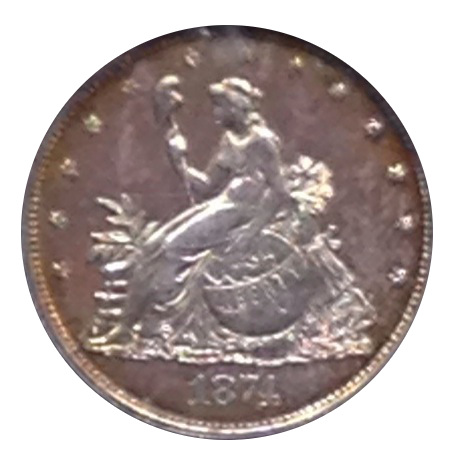
Mint Director Henry Linderman did not wait for the vote. Anticipating that the bill would pass, he ordered pattern coins prepared in 1874 — working models struck so the Mint could choose a design and be ready to go the moment the law was signed. (A pattern is exactly that: a trial coin, made to test a design or a denomination, not for spending.) That readiness is the reason the 1874 twenty-cent pattern exists at all. The coin it stands in for would not become law until President Grant signed the act on March 3, 1875 — months after these patterns were already in hand.