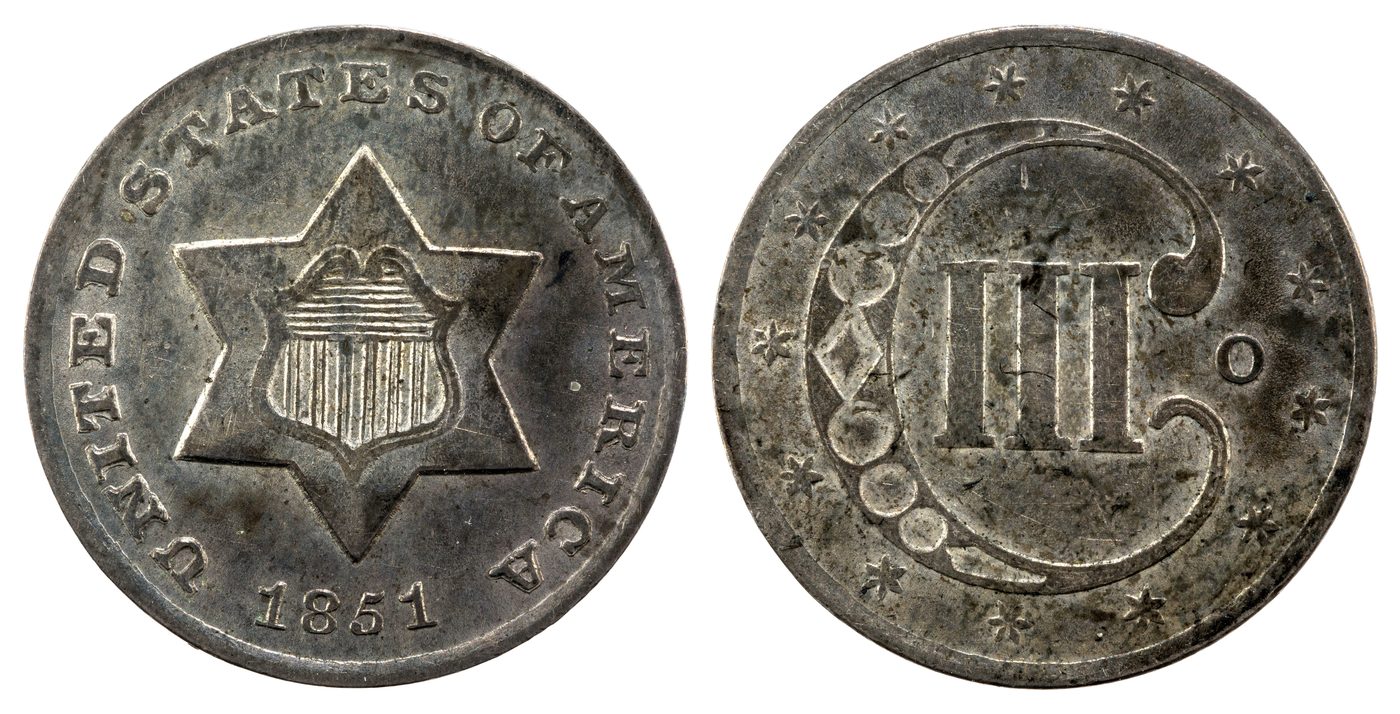
The story behind the coin
In 1851 a curious problem collided with a national emergency, and the answer was the smallest coin the United States has ever made.
The curious problem was postage. That year Congress cut the cost of mailing a letter from five cents to three. People now needed a clean way to pay three cents — without fishing for pennies, which were big copper coins nobody loved to carry.
The emergency was bigger. Gold was pouring out of California, and a flood of cheap gold made silver suddenly worth more — worth more as metal than as money. So Americans did the rational thing: they hoarded their silver dimes, quarters, and half dollars, or sold them to be melted. Small change vanished from pockets and shop drawers across the country. A nation was running out of the coins it used every day.
Congress solved both problems with one tiny coin. It authorized a three-cent piece — perfect for a stamp — and made it deliberately short on silver, only 75% fine, so it would be worth less as metal than as money. That was the trick: a coin too cheap to melt would actually stay in circulation. And it worked. While full-value silver coins kept disappearing, the little three-cent piece circulated freely. For a few years it was one of the only silver coins an ordinary American actually saw.