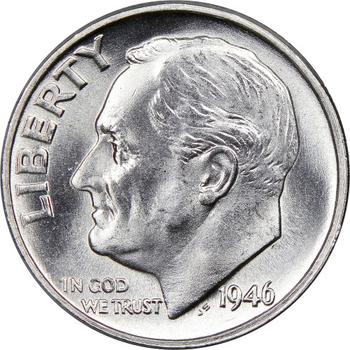
The story behind the coin
When Franklin Roosevelt died in office in April 1945, the country wanted to put him on its money. The dime was the obvious choice — and the choice was not sentimental, it was earned.
Roosevelt had contracted polio in 1921. The disease left him unable to walk unaided, and he spent the rest of his life building the fight against it. In 1938 he helped found the National Foundation for Infantile Paralysis, whose fundraising drive a radio comedian nicknamed the "March of Dimes." Americans mailed dimes by the millions to the White House. So when Roosevelt died, the ten-cent piece wasn't a random denomination — it was his coin already.
The timing was almost violent in its speed. Representative James Hobson Morrison introduced a bill on May 3, 1945. Treasury announced on May 17 that the Mercury dime — one of the most admired designs in American history — would be retired to make room. By design, a coin can be changed without an act of Congress once it has been in service 25 years, and the Mercury dime had just crossed that line. The first Roosevelt dime was struck at Philadelphia on January 19, 1946, and released on January 30 — Roosevelt's birthday. From death to circulation in nine months.